Skip to main content
Macroeconomics
My Course
Learn
Exam Prep
AI Tutor
Study Guides
Flashcards
Explore
Try the app
My Course
Learn
Exam Prep
AI Tutor
Study Guides
Flashcards
Explore
Try the app
Back
Revenue in Perfect Competition definitions
You can tap to flip the card.
Total Revenue
You can tap to flip the card.
👆
Total Revenue
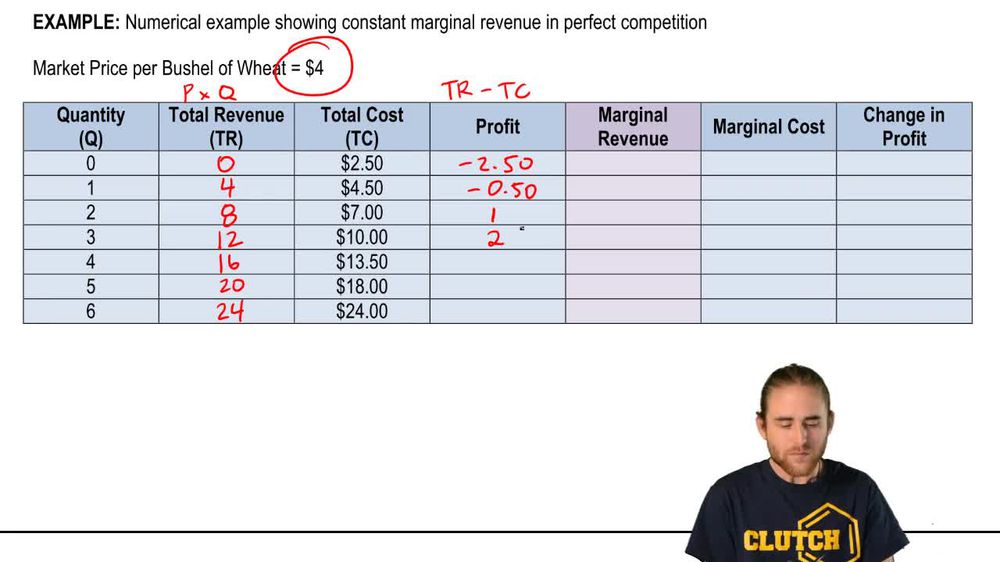
Calculated by multiplying the market price by the quantity sold; represents all money received by a firm from sales.
Track progress
Control buttons has been changed to "navigation" mode.
1/12
Related flashcards
Recommended videos
Revenue in Perfect Competition quiz
Revenue in Perfect Competition
15 Terms
Guided course
06:20
Revenue in Perfect Competition
1
views
Guided course
08:15
Calculating Profit from a Table
1
views
Terms in this set (12)
Hide definitions
Total Revenue
Calculated by multiplying the market price by the quantity sold; represents all money received by a firm from sales.
Average Revenue
Found by dividing total revenue by quantity sold; always equals the market price in all market structures.
Marginal Revenue
The additional money received from selling one more unit; equals the market price in perfect competition.
Price
A fixed value set by the market in perfect competition; firms must accept this value for all units sold.
Quantity
The number of units a firm sells; increasing this does not affect the market price in perfect competition.
Demand Curve
A graphical representation showing the relationship between price and quantity demanded; perfectly elastic for firms here.
Perfect Competition
A market structure with many sellers where each firm is a price taker and faces a perfectly elastic demand.
Price-Taking Behavior
A situation where firms accept the market price and cannot influence it by their own level of output.
Market Structure
The organizational and competitive characteristics of a market, influencing how revenue is determined.
Marginal Benefit
The extra gain a firm receives from selling one additional unit, measured by the increase in revenue.
Market Equilibrium
A state where market supply equals market demand, determining the price firms must accept.
Perfectly Elastic Demand
A situation where firms can sell any quantity at the market price, with no effect on price from their output.
 BackBack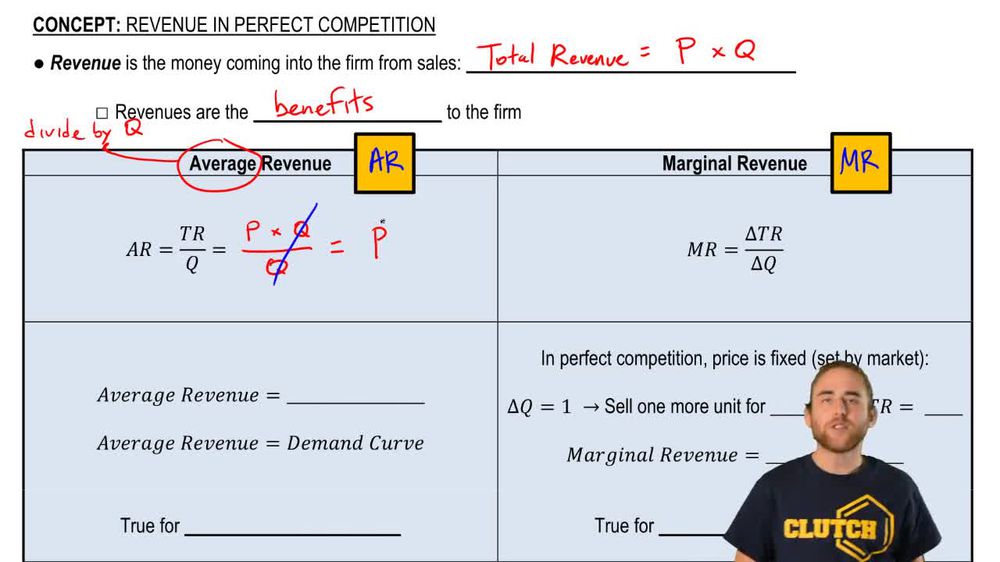
 06:20
06:20