Skip to main content
Macroeconomics
My Course
Learn
Exam Prep
AI Tutor
Study Guides
Flashcards
Explore
Try the app
My Course
Learn
Exam Prep
AI Tutor
Study Guides
Flashcards
Explore
Try the app
Back
Long Run Effects of Fiscal Policy definitions
You can tap to flip the card.
Budget Deficit
You can tap to flip the card.
👆
Budget Deficit
Occurs when government expenditures exceed tax revenues, requiring borrowing to finance the gap and impacting long-term economic growth.
Track progress
Control buttons has been changed to "navigation" mode.
1/14
Related flashcards
Related practice
Recommended videos
Long Run Effects of Fiscal Policy quiz
Long Run Effects of Fiscal Policy
15 Terms
Long Run Effects of Fiscal Policy
19. Fiscal Policy
10 problems
Topic
Criticisms of Fiscal Policy
19. Fiscal Policy
10 problems
Topic
20. Fiscal Policy
6 topics
12 problems
Chapter
Guided course
03:39
Persistent Budget Deficit
3
views
Guided course
02:40
Long Run Tax Policy
2
views
Terms in this set (14)
Hide definitions
Budget Deficit
Occurs when government expenditures exceed tax revenues, requiring borrowing to finance the gap and impacting long-term economic growth.
Government Debt
Represents accumulated borrowing from persistent deficits, leading to future obligations for interest payments and fiscal adjustments.
Crowding Out Effect
Describes how government borrowing increases competition for loanable funds, raising interest rates and reducing private investment.
Loanable Funds
Refers to the pool of money available for borrowing by firms and governments, influencing investment and interest rates.
Interest Rate
Acts as the price of borrowing money, rising when demand for funds increases, and affecting investment decisions and economic growth.
Investment Spending
Involves expenditures on capital goods like factories and equipment, crucial for long-term economic expansion.
Long Run Growth
Signifies sustained increases in an economy’s productive capacity, often hindered by reduced investment due to fiscal imbalances.
Interest Payments
Obligations arising from government debt, which place pressure on future budgets and may require fiscal tightening.
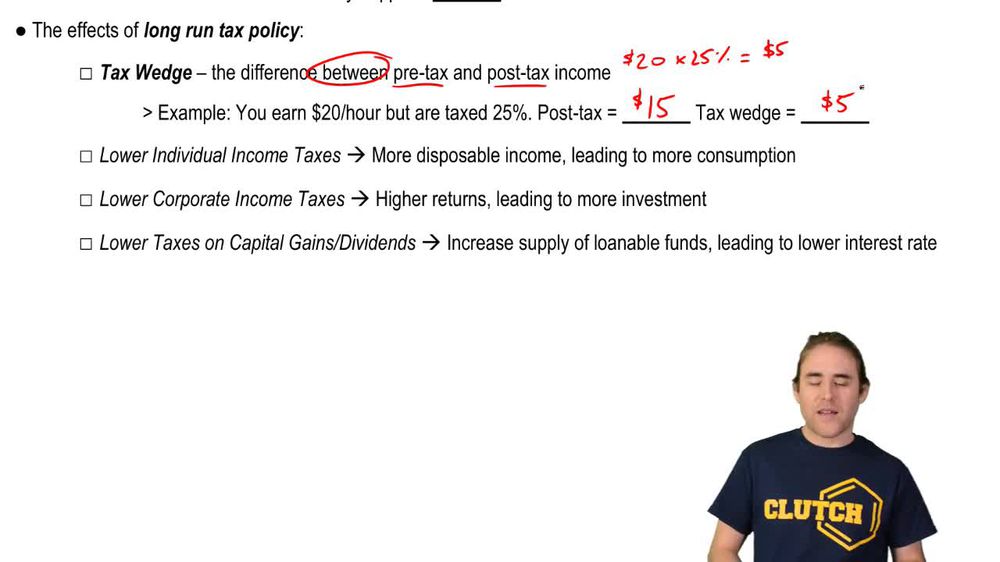
Tax Wedge
Measures the gap between earnings before and after taxes, directly impacting disposable income and consumption.
Disposable Income
Represents earnings remaining after taxes, determining the ability of households to consume or save.
Consumption
Reflects household spending on goods and services, influenced by changes in disposable income and tax policy.
Corporate Taxes
Levies on business profits, where lower rates can boost investment by increasing after-tax returns.
Capital Gains
Profits from the sale of assets, with taxation affecting incentives to save and invest.
Balanced Budget
Achieved when government spending matches tax revenues, preventing persistent deficits and excessive debt accumulation.
 BackBack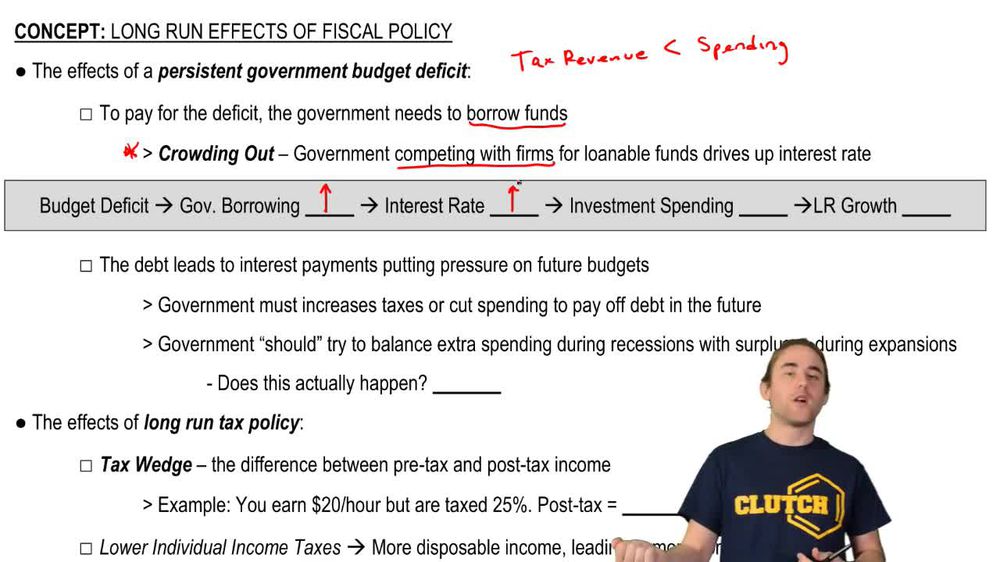
 03:39
03:39