Back

WIllingness to Pay and Consumer Surplus definitions

Control buttons has been changed to "navigation" mode.
1/14
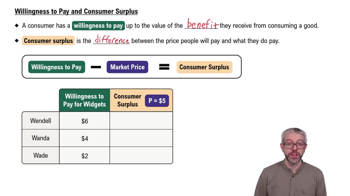
  • Willingness to Pay

    Maximum dollar amount a consumer values a good, determining if a purchase is worthwhile compared to the market price.
  • Consumer Surplus

    Extra benefit received when a consumer pays less than their maximum value for a good, measured in dollars.
  • Market Price

    Actual amount paid for a good in the market, used as a reference to calculate consumer benefit.
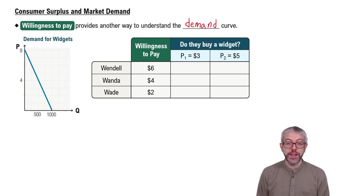
  • Demand Curve

    Graphical representation showing the relationship between price and quantity demanded, reflecting consumer values.
  • Marginal Benefit

    Additional value or satisfaction a consumer gains from consuming one more unit of a good.
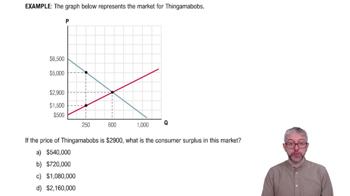
  • Total Consumer Surplus

    Sum of all individual consumer benefits in a market, represented as the area between the demand curve and price.
  • Triangle Area

    Geometric method for calculating total consumer benefit on a graph, using one half base times height.
  • Quantity Demanded

    Number of units consumers are willing to purchase at a specific price, shown on the horizontal axis of a graph.
  • Rational Choice

    Decision-making process where consumers only buy goods if the benefit exceeds or equals the price.
  • Free Benefit

    Value received by consumers above what they pay, resulting from paying less than their maximum willingness.
  • Price Decrease

    Market event leading to increased consumer benefit, as more buyers gain surplus and existing buyers receive greater value.
  • Individual Surplus

    Benefit one consumer receives from a transaction, calculated as the difference between value and price.
  • Base

    Horizontal distance on a graph representing the range of quantities over which consumer benefit is measured.
  • Height

    Vertical distance on a graph between the highest willingness to pay and the market price, used in surplus calculations.