Skip to main content
Macroeconomics
My Course
Learn
Exam Prep
AI Tutor
Study Guides
Flashcards
Explore
Try the app
My Course
Learn
Exam Prep
AI Tutor
Study Guides
Flashcards
Explore
Try the app
Back
Characteristics of Monopoly definitions
You can tap to flip the card.
Monopoly
You can tap to flip the card.
👆
Monopoly
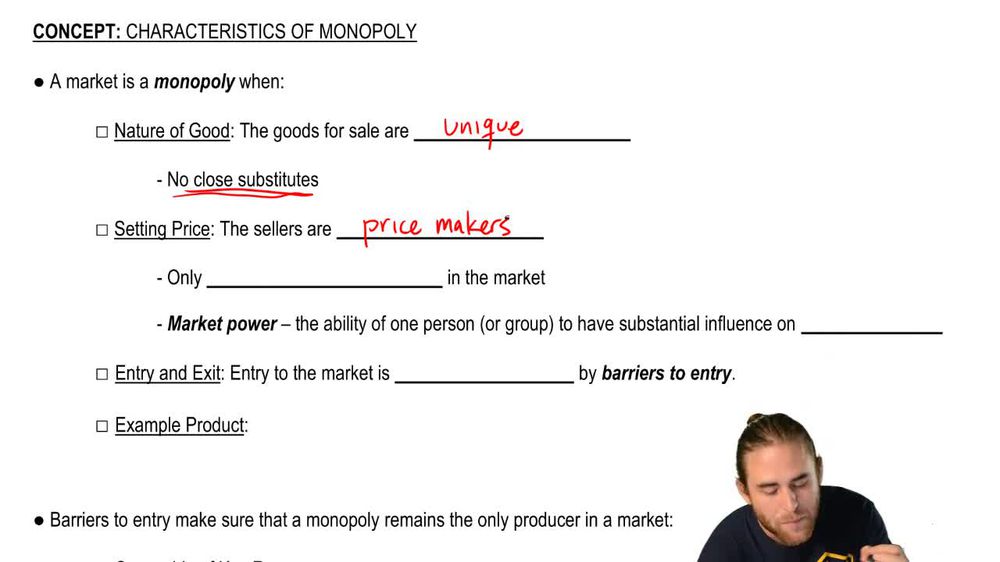
A market structure with a single producer supplying a unique good, facing no close substitutes and significant barriers to entry.
Track progress
Control buttons has been changed to "navigation" mode.
1/15
Related flashcards
Recommended videos
Characteristics of Monopoly quiz
Characteristics of Monopoly
15 Terms
Guided course
04:17
Monopoly Demand Curve
1
views
Guided course
06:29
Monopoly Barriers to Entry
Guided course
02:48
Characteristics of Monopoly
Terms in this set (15)
Hide definitions
Monopoly
A market structure with a single producer supplying a unique good, facing no close substitutes and significant barriers to entry.
Market Power
The ability to influence or set prices due to control over the entire supply of a unique product.
Barriers to Entry
Obstacles that prevent new firms from entering a market, such as resource ownership, patents, or economies of scale.
Ownership of Key Resources
Exclusive control over essential inputs needed for production, making competition nearly impossible.
Government Regulation
Legal protections, like patents, that grant exclusive production rights and restrict competition.
Patent
A government-granted exclusive right to produce and sell an invention, blocking others from entering the market.
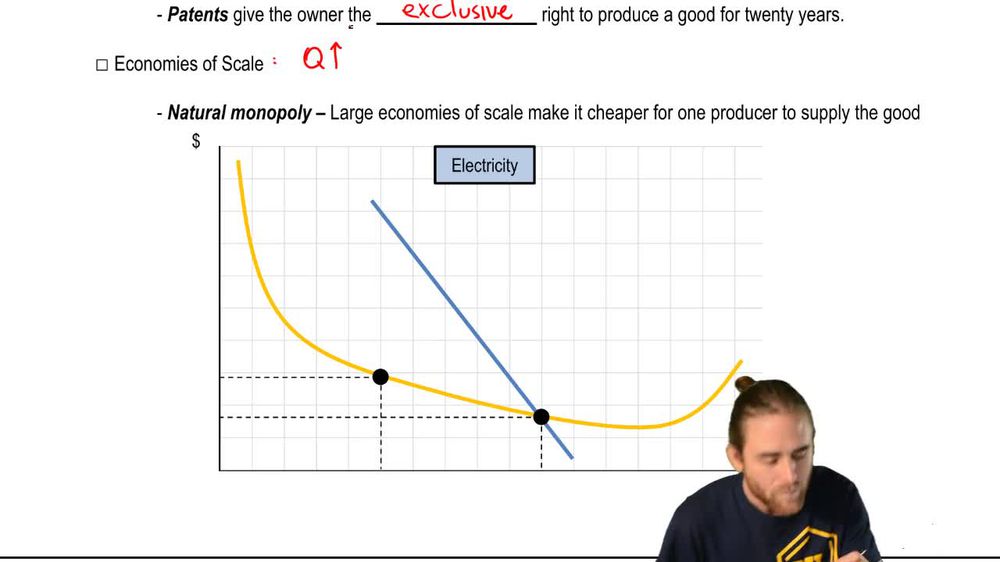
Economies of Scale
Cost advantages achieved when increasing output leads to lower long-run average total costs.
Natural Monopoly
A situation where one firm can supply the entire market more efficiently than multiple firms due to high fixed costs and low marginal costs.
Fixed Costs
Expenses that remain constant regardless of output, often substantial in industries like utilities.
Variable Costs
Expenses that change with the level of output, typically low in natural monopolies after infrastructure is established.
Demand Curve
A graphical representation showing the relationship between price and quantity demanded, downward sloping for monopolies.
Marginal Revenue
The additional income from selling one more unit, which decreases as output increases in monopoly markets.
Price Maker
A firm with the power to set prices rather than accept the market price, characteristic of monopolies.
Unique Good
A product with no close substitutes, giving its producer significant control over the market.
Perfect Competition
A contrasting market structure where many firms sell identical goods and have no influence over price.
 BackBack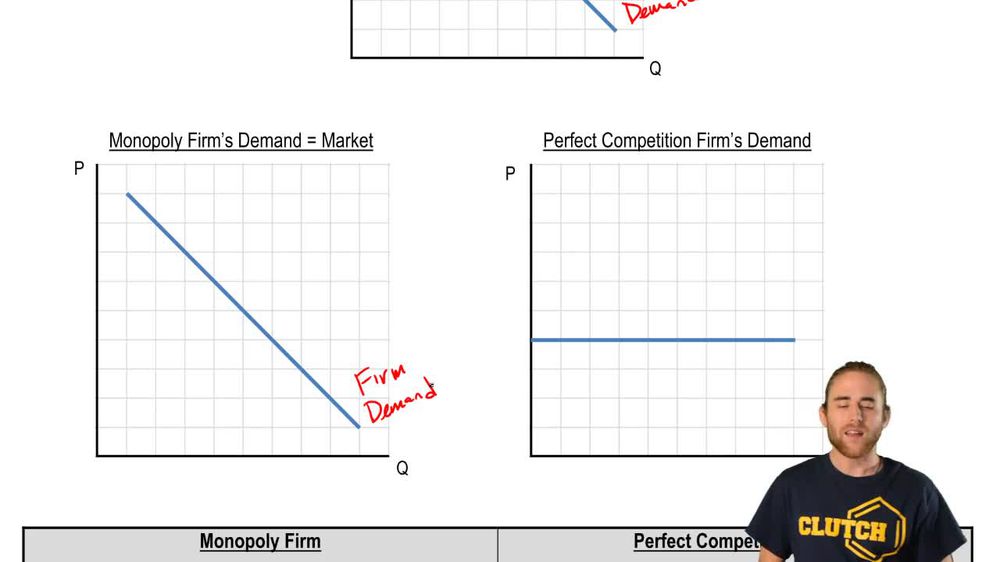
 04:17
04:17