Back

AD-AS Model: Shifts in Aggregate Demand definitions

Control buttons has been changed to "navigation" mode.
1/15
  • Aggregate Demand

    Total spending on goods and services in an economy, including consumption, investment, government purchases, and net exports.
  • Aggregate Supply

    Total quantity of goods and services producers are willing to supply at different price levels in an economy.
  • Short Run Equilibrium

    Point where the current aggregate demand curve intersects the short run aggregate supply curve, determining temporary price and output.
  • Long Run Equilibrium

    Situation where aggregate demand, short run aggregate supply, and long run aggregate supply all intersect, reflecting stable output.
  • Price Level

    Average of current prices across the entire spectrum of goods and services produced in the economy.
  • GDP

    Monetary value of all finished goods and services produced within a country's borders in a specific time period.
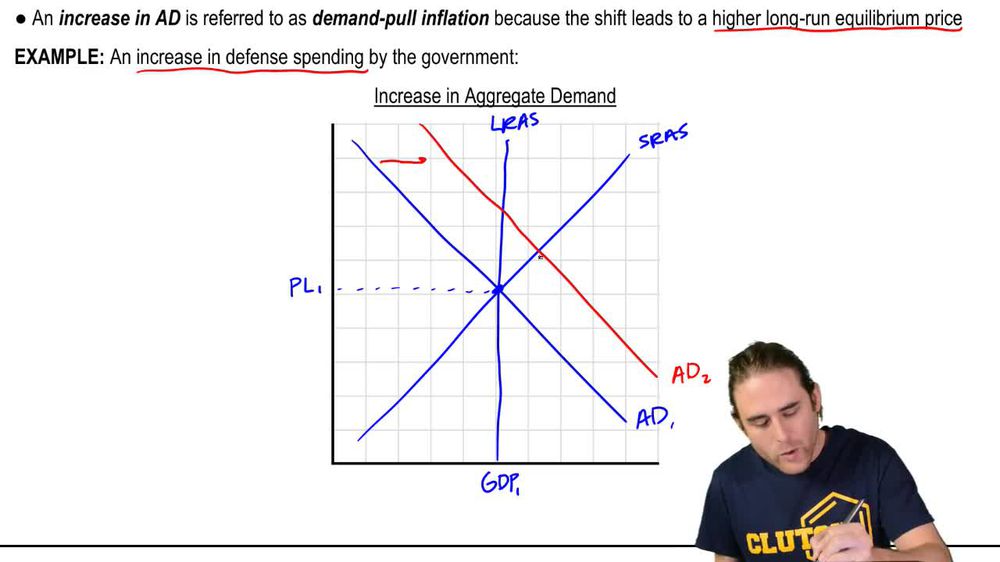
  • Demand-Pull Inflation

    Rise in overall prices caused by increased aggregate demand outpacing aggregate supply, often seen after rightward demand shifts.
  • Recession

    Period of declining economic activity, often marked by reduced aggregate demand, lower GDP, and increased unemployment.
  • Cyclical Unemployment

    Joblessness resulting from downturns in the business cycle, typically linked to decreases in aggregate demand.
  • Investment Spending

    Expenditures on capital goods that will be used for future production, a key component of aggregate demand.
  • Government Purchases

    Spending by the public sector on goods and services, directly influencing aggregate demand.
  • Net Exports

    Difference between a country's exports and imports, contributing to the calculation of aggregate demand.
  • Short Run Aggregate Supply

    Total output firms are willing to produce at various price levels before input prices fully adjust.
  • Long Run Aggregate Supply

    Output level an economy can sustain over time when all resources are fully employed and prices are flexible.
  • Hot Economy

    Situation where output temporarily exceeds long run equilibrium, often due to overemployment and resource overuse.