Skip to main content
Introduction to Chemistry
My Course
Learn
Exam Prep
AI Tutor
Study Guides
Flashcards
Explore
Try the app
My Course
Learn
Exam Prep
AI Tutor
Study Guides
Flashcards
Explore
Try the app
Back
Endothermic & Exothermic Reactions quiz
You can tap to flip the card.
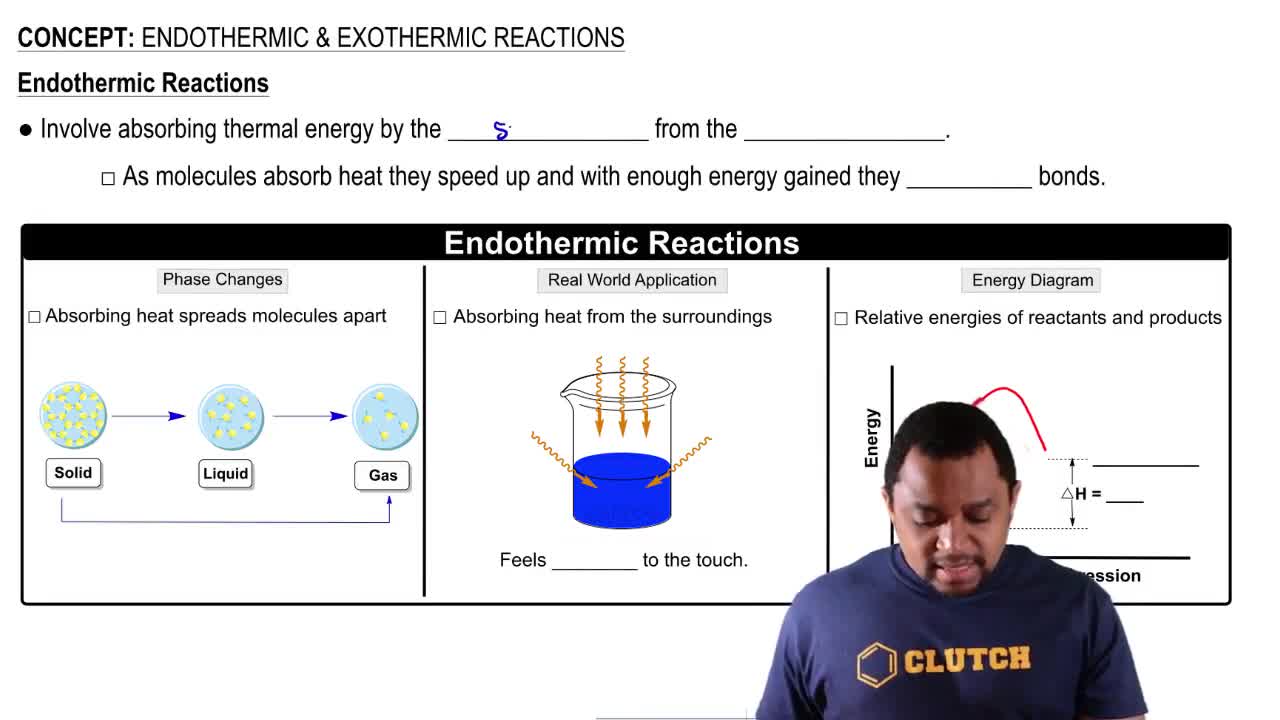
What happens to molecules during an endothermic reaction?
You can tap to flip the card.
👆
What happens to molecules during an endothermic reaction?
Molecules absorb thermal energy, speed up, and may break bonds.
Track progress
Control buttons has been changed to "navigation" mode.
1/15
Related flashcards
Related practice
Recommended videos
Endothermic & Exothermic Reactions definitions
Endothermic & Exothermic Reactions
15 Terms
Endothermic & Exothermic Reactions
3. Matter and Energy
5 problems
Topic
Heat Capacity
3. Matter and Energy
5 problems
Topic
3. Matter and Energy - Part 1 of 2
12 topics
34 problems
Chapter
3. Matter and Energy - Part 2 of 2
1 topic
3 problems
Chapter
Guided course
1:48
Endothermic & Exothermic Reactions Example 2
10
views
Guided course
02:38
Endothermic & Exothermic Reactions
18
views
Guided course
02:30
Endothermic & Exothermic Reactions
18
views
1
rank
Terms in this set (15)
Hide definitions
What happens to molecules during an endothermic reaction?
Molecules absorb thermal energy, speed up, and may break bonds.
What is the effect of an endothermic reaction on the temperature of its surroundings?
It absorbs heat from the surroundings, making the surroundings feel colder.
What phase change occurs when a solid absorbs heat in an endothermic reaction?
The solid melts into a liquid, a process called fusion.
What is vaporization in the context of endothermic reactions?
Vaporization is the phase change from liquid to gas due to heat absorption.
What is sublimation in thermochemistry?
Sublimation is the phase change from solid directly to gas, skipping the liquid phase.
How does an energy diagram for an endothermic reaction appear?
Reactants start at a lower energy and products end at a higher energy, with a positive delta H.
What sign does delta H have in an endothermic reaction?
Delta H is positive in endothermic reactions.
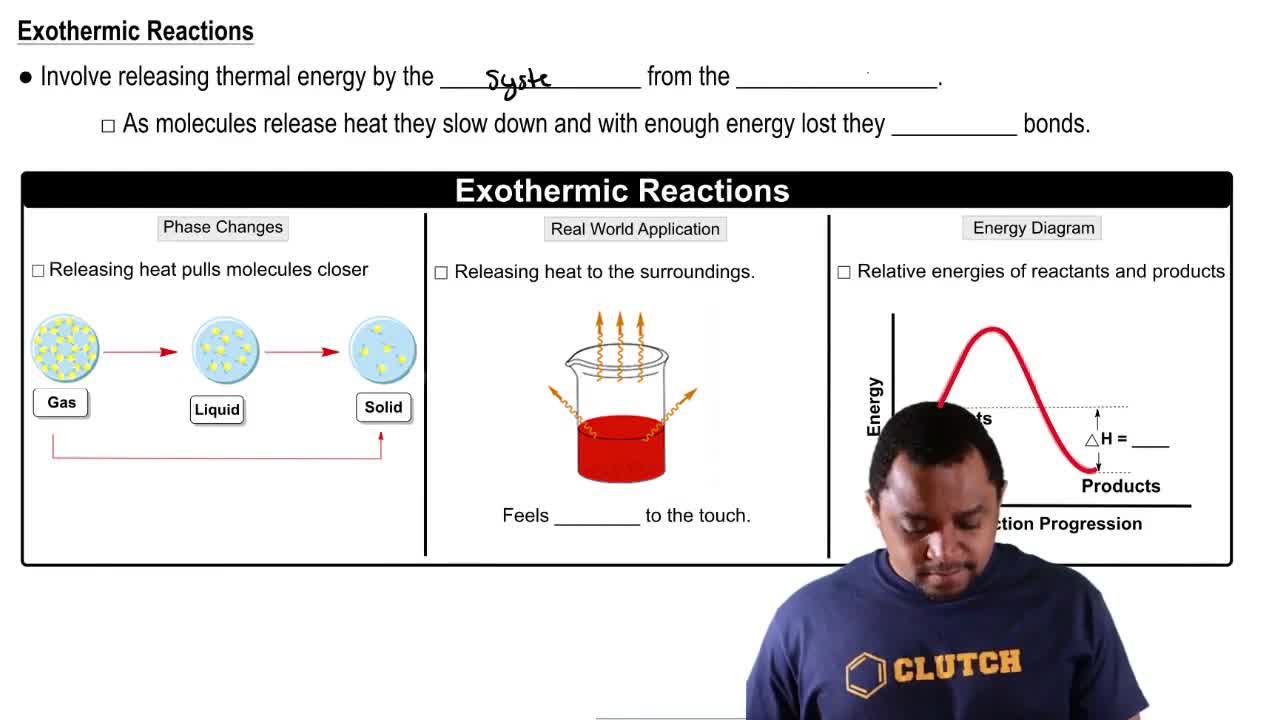
What happens to molecules during an exothermic reaction?
Molecules release thermal energy, slow down, and form bonds.
What phase change occurs when a gas releases heat in an exothermic reaction?
The gas condenses into a liquid, a process called condensation.
What is freezing in the context of exothermic reactions?
Freezing is the phase change from liquid to solid due to heat release.
What is deposition in thermochemistry?
Deposition is the phase change from gas directly to solid, skipping the liquid phase.
How does an exothermic reaction feel to the touch?
It feels warm because heat is released to the surroundings.
How does an energy diagram for an exothermic reaction appear?
Reactants start at a higher energy and products end at a lower energy, with a negative delta H.
What sign does delta H have in an exothermic reaction?
Delta H is negative in exothermic reactions.
What is the main difference between endothermic and exothermic reactions regarding energy flow?
Endothermic reactions absorb energy from surroundings, while exothermic reactions release energy to surroundings.
 BackBack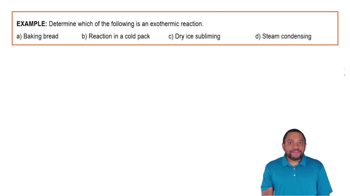
 1:48
1:48