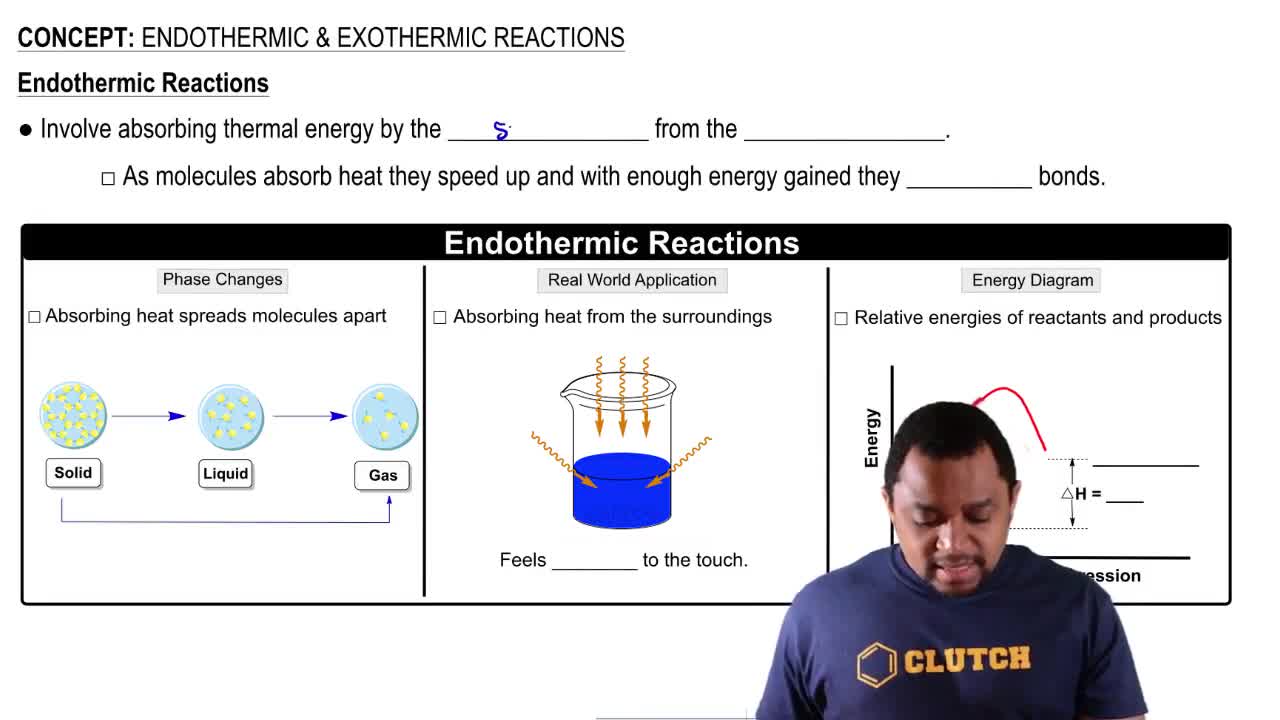
Absorbs thermal energy from surroundings, causing molecules to speed up and break bonds, often resulting in phase changes like melting or vaporization.
Exothermic Reaction
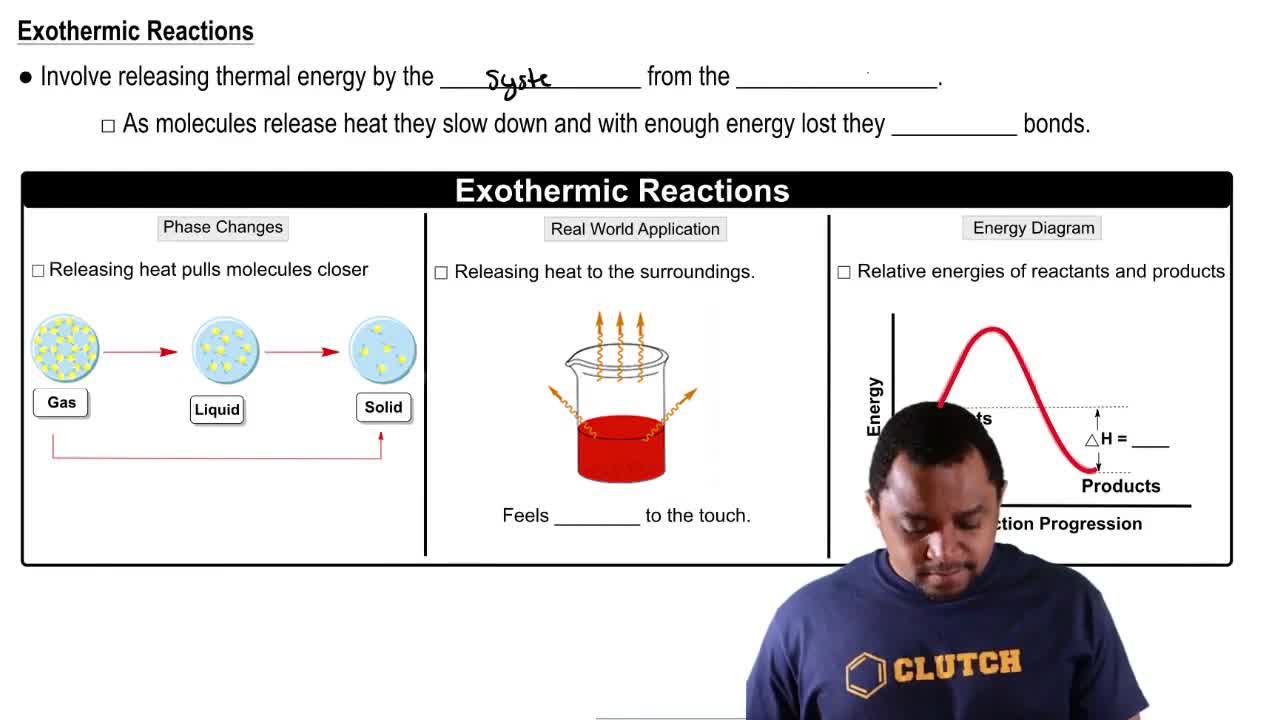
Releases thermal energy to surroundings, causing molecules to slow down and form bonds, often resulting in condensation or freezing.
Thermal Energy
Form of energy transferred as heat, influencing molecular motion and phase changes during chemical reactions.
Bond Breaking
Process requiring energy input, leading to separation of atoms within molecules, common in heat-absorbing reactions.
Bond Formation
Process releasing energy as atoms connect to form molecules, typical in heat-releasing reactions.
Phase Change
Transition between solid, liquid, and gas states, driven by energy absorption or release during reactions.
Melting
Transition from solid to liquid as heat is absorbed, also known as fusion in thermochemistry.
Vaporization
Transition from liquid to gas due to energy absorption, breaking molecular connections.
Sublimation
Direct transition from solid to gas, bypassing the liquid phase, requiring significant energy input.
Condensation
Transition from gas to liquid as molecules lose energy and come closer together.
Freezing
Transition from liquid to solid as heat is released and molecular motion decreases.
Deposition
Direct transition from gas to solid, skipping the liquid phase, involving energy release.
Energy Diagram
Graphical representation showing energy changes from reactants to products during a chemical reaction.
Enthalpy
Measure of total energy change in a reaction, indicated by delta H, positive for heat absorption, negative for heat release.
Delta H
Symbol representing enthalpy change; positive for endothermic and negative for exothermic processes.
 Back
Back
 01:23
01:23