X-linked inheritance is a genetic pattern that is crucial for understanding how certain traits are passed down through generations, particularly in relation to sex chromosomes. In humans and many other organisms, females possess two X chromosomes, allowing them to inherit two alleles for each X-linked gene—one from each parent. This means females can be homozygous dominant (two dominant alleles), homozygous recessive (two recessive alleles), or heterozygous (one dominant and one recessive allele) for X-linked traits.
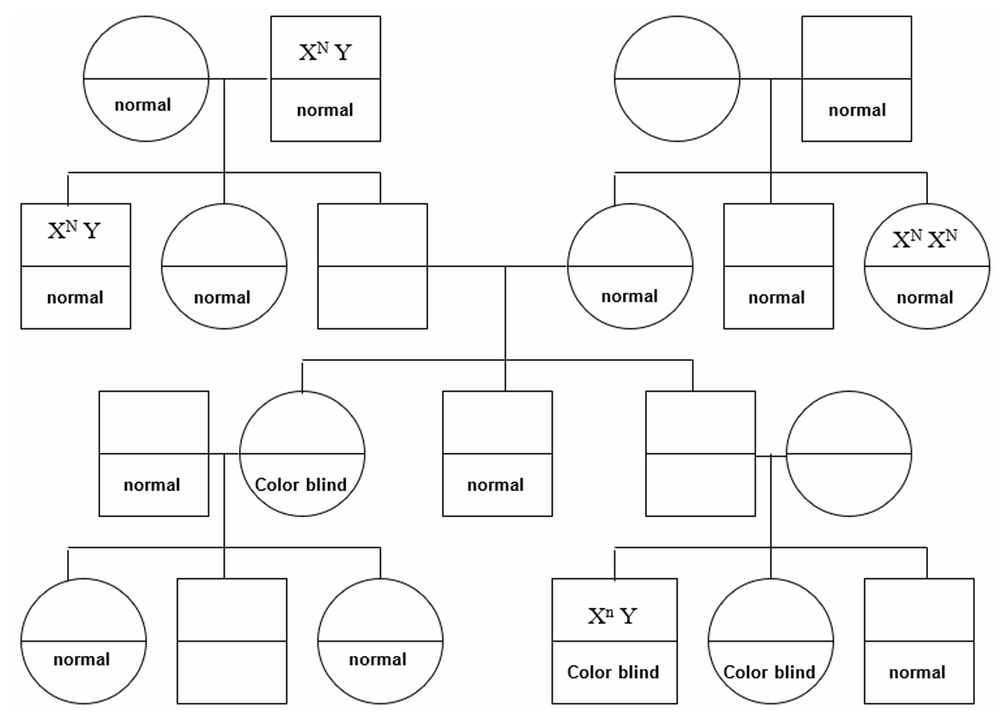
In contrast, males have one X and one Y chromosome, which means they only inherit one allele for each X-linked gene from their mother. Consequently, males cannot be homozygous or heterozygous; they express whatever allele is present on their single X chromosome. This fundamental difference in inheritance patterns leads to distinct expressions of traits between males and females.
For example, in fruit flies, the gene responsible for eye color is located on the X chromosome, with two alleles: the dominant allele (denoted as XR for red eyes) and the recessive allele (denoted as Xr for white eyes). When conducting genetic crosses, such as between a homozygous red-eyed female (XRXR) and a white-eyed male (XrY), the resulting offspring can be analyzed using a Punnett square.
In this specific cross, all female offspring will inherit a red-eye allele from their mother, resulting in 0% of females having white eyes. However, all male offspring will inherit the white-eye allele from their father, leading to 100% of males having white eyes. This pattern continues across various crosses, demonstrating that males are more likely to express recessive traits linked to the X chromosome.
In another example, crossing a heterozygous red-eyed female (XRXr) with a white-eyed male results in 50% of the males having white eyes, while females remain unaffected. This consistent trend highlights that males are generally more susceptible to X-linked disorders, as they lack a second X chromosome that could mask the effects of a recessive allele.
Overall, the study of X-linked inheritance not only reveals the genetic mechanisms behind specific traits but also underscores the differences in how males and females inherit and express these traits. Understanding these patterns is essential for further exploration of genetic disorders and their implications in various species.