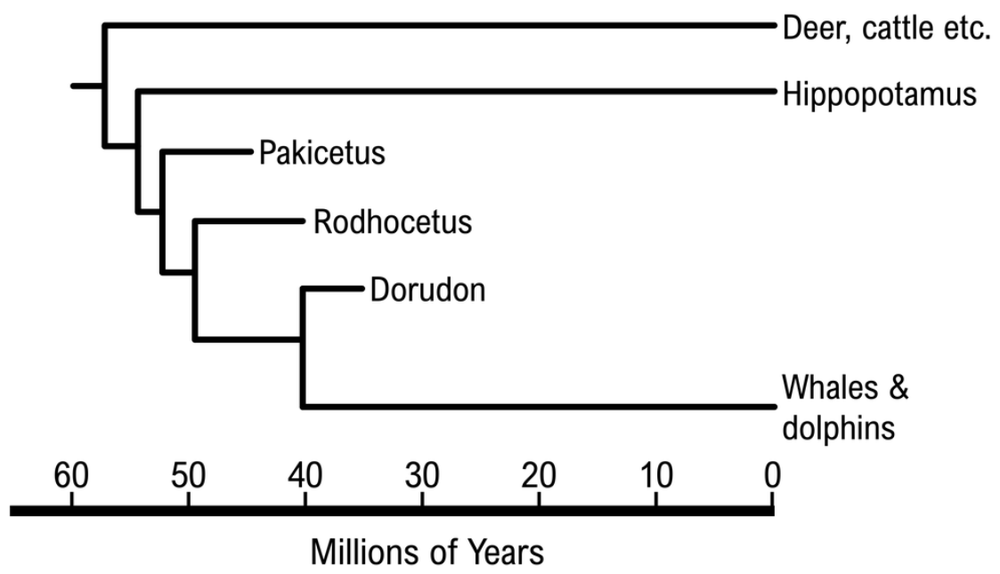
Based on the tree below, which tree shows the same evolutionary relationships?
Table of contents
- 1. Introduction to Biology2h 40m
- 2. Essential Chemistry for Biology2h 43m
- 3. The Molecules of Life2h 18m
- 4. A Tour of the Cell1h 48m
- 5. The Working Cell1h 17m
- 6. Cellular Respiration: Obtaining Energy from Food1h 17m
- 7. Photosynthesis: Using Light to Make Food34m
- 8. Cellular Reproduction: Cells from Cells2h 55m
- 9. Patterns of Inheritance2h 29m
- 10. The Structure and Function of DNA4h 19m
- 11. How Genes Are Controlled55m
- 12. DNA Technology26m
- 13. How Populations Evolve6h 10m
- 14. How Biological Diversity Evolves3h 27m
- 15. The Evolution of Microbial Life2h 24m
- 16. The Evolution of Plants and Fungi1h 58m
- 17. The Evolution of Animals3h 25m
- 18. An Introduction to Ecology and the Biosphere2h 3m
- 19. Population Ecology2h 9m
- 20. Communities and Ecosystems4h 29m
- 21. Unifying Concepts of Animal Structure and Function2h 17m
- 22. Nutrition and Digestion1h 2m
- 23. Circulation and Respiration1h 48m
- 24. The Body's Defenses1h 12m
- 25. Hormones59m
- 26. Reproduction and Development1h 2m
- 27. Nervous, Sensory, and Locomotor Systems2h 59m
- 28. The Life of a Flowering Plant1h 17m
- 29. The Working Plant1h 11m
14. How Biological Diversity Evolves
Classifying The Diversity of Life
Multiple Choice
From the phylogenetic tree below, what can you infer from the branch lengths for the organisms Pakicetus, Rodhocetus, and Dorudon?

A
They are more closely related to each other than to other organisms on the tree.
B
They are extinct taxa.
C
Those taxa experienced less genetic change than other branches on the tree.
D
They represent the ancestors of modern whales and dolphins
0 Comments
Related Videos
Related Practice
Multiple Choice