Back

Rate of Reaction definitions

Control buttons has been changed to "navigation" mode.
1/14
  • Chemical Kinetics

    Study focusing on how quickly reactants transform into products, emphasizing the speed and mechanisms of chemical changes.
  • Reaction Rate

    Measurement of how fast reactant or product concentrations change over time during a chemical process.
  • Completion

    State where nearly all reactants are converted to products, leaving little to no reactant remaining.
  • Equilibrium

    Condition where reactant and product concentrations remain constant as forward and reverse reactions occur at equal rates.
  • Concentration

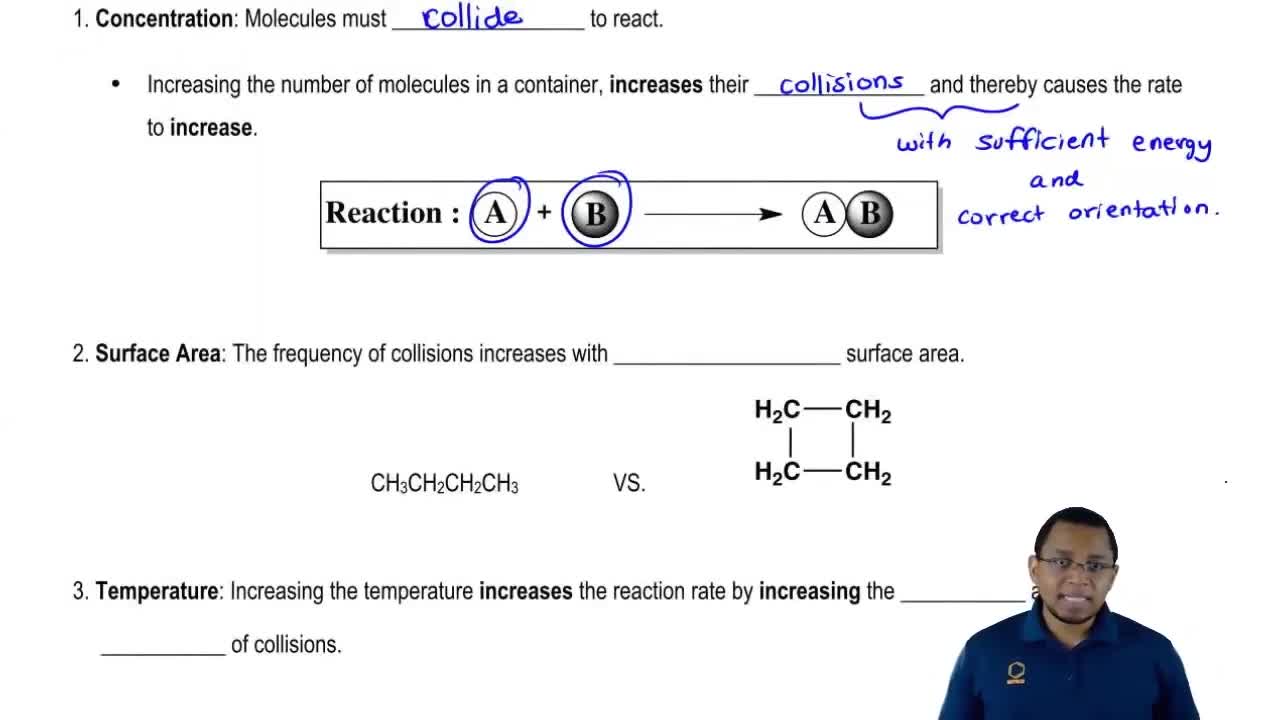
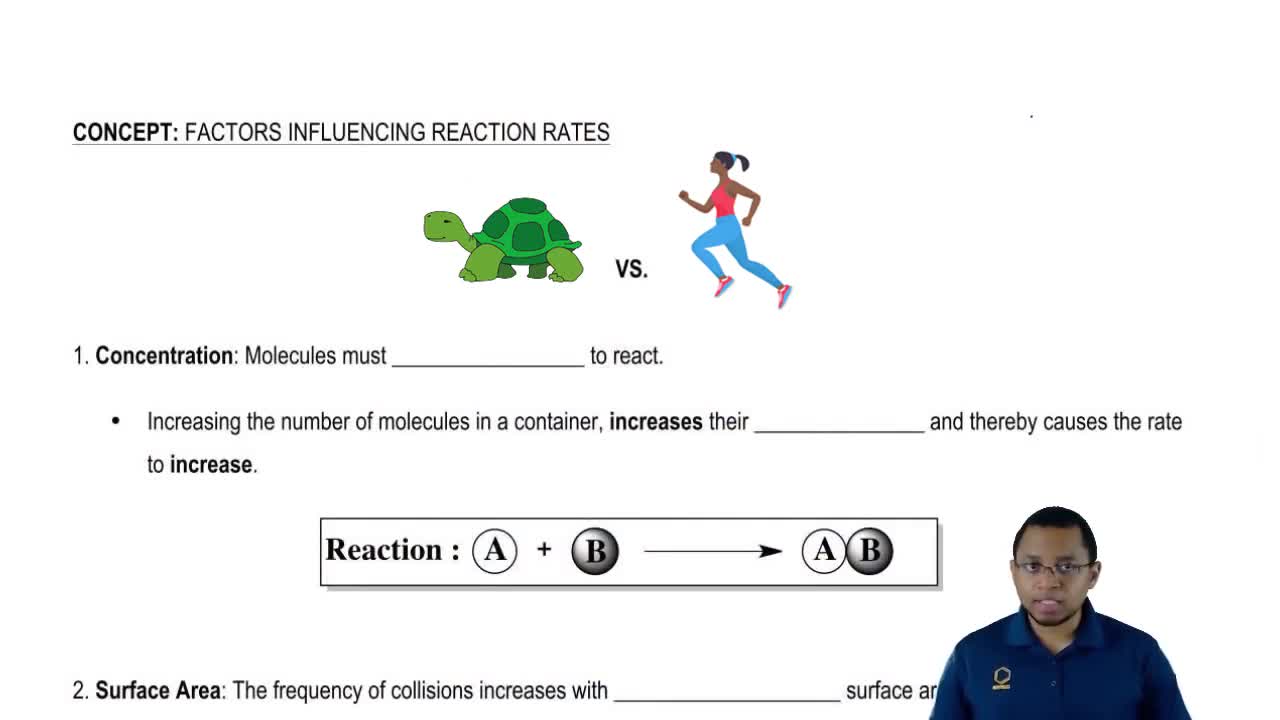
    Amount of a substance present in a given volume, influencing the frequency of molecular collisions in reactions.
  • Surface Area

    Extent of exposed material available for collisions, with greater values leading to faster reaction speeds.
  • Temperature

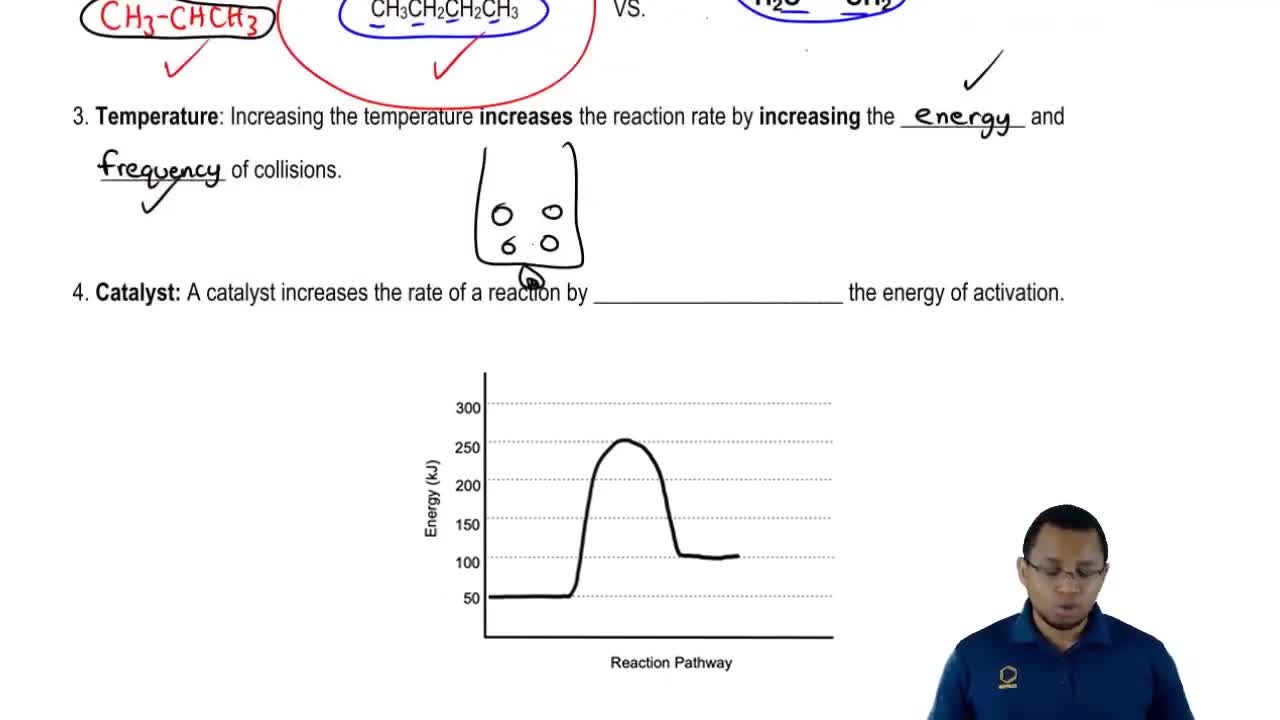
    Measure of thermal energy affecting molecular motion, where higher values increase collision energy and reaction speed.
  • Catalyst

    Substance that accelerates a reaction by providing an alternative pathway with lower activation energy, without being consumed.
  • Activation Energy

    Minimum energy required for reactants to reach the transition state and form products during a reaction.
  • Transition State

    High-energy, unstable arrangement of atoms that exists momentarily as reactants are converted into products.
  • Energy Diagram

    Graphical representation showing energy changes as reactants progress to products, highlighting activation energy and transition state.
  • Collision Theory

    Model explaining that reactions occur when particles collide with sufficient energy and proper orientation.
  • Orientation

    Relative positioning of colliding molecules, which must be correct for a successful reaction to occur.
  • Branch Group

    Structural feature where a chain of atoms extends from the main linear structure, reducing available surface area for reactions.