Back

Oxidative Phosphorylation definitions

Control buttons has been changed to "navigation" mode.
1/15
  • Oxidative Phosphorylation

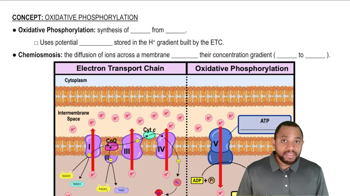
    A process coupling electron transport and ATP synthesis using a proton gradient across the mitochondrial membrane.
  • Electron Transport Chain

    A series of protein complexes in mitochondria transferring electrons to generate a proton gradient.
  • Proton Gradient

    A difference in proton concentration across the inner mitochondrial membrane, storing potential energy.
  • Chemiosmosis

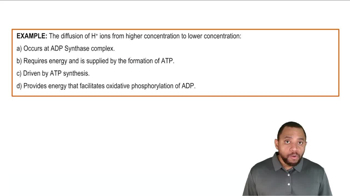
    The movement of ions, especially protons, across a membrane down their concentration gradient to produce ATP.
  • Complex I

    The first protein complex in the electron transport chain where NADH donates electrons.
  • Complex II

    A protein complex in the electron transport chain where FADH2 donates electrons.
  • Coenzyme Q

    A mobile electron carrier shuttling electrons from complexes I and II to complex III.
  • Cytochrome c

    A small protein transferring electrons from complex III to complex IV in the electron transport chain.
  • Complex IV

    The terminal protein complex in the electron transport chain where oxygen accepts electrons to form water.
  • ATP Synthase

    An enzyme complex (complex V) that uses proton flow to catalyze ATP formation from ADP and inorganic phosphate.
  • ADP

    A molecule that gains an inorganic phosphate during oxidative phosphorylation to become ATP.
  • NADH

    An electron carrier donating electrons to complex I, contributing to the proton gradient and ATP production.
  • FADH2

    An electron carrier donating electrons to complex II, yielding less ATP per molecule than NADH.
  • Intermembrane Space

    The region between mitochondrial membranes where protons accumulate, creating the gradient for ATP synthesis.
  • Theoretical Yield

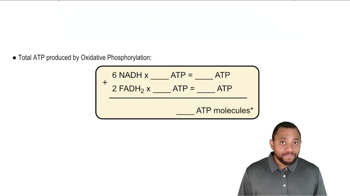
    The calculated maximum number of ATP molecules produced under ideal conditions during oxidative phosphorylation.