Back

Law of Conservation of Mass definitions

Control buttons has been changed to "navigation" mode.
1/12
  • Law of Conservation of Mass

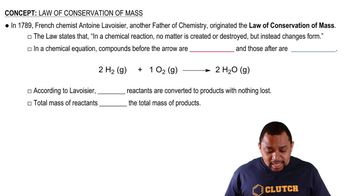
    Principle stating that during a chemical reaction, the total amount of matter remains unchanged, only altering its form.
  • Antoine Lavoisier

    French chemist from 1789 recognized for establishing the foundational principle that matter is neither created nor destroyed.
  • Chemical Reaction

    Process where substances interact to form new substances, with total mass remaining constant throughout.
  • Reactant

    Substance present before a chemical change, which undergoes transformation during the process.
  • Product

    Substance formed as a result of a chemical change, having the same total mass as the original materials.
  • Stoichiometry

    Area of chemistry focused on calculating quantities of substances involved in chemical changes, relying on mass conservation.
  • Solution Chemistry

    Branch of chemistry dealing with substances dissolved in liquids, where mass relationships are governed by conservation principles.
  • Hydrogen

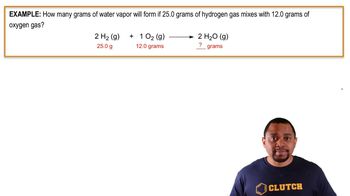
    Lightest element, often used as a reactant in reactions demonstrating mass conservation, such as water formation.
  • Oxygen

    Element that combines with others, like hydrogen, to form compounds while maintaining total mass.
  • Water

    Compound formed from hydrogen and oxygen, exemplifying the unchanged total mass after a chemical reaction.
  • Mass

    Measure of the amount of matter in a substance, remaining constant before and after chemical changes.
  • Compound

    Substance composed of two or more elements chemically bonded, participating in reactions without loss of total matter.