Back

Introduction to Organic Chemistry definitions

Control buttons has been changed to "navigation" mode.
1/14
  • Organic Compound

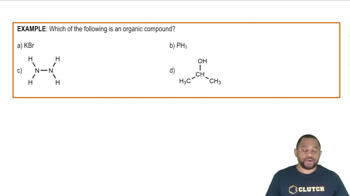
    A molecule primarily composed of carbon atoms, often bonded to hydrogen, and sometimes containing oxygen, nitrogen, sulfur, or halogens.
  • Hydrocarbon

    A molecule consisting solely of carbon and hydrogen atoms, forming the simplest class of organic compounds.
  • Propane

    A three-carbon hydrocarbon commonly used as fuel, featuring only single bonds between its atoms.
  • Ethanol

    A two-carbon molecule with an -OH group, found in alcoholic beverages like wine.
  • Caffeine

    A complex organic molecule containing carbon, nitrogen, and multiple double bonds, present in coffee.
  • Geraniol

    A fragrant organic molecule with pi bonds and an -OH group, naturally occurring in roses.
  • Carbon-Carbon Bond

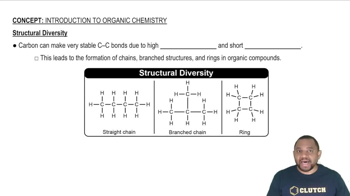
    A linkage between two carbon atoms, notable for its stability, high bond energy, and short bond length.
  • Structural Diversity

    The variety in molecular shapes, including chains, branches, and rings, enabled by carbon's bonding abilities.
  • Pi Bond

    A type of covalent bond formed from sideways overlap of orbitals, often found in double bonds.
  • Halogen

    An element such as fluorine, chlorine, bromine, or iodine, sometimes present in organic molecules.
  • Branched Structure

    A molecular arrangement where a carbon atom is attached off the main chain, creating a side group.
  • Cyclic Structure

    A ring-shaped arrangement of atoms, often formed by carbon atoms in organic molecules.
  • Bond Energy

    The amount of energy required to break a chemical bond, contributing to the stability of organic molecules.
  • Bond Length

    The distance between the nuclei of two bonded atoms, with shorter values indicating stronger bonds.