Back

Intro to Amino Acid Catabolism definitions

Control buttons has been changed to "navigation" mode.
1/13
  • Amino Acid Catabolism

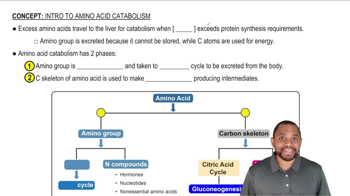
    Process in the liver where surplus amino acids are broken down, involving removal of amino groups and use of carbon skeletons for energy.
  • Amino Group

    Nitrogen-containing component of amino acids that is toxic if accumulated and must be removed or repurposed.
  • Urea Cycle

    Liver pathway that converts toxic ammonium ions into a less harmful compound for safe excretion.
  • Ammonium Ion

    NH4+; a toxic byproduct formed from amino groups during amino acid breakdown, destined for excretion.
  • Carbon Skeleton

    Remaining structure of an amino acid after removal of the amino group, used for energy production.
  • Citric Acid Cycle

    Metabolic pathway where carbon skeletons are further processed to generate cellular energy.
  • Gluconeogenesis

    Metabolic process that creates glucose from non-carbohydrate sources, including amino acid carbon skeletons.
  • Ketogenesis

    Pathway that produces ketone bodies from carbon skeletons, especially during low carbohydrate availability.
  • Nitrogen Compounds

    Molecules such as hormones, nucleotides, and non-essential amino acids synthesized using amino groups.
  • Protein Synthesis

    Cellular process that uses amino acids to build proteins, determining the need for amino acid catabolism.
  • Energy-Producing Intermediates

    Molecules generated from carbon skeletons that enter metabolic cycles to yield cellular energy.
  • Phase 1

    Initial stage of amino acid catabolism focused on removal and processing of the amino group.
  • Phase 2

    Stage where the carbon skeleton is utilized in metabolic pathways for energy or biosynthesis.