Back

Digestion of Proteins definitions

Control buttons has been changed to "navigation" mode.
1/13
  • Amino Acids

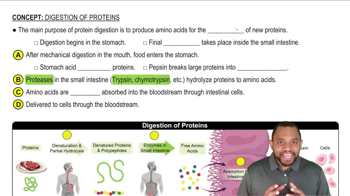
    Building blocks resulting from protein breakdown, absorbed and used for new protein synthesis in the body.
  • Stomach Acid

    Substance responsible for denaturing proteins, making them more accessible to enzymatic action.
  • Denaturation

    Process where protein structure unravels, exposing peptide bonds for further enzymatic breakdown.
  • Polypeptides

    Short chains formed from partially digested proteins, serving as intermediates before full breakdown.
  • Pepsin

    Enzyme in the stomach that cleaves proteins into smaller polypeptide fragments.
  • Proteases

    Group of enzymes in the small intestine that catalyze the hydrolysis of polypeptides into amino acids.
  • Trypsin

    Protease in the small intestine that further splits polypeptides into smaller peptide units and amino acids.
  • Chymotrypsin

    Enzyme in the small intestine specializing in breaking peptide bonds within polypeptides.
  • Hydrolysis

    Chemical reaction involving water that splits peptide bonds during protein digestion.
  • Intestinal Cells

    Structures lining the small intestine responsible for absorbing amino acids into the bloodstream.
  • Bloodstream

    Transport system that delivers absorbed amino acids from the intestine to various body cells.
  • Mechanical Digestion

    Physical process in the mouth and stomach that breaks food into smaller pieces, aiding chemical digestion.
  • Protein Synthesis

    Cellular process utilizing absorbed amino acids to build new proteins required by the body.