Back

Coenzymes in Metabolism definitions

Control buttons has been changed to "navigation" mode.
1/15
  • Coenzyme

    Organic molecule assisting enzymes in metabolic reactions by cycling between oxidized and reduced forms to transfer electrons.
  • Catabolism

    Metabolic process involving the breakdown of molecules, releasing energy through oxidation reactions.
  • Oxidation

    Loss of electrons or hydrogen from a molecule, often resulting in energy release during metabolism.
  • Reduction

    Gain of electrons or hydrogen by a molecule, typically converting coenzymes to their energy-carrying forms.
  • Electron Carrier

    Molecule that temporarily holds and transfers electrons during metabolic reactions, facilitating ATP production.
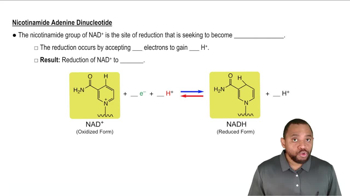
  • Nicotinamide Adenine Dinucleotide

    Coenzyme that cycles between oxidized and reduced forms, accepting electrons and hydrogen to form NADH.
  • NAD+

    Oxidized form of a coenzyme with a positively charged nitrogen, ready to accept electrons and hydrogen.
  • NADH

    Reduced form of a coenzyme, carrying extra electrons and hydrogen, used to transfer energy in metabolism.
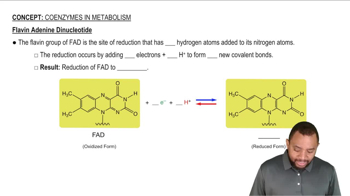
  • Flavin Adenine Dinucleotide

    Coenzyme that accepts two electrons and two hydrogens at nitrogen sites, forming FADH2 during reduction.
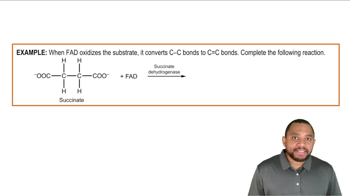
  • FAD

    Oxidized form of a coenzyme, ready to accept electrons and hydrogens at specific nitrogen atoms.
  • FADH2

    Reduced form of a coenzyme, containing two additional hydrogens and electrons, crucial for energy transfer.
  • Coenzyme A

    Molecule composed of ADP, pantothenic acid, and aminoethanethiol, carrying acetyl groups to the Krebs Cycle.
  • Thiol Bond

    High-energy sulfur-hydrogen linkage in coenzyme A, essential for acetyl group transfer.
  • Pantothenic Acid

    Vitamin B5 component of coenzyme A, vital for its structure and function in metabolism.
  • Aminoethanethiol

    Structural segment of coenzyme A containing nitrogen, carbon chains, and a terminal SH group.