Back

Chromosomal Rearrangements: Duplications definitions

Control buttons has been changed to "navigation" mode.
1/13
  • Duplication

    A chromosomal event where a segment is copied, resulting in extra genetic material that can influence evolution and gene function.
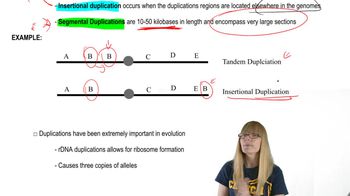
  • Tandem Duplication

    A duplicated chromosomal segment positioned directly next to the original, creating adjacent gene copies.
  • Insertional Duplication

    A duplicated segment located away from the original, possibly on a different chromosome, not adjacent in the genome.
  • Segmental Duplication

    A large duplicated DNA region, typically 10 to 50 kilobases, often rare and found in specific organisms.
  • rDNA

    Genetic material encoding ribosomal RNA, essential for ribosome production and thus for protein synthesis and survival.
  • Ribosomal RNA

    A molecule produced from rDNA, forming the core of ribosomes and enabling protein synthesis in cells.
  • Ribosome

    A cellular structure composed of RNA and proteins, responsible for translating genetic information into proteins.
  • Protein Synthesis

    The cellular process where ribosomes assemble amino acids into proteins, crucial for organismal survival.
  • Allele

    A variant form of a gene; extra copies from duplication can mutate without affecting essential functions.
  • Mutation

    A change in genetic sequence; extra gene copies from duplication can accumulate these changes, sometimes leading to new traits.
  • Phenotype

    The observable characteristics of an organism, which can be altered by mutations in duplicated genes.
  • Evolution

    A process where genetic changes, such as those from duplications, can lead to new traits and increased organismal diversity.
  • Genome

    The complete set of genetic material in an organism, where duplications can occur in various locations.