 Back
BackMatter and Measurements: Foundations of General Chemistry
Study Guide - Smart Notes
 Tailored notes based on your materials, expanded with key definitions, examples, and context.
למחנח | |
|---|---|
Classification of Matter
Types of Matter
Chemistry is the study of matter and the changes it undergoes. Matter is anything that occupies space and has mass. It can be classified into three main types:
Element: The simplest type of matter, composed of only one kind of atom. Examples include gold (Au) and oxygen (O2).
Compound: Matter composed of two or more different elements that are chemically bonded together, such as water (H2O).
Mixture: Matter composed of elements and/or compounds that are physically mixed together but not chemically bonded. Mixtures can be homogeneous (uniform composition, e.g., saltwater) or heterogeneous (non-uniform composition, e.g., salad).
Key Point: Compounds can only be separated into their elements by chemical means, while mixtures can be separated by physical means.
Examples and Applications
Homogeneous Mixture: A mixture with uniform composition throughout (e.g., air, black coffee).
Heterogeneous Mixture: A mixture with non-uniform composition (e.g., trail mix, orange juice with pulp).
Physical and Chemical Changes
Physical Changes
Physical changes alter the state or appearance of matter without changing its composition. Examples include melting, freezing, dissolving, and tearing.
Reversible Physical Changes: Phase changes (solid ↔ liquid ↔ gas), dissolving, and some mixing processes.
Chemical Changes
Chemical changes result in the formation of new substances with different properties. These changes are usually irreversible under normal conditions.
Examples: Burning wood, rusting iron, cooking an egg.
Reversible vs. Irreversible Changes
Reversible: Melting and re-solidifying chocolate.
Irreversible: Baking a cake, burning paper.
Chemical and Physical Properties
Chemical Properties
Chemical properties describe a substance's ability to undergo chemical changes and form new substances. These are observed during chemical reactions.
Examples: Flammability, reactivity with acids, toxicity, radioactivity.
Physical Properties
Physical properties can be observed or measured without changing the chemical identity of a substance.
Examples: Color, mass, density, melting point, boiling point, luster, hardness.

Intensive vs. Extensive Properties
Intensive Properties
Intensive properties do not depend on the amount of substance present. They are useful for identifying substances.
Examples: Density, melting point, boiling point, color, luster.
Extensive Properties
Extensive properties depend on the amount of substance present. They are additive for the same substance.
Examples: Mass, volume, length, total charge.


Temperature and Heat
Thermal Energy, Temperature, and Heat
Thermal energy is the total kinetic and potential energy of all particles in a substance. Temperature is the average kinetic energy of particles, while heat is the transfer of thermal energy from a hotter object to a cooler one.
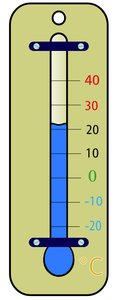
Temperature Units: Celsius (ºC), Fahrenheit (ºF), Kelvin (K)
Temperature Conversion Formulas
Scientific Notation
Format and Use
Scientific notation expresses very large or small numbers in the form , where and is an integer.
Positive exponent: Move decimal to the right (number gets larger).
Negative exponent: Move decimal to the left (number gets smaller).
SI Units and Metric Prefixes
SI Base Units
The International System of Units (SI) uses seven base units for fundamental physical quantities:
Physical Quantity | Name | Symbol |
|---|---|---|
Mass | kilogram | kg |
Length | meter | m |
Time | second | s |
Temperature | kelvin | K |
Amount of substance | mole | mol |
Electric current | ampere | A |
Luminous intensity | candela | cd |




Metric Prefixes
Metric prefixes indicate multiples or fractions of base units. For example, kilo- (k) means 103, milli- (m) means 10-3.
Significant Figures
Rules for Counting Significant Figures
All nonzero digits are significant.
Zeros between nonzero digits are significant.
Leading zeros are not significant.
Trailing zeros in a decimal number are significant.
Trailing zeros in a whole number without a decimal are not significant.
Exact numbers (e.g., counted objects) have an infinite number of significant figures.
Significant Figures in Calculations
Multiplication/Division: The result should have as many significant figures as the value with the fewest significant figures.
Addition/Subtraction: The result should have as many decimal places as the value with the fewest decimal places.
Conversion Factors and Dimensional Analysis
Conversion Factors
A conversion factor is a ratio that expresses how many of one unit are equal to another unit. They are used to convert between units in calculations.
Example:
Dimensional Analysis
Dimensional analysis is a systematic approach to problem-solving that uses conversion factors to move from one unit to another.
Set up the problem so that units cancel appropriately, leaving only the desired unit.
Density
Definition and Formula
Density is the amount of mass per unit volume. It is a physical property that can be used to identify substances.
For solids and liquids: units are typically g/cm3 or kg/L.
For gases: units are typically g/L.
Formula:
Density of Geometric and Non-Geometric Objects
For regular shapes, use geometric formulas to find volume (e.g., ).
For irregular shapes, use water displacement to determine volume.
Summary Table: Classification of Properties
Property Type | Examples |
|---|---|
Physical Property | Color, mass, density, melting point, boiling point, luster |
Chemical Property | Flammability, reactivity, toxicity, radioactivity |
Intensive Property | Density, color, melting point |
Extensive Property | Mass, volume, length |
