Back
BackGeneral Chemistry I: Course Overview and Study Strategies
Study Guide - Smart Notes
 Tailored notes based on your materials, expanded with key definitions, examples, and context.
General Chemistry I: Course Overview
Course Structure and Materials
This course, General Chemistry I (CHM2045), provides a foundational introduction to the principles and concepts of chemistry. It is designed for college students beginning their study of chemistry and covers a wide range of essential topics, from the nature of matter to chemical reactions and atomic structure.
Textbook: "Chemistry, The Central Science" (14th edition) by Brown, LeMay, Bursten, Murphy, Woodward, Stoltzfus.
Lecture Notes: Provided for each chapter, covering key concepts and problem-solving strategies.
Online Homework: Graded assignments and tutorials are accessed via MasteringChemistry through Canvas.
Exams: Multiple-choice format, using Scantron sheets. Solutions are posted for review.
Main Topics Covered
The course is organized into the following major chapters, each corresponding to a core area of general chemistry:
Chapter 1: Introduction: Matter and Measurement
Chapter 2: Atoms, Molecules, and Ions
Chapter 3: Chemical Reactions and Reaction Stoichiometry
Chapter 4: Aqueous Reactions and Solution Stoichiometry
Chapter 5: Thermochemistry
Chapter 6: Electronic Structure of Atoms
Chapter 7: Periodic Properties of the Elements
Chapter 8: Basic Concepts of Chemical Bonding
Chapter 9: Molecular Geometries and Bonding Theories
Chapter 10: Gases
Study Strategies for Success in General Chemistry
Effective Preparation and Study Habits
Success in General Chemistry requires consistent effort, active engagement with the material, and effective study strategies. The following recommendations are based on best practices for learning chemistry at the college level:
Read Before Lecture: Preview the relevant textbook sections and attempt sample exercises to build foundational understanding.
Take Organized Notes: Handwritten notes during lectures help reinforce learning and improve long-term retention.
Avoid Cramming: Spread out study sessions over several weeks to move information into long-term memory.
Focus on Concepts: Create outlines from memory and compare them to chapter summaries, key terms, and objectives.
Practice Problems: Regularly solve new problems, especially those from the end of textbook chapters, to develop problem-solving skills.
Manage Time and Seek Help: Use campus resources such as tutoring services and bring attempted problems for review.
Simulate Exam Conditions: Write and take practice exams under timed, closed-book conditions to build exam readiness.
Supporting and Supplemental Activities
Additional Resources and Academic Support
MasteringChemistry: Includes chemistry primers, dynamic study modules, and adaptive review assignments.
Student Academic Success Services (SASS): Offers tutoring and supplemental instruction for concept mastery.
Academic Activity Tracking: Monitors student progress and provides early alerts for academic support.
Calculator Use: Scientific calculators are required; use the EE or EXP key for scientific notation (e.g., is entered as 6.02 EE 23).
Key Concepts and Skills in General Chemistry I
Overview of Major Topics
Matter and Measurement: Understanding the classification of matter, physical and chemical properties, and measurement techniques.
Atomic Structure: Study of atoms, subatomic particles, isotopes, and atomic theory.
Chemical Reactions: Types of reactions, balancing equations, and stoichiometry.
Solution Chemistry: Properties of solutions, concentration units, and aqueous reactions.
Thermochemistry: Energy changes in chemical processes, enthalpy, and calorimetry.
Electronic Structure: Quantum mechanics, electron configurations, and periodic trends.
Chemical Bonding: Ionic and covalent bonds, Lewis structures, and molecular geometry.
Gases: Gas laws, kinetic molecular theory, and real gas behavior.
Example: Entering Scientific Notation on a Calculator
To enter Avogadro's number () on a scientific calculator:
Press: 6 . 0 2 EE 23 (or 6 . 0 2 EXP 23)
Do not enter: 6 . 0 2 x 10 EE 23
Visual Aids
The following images are directly relevant to the core topics of General Chemistry I and are included to reinforce key concepts:
Atomic Structure:
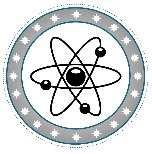
Periodic Table:
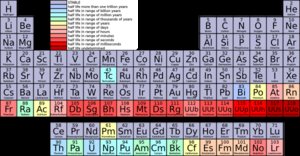
Chemical Bonding (Lewis Structure of Water):
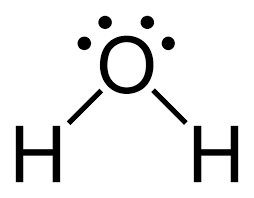
Molecular Structure (Water Molecule):
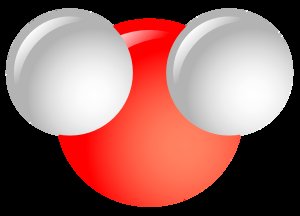
Gases (Balloon as a model for gas behavior):