 Back
BackGeneral Chemistry: Foundations and Key Concepts
Study Guide - Smart Notes
 Tailored notes based on your materials, expanded with key definitions, examples, and context.
Atomic Structure
Subatomic Particles and the Atom
The atom is the fundamental unit of matter, composed of three main subatomic particles: protons, neutrons, and electrons. Protons carry a positive charge, neutrons are electrically neutral, and electrons have a negative charge. The nucleus, located at the center of the atom, contains protons and neutrons and accounts for most of the atom's mass, while electrons occupy the surrounding space in defined energy levels.
Proton (p+): Charge = +1, Mass ≈ 1 amu
Neutron (n0): Charge = 0, Mass ≈ 1 amu
Electron (e-): Charge = -1, Mass ≈ 1/1836 amu
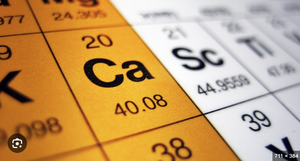
Atomic number (Z) is the number of protons in the nucleus and defines the element. Mass number (A) is the sum of protons and neutrons.
Isotopes: Atoms of the same element with different numbers of neutrons.
Chemical Bonding
Ionic and Covalent Bonds
Atoms form chemical bonds to achieve greater stability, often by attaining a full outer electron shell. The two primary types of bonds are ionic and covalent:
Ionic Bonds: Formed when electrons are transferred from one atom (typically a metal) to another (typically a nonmetal), resulting in oppositely charged ions that attract each other.
Covalent Bonds: Formed when two atoms (usually nonmetals) share one or more pairs of electrons.
These bonds influence the physical and chemical properties of substances, such as melting point, solubility, and electrical conductivity.
Example: Sodium chloride (NaCl) is formed by the transfer of an electron from sodium to chlorine, creating Na+ and Cl- ions.
States of Matter
Solid, Liquid, Gas, and Plasma
Matter exists in four primary states, each with distinct particle arrangements and energy levels:
Solid: Particles are closely packed in a fixed structure; definite shape and volume.
Liquid: Particles are close but can move past each other; definite volume but no fixed shape.
Gas: Particles move freely and are far apart; no definite shape or volume.
Plasma: Ionized gas with free electrons; found in stars and fluorescent lights.
Changes in temperature and pressure can cause matter to transition between these states (e.g., melting, boiling, condensation).
Chemical Reactions
Reactants, Products, and Energy Changes
A chemical reaction involves the rearrangement of atoms to form new substances. The starting materials are called reactants, and the substances formed are products. Chemical reactions can either release energy (exothermic) or absorb energy (endothermic).
General equation:
Example: Combustion of methane:
Acids and Bases
Properties and Neutralization
Acids are substances with a pH less than 7 and typically taste sour. Bases have a pH greater than 7 and often feel slippery. When an acid reacts with a base, they undergo a neutralization reaction to form water and a salt.
Acid: Proton (H+) donor
Base: Proton (H+) acceptor
Neutralization reaction:
Example:
