Ch. P - Fundamental Concepts of Algebra
Blitzer - College Algebra 8th Edition
Blitzer8th EditionCollege AlgebraISBN: 9780136970514Not the one you use?Change textbook
Chapter 1, Problem 18

State the name of the property illustrated: (3 • 7) + (4 • 7) = (4 • 7) + (3 •7)

Verified step by step guidance
1
Observe the given expression: \( (3 \cdot 7) + (4 \cdot 7) = (4 \cdot 7) + (3 \cdot 7) \). Notice that the two products are being added together on both sides.
Identify that the terms on the left side are \(3 \cdot 7\) and \(4 \cdot 7\), and on the right side, the same terms appear but in reversed order: \(4 \cdot 7\) and \(3 \cdot 7\).
Recall the Commutative Property of Addition, which states that changing the order of addends does not change the sum. In symbolic form, this is \(a + b = b + a\).
Since the expression shows the sum of two products with their order switched but the sum remains the same, this illustrates the Commutative Property of Addition.
Therefore, the property illustrated by the equation is the Commutative Property of Addition.

Verified video answer for a similar problem:

This video solution was recommended by our tutors as helpful for the problem above.
Video duration:
1m
Was this helpful?

Key Concepts

Here are the essential concepts you must grasp in order to answer the question correctly.

Commutative Property of Addition

The commutative property of addition states that changing the order of addends does not change the sum. For example, a + b = b + a. In the given expression, the sums on both sides have the same terms added in different orders, illustrating this property.
Recommended video:
5:36
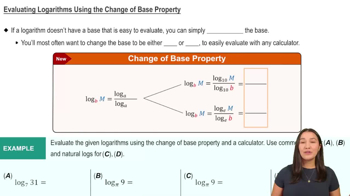
Change of Base Property

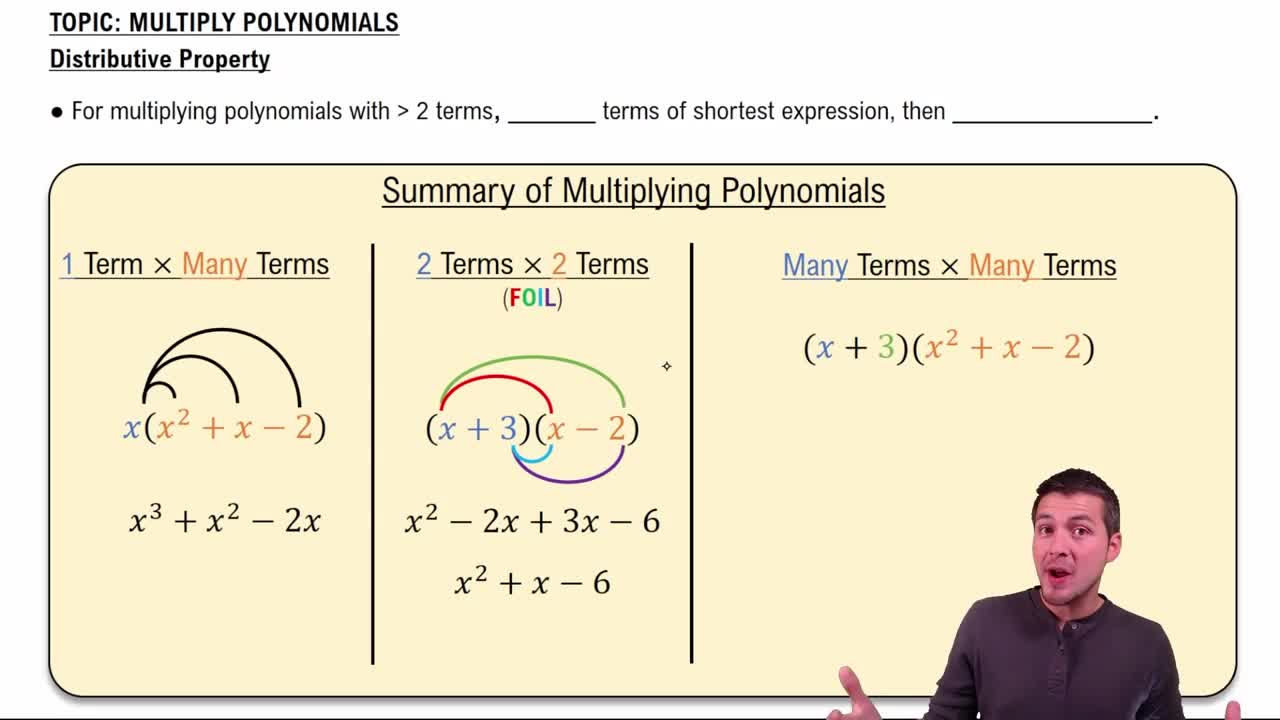
Distributive Property

The distributive property connects multiplication and addition, stating that a(b + c) = ab + ac. Although the given expression resembles terms from distribution, it primarily shows rearrangement of terms rather than distribution itself.
Recommended video:
Guided course
04:15
Multiply Polynomials Using the Distributive Property

Multiplication of Real Numbers

Multiplication of real numbers is commutative, meaning a × b = b × a. This allows factors to be reordered without changing the product, which is essential in understanding why (3 • 7) and (7 • 3) are equivalent in the expression.
Recommended video:
03:31
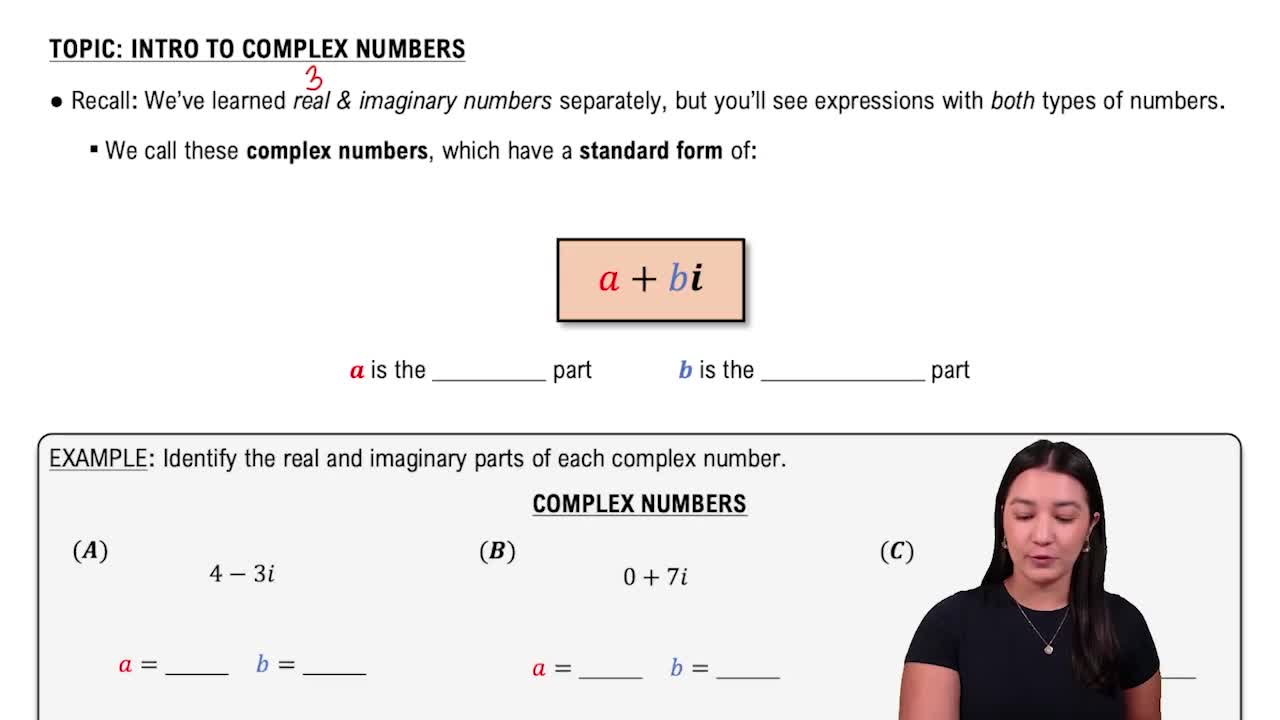
Introduction to Complex Numbers