The equations in Exercises 79–90 combine the types of equations we have discussed in this section. Solve each equation. Then state whether the equation is an identity, a conditional equation, or an inconsistent equation. 2/x + 1/2 = 3/4
Ch. 1 - Equations and Inequalities

Chapter 2, Problem 86
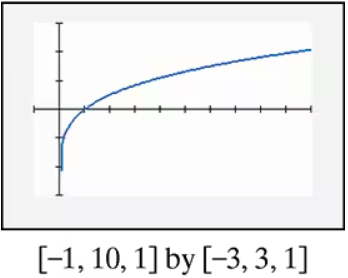
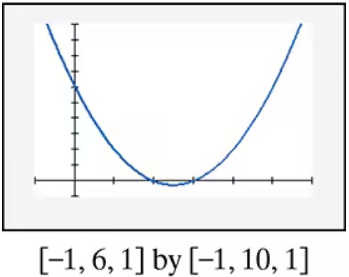
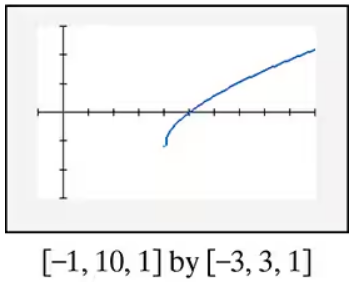
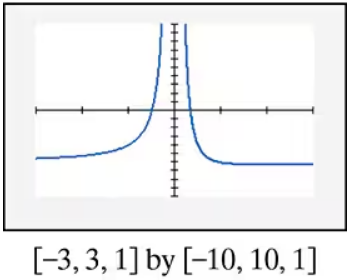
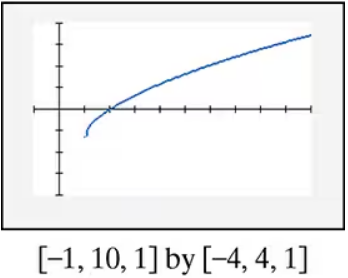
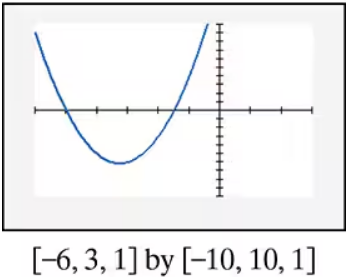
In Exercises 85–90, find the x-intercepts of the graph of each equation. Then use the x-intercepts to match the equation with its graph. [The graphs are labeled (a) through (f).]
a)
b)
c)
d)
e)
f) 
Verified step by step guidance1
To find the x-intercepts of the graph, set the equation equal to zero because x-intercepts occur where the graph crosses the x-axis, meaning \(y = 0\). So, start with the equation: \(0 = \sqrt{\,x - 4\,} + \sqrt{\,x + 4\,} - 4\).
Isolate the square root terms on one side to simplify the equation. Add 4 to both sides to get: \(4 = \sqrt{\,x - 4\,} + \sqrt{\,x + 4\,}\).
To eliminate the square roots, consider squaring both sides of the equation. Remember, when squaring, use the formula \((a + b)^2 = a^2 + 2ab + b^2\). So, square both sides: \(4^2 = (\sqrt{\,x - 4\,} + \sqrt{\,x + 4\,})^2\).
Expand the right side using the formula: \(16 = (x - 4) + 2\sqrt{(x - 4)(x + 4)} + (x + 4)\). Simplify the terms without the square root: \(16 = 2x + 2\sqrt{(x - 4)(x + 4)}\).
Isolate the square root term: \(16 - 2x = 2\sqrt{(x - 4)(x + 4)}\). Then divide both sides by 2: \(\frac{16 - 2x}{2} = \sqrt{(x - 4)(x + 4)}\). This simplifies to \(8 - x = \sqrt{x^2 - 16}\). Next, square both sides again to eliminate the square root and solve for \(x\).

Verified video answer for a similar problem:
This video solution was recommended by our tutors as helpful for the problem above.
Video duration:
1mWas this helpful?
Key Concepts
Here are the essential concepts you must grasp in order to answer the question correctly.
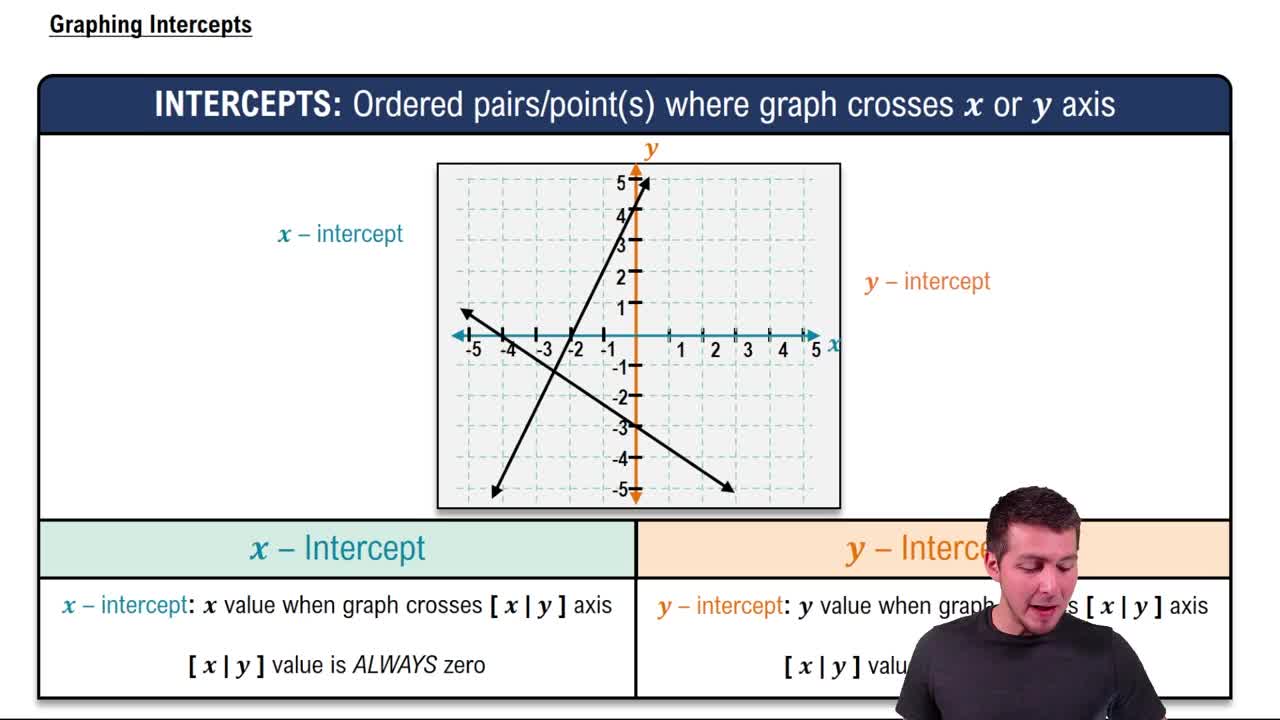
Finding x-intercepts
X-intercepts are points where the graph crosses the x-axis, meaning the y-value is zero. To find them, set y = 0 in the equation and solve for x. This helps identify key points that characterize the graph's shape and position.
Recommended video:
Guided course
Graphing Intercepts
Domain of Radical Functions
For functions involving square roots, the expression inside the root must be non-negative to yield real values. Determining the domain involves solving inequalities like x - 4 ≥ 0 and x + 4 ≥ 0, which restricts the possible x-values and affects where the graph exists.
Recommended video:
Domain Restrictions of Composed Functions
Graph Matching Using Intercepts
Matching equations to graphs often relies on key features like intercepts and domain restrictions. By finding x-intercepts and understanding the domain, you can compare these points and intervals to the given graphs to identify the correct match.
Recommended video:
Guided course
Graphing Intercepts
Related Practice
Textbook Question
Textbook Question
Solve each equation in Exercises 83–108 by the method of your choice.
1
views
Textbook Question
The equations in Exercises 79–90 combine the types of equations we have discussed in this section. Solve each equation. Then state whether the equation is an identity, a conditional equation, or an inconsistent equation. 4/(x - 2) + 3/(x + 5) = 7/(x + 5)(x - 2)
Textbook Question
In Exercises 59–94, solve each absolute value inequality. 5 > |4 - x|
Textbook Question
Solve each polynomial equation in Exercises 86–87. 2x^4 = 50 x^2
Textbook Question
In Exercises 59–94, solve each absolute value inequality. 3 ≤ |2x - 1|