What is epigenetic regulation in the context of gene expression?
Epigenetic regulation refers to modifications on histone proteins, such as methylation and acetylation, that affect DNA structure and control gene expression without altering the DNA sequence.
How does histone methylation generally affect gene expression?
Histone methylation typically represses gene expression by stimulating chromatin condensation, making DNA less accessible for transcription.
What are CpG islands and where are they commonly found?
CpG islands are regions with a high frequency of CG nucleotides that remain unmethylated and are commonly found in promoter regions to facilitate gene expression.
Why do CpG islands remain unmethylated in promoter regions?
They remain unmethylated to promote gene expression, as methylation in these regions would repress transcription.
What effect does histone acetylation have on chromatin structure and gene expression?
Histone acetylation relaxes chromatin structure, making it more open and accessible for transcription, thereby stimulating gene expression.
Which enzymes are responsible for adding and removing acetyl groups from histones?
The histone code refers to the combination of histone modifications, such as methylation and acetylation, that regulate chromatin structure and gene expression.
What role do chromatin remodeling factors play in gene expression?
Chromatin remodeling factors rearrange nucleosomes along DNA, altering the accessibility of DNA to transcription machinery without changing histone modifications.
How do elongation factors influence transcription?
Elongation factors modify histones and disrupt nucleosomes during transcription, affecting whether transcription continues or is prematurely stopped.
What is transcriptional synergy?
Transcriptional synergy occurs when multiple activator proteins work together to increase the rate of transcription beyond the sum of their individual effects.
What is epigenetic heredity?
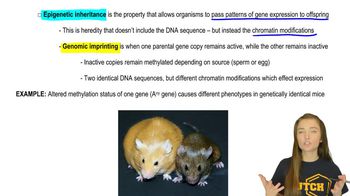
Epigenetic heredity is the inheritance of chromatin structure and gene expression patterns from cell to cell or parent to offspring, independent of DNA sequence.
How does cell memory contribute to tissue-specific gene expression?
Cell memory allows differentiated cells to pass patterns of gene expression to their daughter cells, ensuring tissue-specific genes are expressed in the correct cell types.
What is genomic imprinting?
Genomic imprinting is an epigenetic phenomenon where only one parental allele of a gene is expressed while the other is silenced, depending on chromatin modifications.
What is X inactivation and why does it occur in females?
X inactivation is the random transcriptional silencing of one X chromosome in female cells to ensure dosage compensation between males and females.
How does X inactivation lead to mosaic phenotypes in organisms like calico cats?
Because X inactivation is random in each cell, different cells express different X-linked alleles, resulting in mosaic patterns such as the splotchy fur colors seen in calico cats.
 Back
Back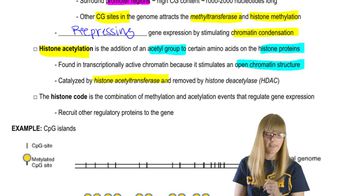
 10:07
10:07