Skip to main content
Cell Biology
My Course
Learn
Exam Prep
AI Tutor
Study Guides
Flashcards
Explore
Try the app
My Course
Learn
Exam Prep
AI Tutor
Study Guides
Flashcards
Explore
Try the app
Back
Epigenetic Regulation of Gene Expression definitions
You can tap to flip the card.
Epigenetic Regulation
You can tap to flip the card.
👆
Epigenetic Regulation
Control of gene activity through reversible chromatin modifications, independent of DNA sequence changes.
Track progress
Control buttons has been changed to "navigation" mode.
1/15
Related flashcards
Related practice
Recommended videos
Epigenetic Regulation of Gene Expression quiz
Epigenetic Regulation of Gene Expression
15 Terms
Epigenetic Regulation of Gene Expression
7. Gene Expression
7 problems
Topic
Transcriptional Regulators
7. Gene Expression
7 problems
Topic
7. Gene Expression
5 topics
15 problems
Chapter
Guided course
10:07
Epigenetic Modifications
4
views
Guided course
10:57
Epigenetic Heredity
4
views
Terms in this set (15)
Hide definitions
Epigenetic Regulation
Control of gene activity through reversible chromatin modifications, independent of DNA sequence changes.
Histone Methylation
Addition of methyl groups to histone proteins, often leading to chromatin condensation and gene silencing.
Histone Acetylation
Attachment of acetyl groups to histones, resulting in relaxed chromatin and increased gene transcription.
CpG Islands
DNA regions rich in cytosine and guanine, typically unmethylated in promoters to enable gene expression.
Chromatin Structure
Physical arrangement of DNA and histones, determining accessibility for transcription machinery.
Histone Acetyltransferases
Enzymes that add acetyl groups to histones, promoting open chromatin and active transcription.
Histone Deacetylases
Enzymes that remove acetyl groups from histones, leading to chromatin condensation and gene repression.
Chromatin Remodeling Factors
Proteins that reposition nucleosomes, altering DNA accessibility without changing histone modifications.
Elongation Factors
Proteins associated with RNA polymerase that modify nucleosomes during transcription, influencing gene output.
Transcriptional Synergy
Enhanced transcription rate achieved when multiple activators cooperate, exceeding their individual effects.
Epigenetic Heredity
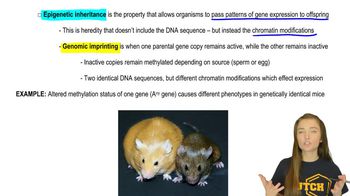
Transmission of chromatin modification patterns, not DNA sequence, from cell to cell or across generations.
Cell Memory
Retention of gene expression patterns in differentiated cells, ensuring tissue-specific function in progeny.
Genomic Imprinting
Epigenetic phenomenon where only one parental allele is expressed, determined by chromatin modifications.
X Inactivation
Random silencing of one X chromosome in females, ensuring dosage compensation and creating mosaic phenotypes.
Mosaic Phenotype
Physical trait variation within an organism due to random epigenetic inactivation of different alleles in cells.
 BackBack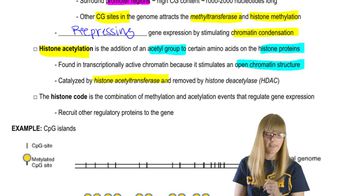
 10:07
10:07