Back
Back
Problem 3.1.20
In Exercises 19–22, find the slope of the curve at the point indicated.
y = x³ − 2x + 7, x = −2
Problem 3.33
Find the derivatives of the functions in Exercises 1–42.
_____
𝔂 = / x² + x
√ x²
Problem 3.9.38
Differential Estimates of Change
In Exercises 35–40, write a differential formula that estimates the given change in volume or surface area.
The change in the lateral surface area S = πr√(r² + h²) of a right circular cone when the radius changes from r₀ to r₀ + dr and the height does not change
Problem 3.6.45
In Exercises 41–58, find dy/dt.
y = (t tan(t))¹⁰
Problem 3.2.29
Graphs
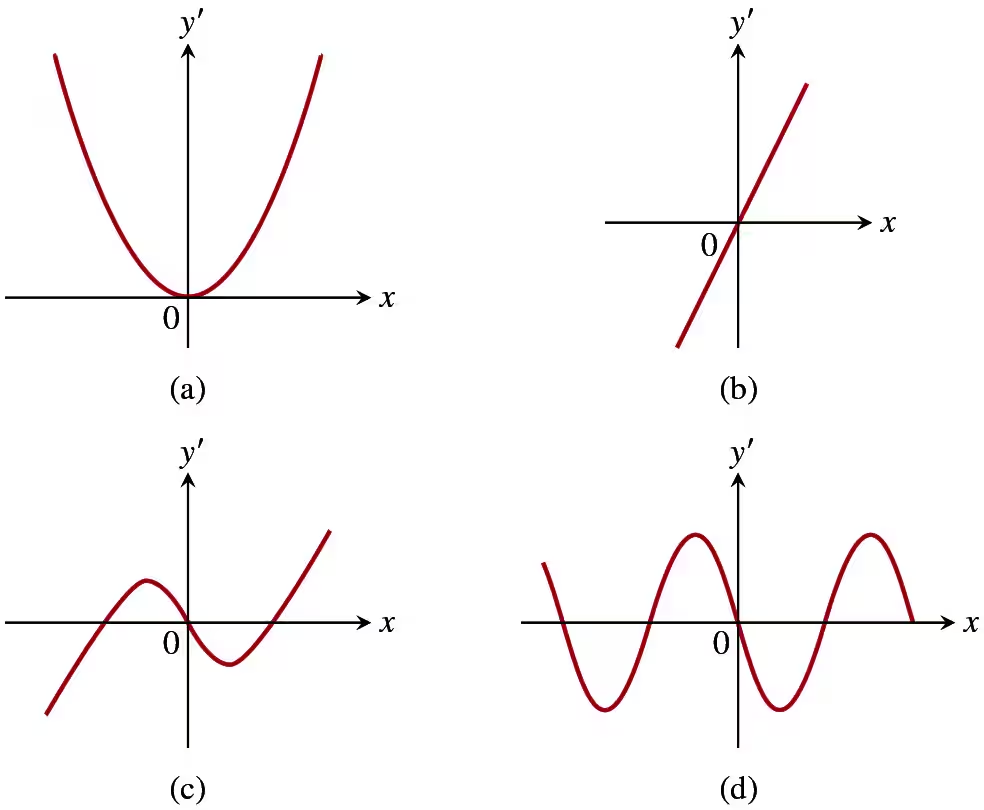
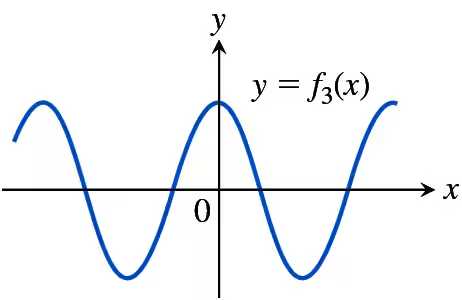
Match the functions graphed in Exercises 27–30 with the derivatives graphed in the accompanying figures (a)–(d).
Problem 3.7.20
Second Derivatives
In Exercises 19–26, use implicit differentiation to find dy/dx and then d²y/dx². Write the solutions in terms of x and y only.
x²/³ + y²/³ = 1
Problem 3.1.43
[Technology Exercise]
Graph the curves in Exercises 39–48.
a. Where do the graphs appear to have vertical tangent lines?
b. Confirm your findings in part (a) with limit calculations. But before you do, read the introduction to Exercises 37 and 38.
y = 4x²/⁵ − 2x
Problem 3.9.29
Approximation Error
In Exercises 29–34, each function f(x) changes value when x changes from x₀ to x₀ + dx. Find
a. the change Δf = f(x₀ + dx) − f(x₀);
b. the value of the estimate df = fʹ(x₀) dx; and
c. the approximation error |Δf − df|.
<IMAGE>
f(x) = x² + 2x, x₀ = 1, dx = 0.1
Problem 3.7.54
In Exercises 53 and 54, find both dy/dx (treating y as a differentiable function of x) and dx/dy (treating x as a differentiable function of y). How do dy/dx and dx/dy seem to be related?
54. x³ + y² = sin²y
Problem 3.8.20
Heating a plate When a circular plate of metal is heated in an oven, its radius increases at the rate of 0.01 cm/min. At what rate is the plate’s area increasing when the radius is 50 cm?
Problem 3.3.2
Derivative Calculations
In Exercises 1–12, find the first and second derivatives.
y = x² + x + 8
Problem 3.6.19
Find the derivatives of the functions in Exercises 19–40.
p = √(3 − t)
Problem 3.1.3
Slopes and Tangent Lines
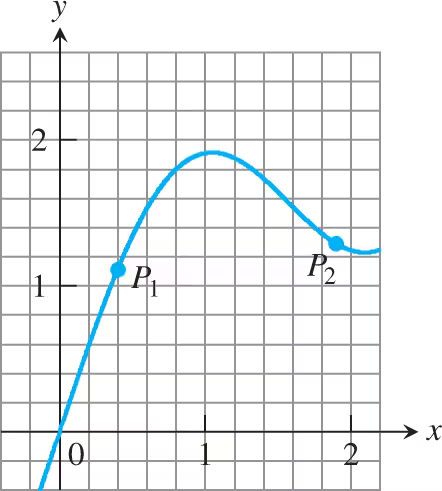
In Exercises 1–4, use the grid and a straight edge to make a rough estimate of the slope of the curve (in y-units per x-unit) at the points P₁ and P₂.
Problem 3.6.9
In Exercises 9–18, write the function in the form y = f(u) and u = g(x). Then find dy/dx as a function of x.
y = (2x + 1)⁵
Problem 3.8.9
If L = √(x² + y²), dx/dt = –1, and dy/dt = 3, find dL/dt when x = 5 and y = 12.
Problem 3.9.4
Finding Linearizations
In Exercises 1–5, find the linearization L(x) of f(x) at x = a.
f(x) = ∛x, a = −8
Problem 3.6.29
Find the derivatives of the functions in Exercises 19–40.
y = (4x + 3)⁴(x + 1)⁻³
Problem 3.1.14
In Exercises 11–18, find the slope of the function’s graph at the given point. Then find an equation for the line tangent to the graph there.
g(x) = 8 / x², (2, 2)
Problem 3.6.33
Find the derivatives of the functions in Exercises 19–40.
f(x) = √(7 + x sec x)
Problem 3.72
Are there any points on the curve y = x - 1/(2x) where the slope is 2? If so, find them.
Problem 3.8.5
If y = x² and dx/dt = 3, then what is dy/dt when x = –1?
Problem 3.1.18
In Exercises 11–18, find the slope of the function’s graph at the given point. Then find an equation for the line tangent to the graph there.
f(x) = √(x + 1), (8, 3)
Problem 3.3.64
Power Rule for negative integers Use the Derivative Quotient Rule to prove the Power Rule for negative integers, that is,
d/dx (x⁻ᵐ) = −mx⁻ᵐ⁻¹
where m is a positive integer.
Problem 3.2.39
One-Sided Derivatives
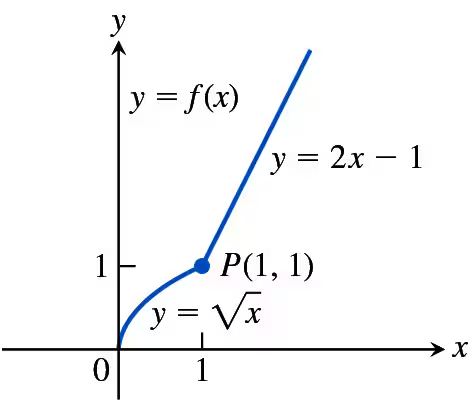
Compute the right-hand and left-hand derivatives as limits to show that the functions in Exercises 37–40 are not differentiable at the point P.
Problem 3.7.22
Second Derivatives
In Exercises 19–26, use implicit differentiation to find dy/dx and then d²y/dx². Write the solutions in terms of x and y only.
y² – 2x = 1 – 2y
Problem 3.1.22
In Exercises 19–22, find the slope of the curve at the point indicated.
y = (x − 1) / (x + 1), x = 0
Problem 3.9.18
Derivatives in Differential Form
In Exercises 17–28, find dy.
y = x√(1 − x²)
Problem 3
Finding Derivative Functions and Values
Using the definition, calculate the derivatives of the functions in Exercises 1–6. Then find the values of the derivatives as specified.
g(t) = 1/t²; g′(−1), g′(2), g′(√3)
Problem 3.6.77
Find ds/dt when θ = 3π/2 if s = cosθ and dθ/dt = 5.
Problem 3.9.20
Derivatives in Differential Form
In Exercises 17–28, find dy.
y = (2√x)/(3(1 + √x))