 Back
BackSpeciation and the Biological Species Concept
Study Guide - Smart Notes
 Tailored notes based on your materials, expanded with key definitions, examples, and context.
Speciation and the Biological Species Concept
Introduction to Speciation
Speciation is the evolutionary process by which populations evolve to become distinct species. Understanding speciation is central to evolutionary biology, as it explains both the origin of new species and the mechanisms that maintain species boundaries.
Speciation is the formation of new and distinct species in the course of evolution.
Evolutionary theory must explain both the origin of new species and how populations evolve over time.
What is a Species?
The definition of a species is fundamental to biology and underpins the study of biodiversity, evolution, and conservation. Several concepts exist to define what constitutes a species.
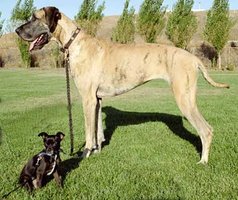
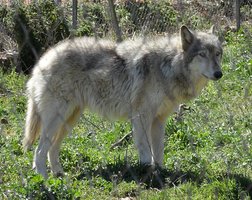
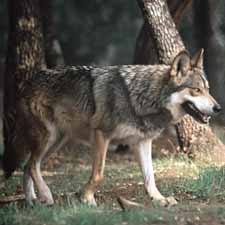
Species: A set of individuals closely related by descent from a common ancestor, capable of producing viable offspring with each other, but not with members of other groups.
Species are maintained by mechanisms that prevent gene flow between populations.


Microevolution vs. Macroevolution
Evolutionary changes can be categorized as microevolution or macroevolution, representing a continuum of genetic divergence.
Microevolution: Small changes in allele frequency within a population over time (adaptation).
Macroevolution: Broad patterns of evolutionary change above the species level, including speciation.
Species Concepts
Biologists use several concepts to define species, each with its own criteria and applications.
Morphological Species Concept: Defines species based on anatomical similarities and differences.
Phylogenetic Species Concept: Defines species as the smallest group of individuals sharing a common ancestor and unique derived traits.
Biological Species Concept: Defines species as groups of actually or potentially interbreeding natural populations that are reproductively isolated from other such groups.
The Biological Species Concept
The biological species concept is widely used and emphasizes reproductive isolation as the key criterion for defining species.
Species are groups of interbreeding natural populations that are reproductively isolated from other such groups.
Reproductive isolation prevents gene flow between populations, maintaining species boundaries.
Hybrids are offspring resulting from the mating of individuals from different species or populations.

Mechanisms of Reproductive Isolation
Reproductive isolation is essential for the maintenance of species and can occur before or after fertilization. These mechanisms are classified as prezygotic or postzygotic barriers.
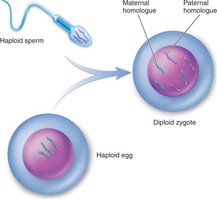
Prezygotic barriers: Prevent mating or fertilization between species.
Postzygotic barriers: Occur after fertilization, reducing the viability or fertility of hybrids.
Prezygotic Barriers
Habitat isolation: Species occupy different habitats within the same area and rarely encounter each other.
Temporal isolation: Species breed at different times or seasons.
Behavioral isolation: Differences in courtship rituals or behaviors prevent mating.
Mechanical isolation: Morphological differences prevent successful mating.
Gametic isolation: Sperm and egg are incompatible, preventing fertilization.
Examples of Prezygotic Barriers
Habitat isolation: Yellow lady’s slippers grow in forests, while white lady’s slippers grow in prairies. Garter snakes occupy aquatic vs. terrestrial habitats in the same area.
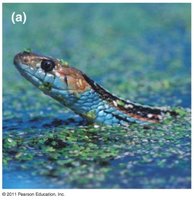
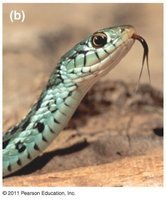

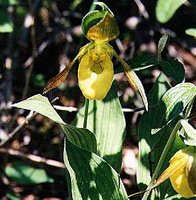
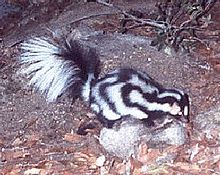
Temporal isolation: Western spotted skunk breeds in fall, eastern spotted skunk breeds in late winter to early spring, even though their ranges overlap.
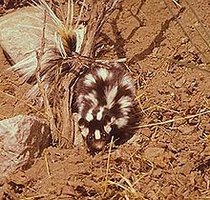
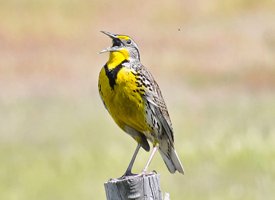
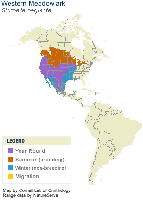
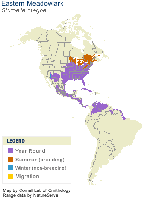
Behavioral isolation: Western and eastern meadowlarks have overlapping ranges but different songs, preventing interbreeding.
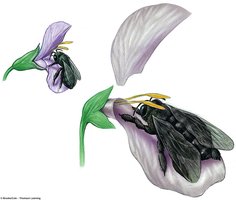
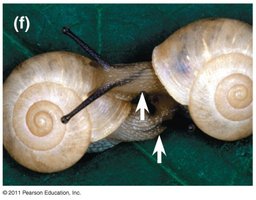
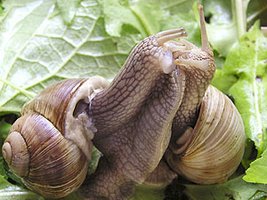
Mechanical isolation: Different species of snails have incompatible genital openings due to opposite shell spirals; certain flowers are pollinated only by specific bee sizes.
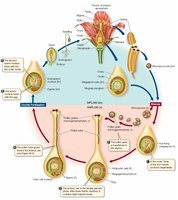
Gametic isolation: Pollen tube inhibition in flowering plants prevents fertilization between species.
Postzygotic Barriers
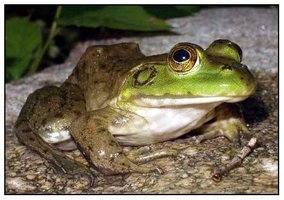
Reduced hybrid viability: Hybrid offspring fail to develop or reach sexual maturity (e.g., American bullfrog and green frog hybrids are inviable).
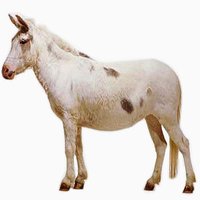
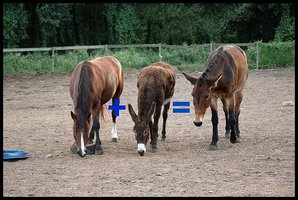
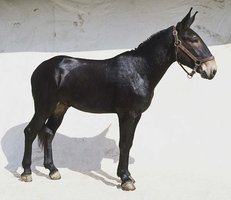
Reduced hybrid fertility: Hybrids are sterile (e.g., mules and hinnies, which are crosses between horses and donkeys).
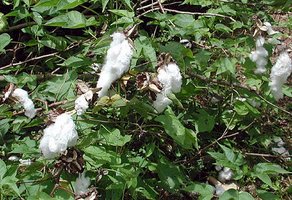
Hybrid breakdown: F1 hybrids are viable and fertile, but F2 offspring are weak or sterile (e.g., cotton plants Gossypium hirsutum and Gossypium barbadense).
Summary Table: Reproductive Isolating Mechanisms
Type | Barrier | Description | Example |
|---|---|---|---|
Prezygotic | Habitat isolation | Species occupy different habitats | Lady’s slippers, garter snakes |
Prezygotic | Temporal isolation | Species breed at different times | Spotted skunks |
Prezygotic | Behavioral isolation | Different courtship behaviors | Meadowlarks |
Prezygotic | Mechanical isolation | Morphological differences prevent mating | Snails, flowers and bees |
Prezygotic | Gametic isolation | Gametes cannot fuse | Pollen tube inhibition |
Postzygotic | Reduced hybrid viability | Hybrids fail to develop or mature | Bullfrog x Green frog |
Postzygotic | Reduced hybrid fertility | Hybrids are sterile | Mules, hinnies |
Postzygotic | Hybrid breakdown | F2 hybrids are weak or sterile | Cotton plants |
Evolutionary Perspective on Reproductive Isolation
Reproductive isolating mechanisms are not evolved with the purpose of preventing interbreeding. Instead, they are a consequence of genetic divergence and the lack of gene flow between populations. Over time, these barriers reinforce the separation of species.

Additional info: The study of speciation and reproductive isolation is crucial for understanding the diversity of life and the processes that generate new species. These mechanisms are central to evolutionary biology and have important implications for conservation and biodiversity management.
