 Back
BackIntroduction to Biology: The Study of Life
Study Guide - Smart Notes
 Tailored notes based on your materials, expanded with key definitions, examples, and context.
Introduction to Biology
What is Biology?
Biology is the scientific study of life and living organisms. The term comes from the Greek words for "life" (bios) and "the study of" (-logy), reflecting its focus on understanding the structure, function, growth, origin, evolution, and distribution of living things.
Prefix "bio-": Means "life".
Suffix "-ology": Means "the study of".
Diversity of Life: Life on Earth is incredibly diverse, ranging from microscopic organisms to large plants and animals. Most life forms are too small to be seen without a microscope.
Cell: The smallest, most basic/fundamental unit of life. All living things are composed of one or more cells.
Organism: Any individual form of life, which can be applied to all forms of life, from bacteria to plants and animals.
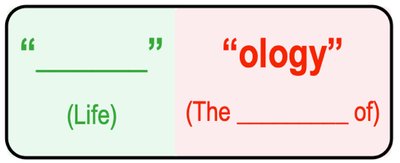
Example: The area of science that studies life and its processes is called biology.
Practice Question: The area of science that studies life and its processes is called: a) Archeology b) Astronomy c) Geology d) Biology e) Anthropology
Diversity of Life
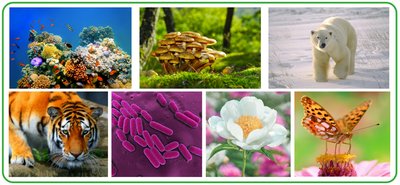
Life on Earth encompasses a vast array of organisms, including animals, plants, fungi, and microorganisms. This diversity is a central theme in biology, as scientists seek to understand both the unity and variety of living things.
Examples of Life Forms: Coral reefs, fungi, polar bears, tigers, bacteria, flowers, and butterflies all represent different domains and kingdoms of life.
Unicellular vs. Multicellular Organisms
Cellularity in Living Organisms
All living organisms are made up of cells, but they can be classified based on the number of cells they possess:
Unicellular Organisms: These are forms of life that consist of a single cell. They are usually only visible with the aid of a microscope. Examples include bacteria and many protists.
Multicellular Organisms: These organisms are composed of many cells, which may be specialized for different functions. Examples include plants, animals, and most fungi.
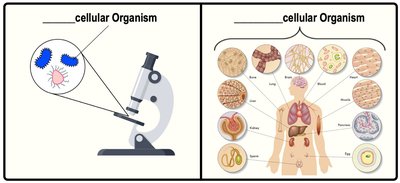
Example: All living organisms are either unicellular or multicellular.
Practice Question: All living organisms are: a) Eukaryotic b) Animals c) Multicellular d) Either uni- or multi-cellular
