 Back
BackChromosomes, Cell Cycle, and Cell Division: A Comprehensive Study Guide
Study Guide - Smart Notes
 Tailored notes based on your materials, expanded with key definitions, examples, and context.
Chromosomes and Chromatin
Structure and Types of Chromosomes
Chromosomes are highly organized structures of DNA and protein found in the nucleus of eukaryotic cells. They carry genetic information essential for inheritance and cellular function.
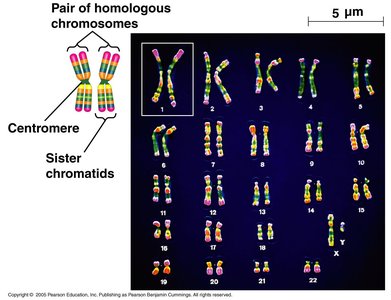
Homologous Chromosomes: Chromosomes that exist in pairs, one from each parent, and are similar in size, shape, and gene content.
Autosomes: Non-sex chromosomes; humans have 22 pairs.
Sex Chromosomes: Determine biological sex (XX in females, XY in males); X and Y are not homologous.
Sister Chromatids: Identical copies of a chromosome connected at the centromere, formed during DNA replication.
Chromosomes vs. Chromatin
DNA exists in two forms within the cell, depending on the stage of the cell cycle:
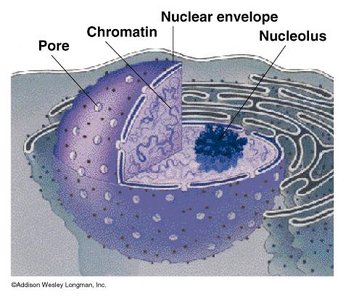
Chromatin: Loosely packed DNA, present during interphase, allowing access for transcription and replication.
Chromosomes: Condensed, tightly packed DNA, visible during cell division, ensuring accurate segregation.
Gene Loci and Alleles
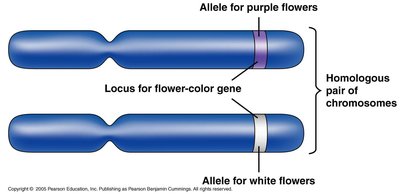
Genes are specific sequences of DNA located on chromosomes. Each gene has a specific position, or locus, and may exist in different forms called alleles.
Locus: The physical location of a gene on a chromosome.
Allele: A variant form of a gene; different alleles can result in different phenotypes.
The Cell Cycle
Phases of the Eukaryotic Cell Cycle
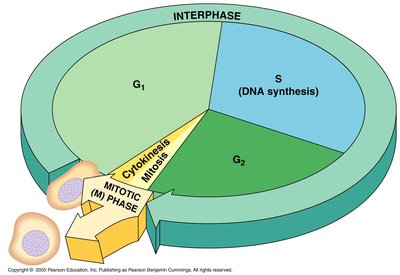
The cell cycle is the series of events that cells go through as they grow and divide. It consists of interphase (G1, S, G2) and the mitotic (M) phase.
G1 Phase (Gap 1): Cell growth and normal metabolic roles.
S Phase (Synthesis): DNA replication occurs, resulting in duplicated chromosomes (sister chromatids).
G2 Phase (Gap 2): Preparation for mitosis; further growth and protein synthesis.
M Phase (Mitosis and Cytokinesis): Division of the nucleus and cytoplasm to form two daughter cells.
Cell Division: Mitosis
Purpose and Overview
Mitosis is the process by which a eukaryotic cell divides its nucleus and genetic material to produce two genetically identical daughter cells. It is essential for growth, tissue repair, and asexual reproduction.
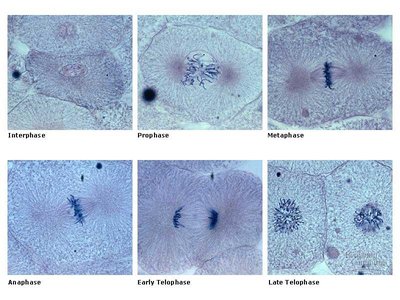
Prophase: Chromatin condenses into visible chromosomes; mitotic spindle forms; nucleolus disappears.
Metaphase: Chromosomes align at the metaphase plate; spindle fibers attach to centromeres.
Anaphase: Sister chromatids separate and move toward opposite poles.
Telophase: Chromosomes decondense; nuclear envelope reforms; cytokinesis begins.
Cytokinesis: Division of the cytoplasm, resulting in two separate cells.
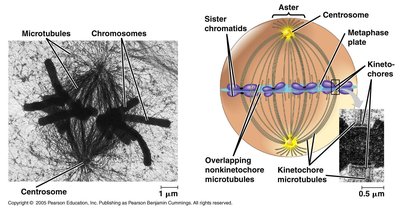
Mitotic Spindle and Chromosome Movement
The mitotic spindle is a structure made of microtubules that segregates chromosomes during mitosis. Centrosomes organize the spindle fibers, and kinetochores attach chromosomes to the spindle.
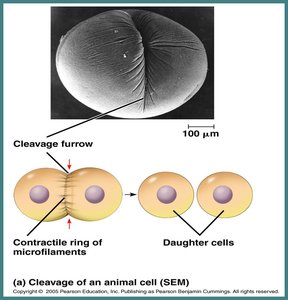
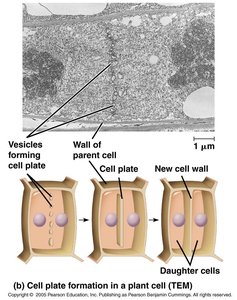
Cytokinesis in Animal and Plant Cells
Animal Cells: Cytokinesis occurs via cleavage furrow, where a contractile ring pinches the cell in two.
Plant Cells: Cytokinesis occurs via formation of a cell plate, which develops into a new cell wall separating the daughter cells.
Cell Division: Meiosis
Overview and Significance
Meiosis is a specialized form of cell division that reduces the chromosome number by half, producing four genetically unique haploid gametes. It is essential for sexual reproduction and genetic diversity.
Meiosis I: Homologous chromosomes separate, reducing chromosome number (reductional division).
Meiosis II: Sister chromatids separate (equational division), similar to mitosis.
Crossing Over: Exchange of genetic material between homologous chromosomes during prophase I, increasing genetic variation.
Independent Assortment: Random distribution of homologous chromosomes to gametes, further increasing diversity.
Human Sexual Life Cycle
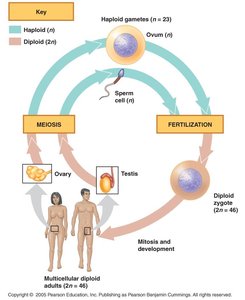
The human life cycle alternates between diploid (2n) and haploid (n) stages. Meiosis produces haploid gametes, which fuse during fertilization to restore diploidy.
Comparison of Mitosis and Meiosis
Feature | Mitosis | Meiosis |
|---|---|---|
Number of Divisions | 1 | 2 |
Number of Daughter Cells | 2 | 4 |
Chromosome Number in Daughter Cells | Diploid (2n) | Haploid (n) |
Genetic Identity | Identical to parent | Genetically unique |
Function | Growth, repair, asexual reproduction | Sexual reproduction |
Prokaryotic Cell Division: Binary Fission
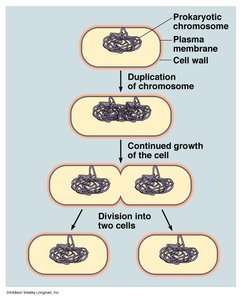
Prokaryotes, such as bacteria, divide by binary fission, a simpler process than mitosis. The single, circular chromosome is duplicated, and the cell splits into two genetically identical daughter cells.
Functions of Cell Division
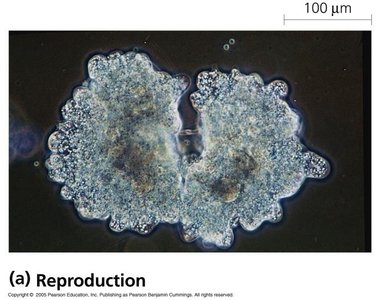
Reproduction: Unicellular organisms reproduce by cell division.
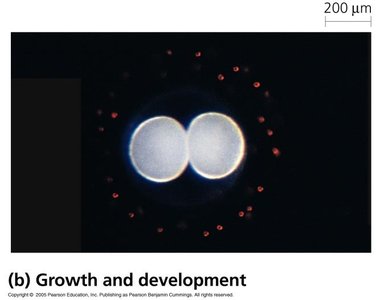
Growth and Development: Multicellular organisms grow by increasing cell number.
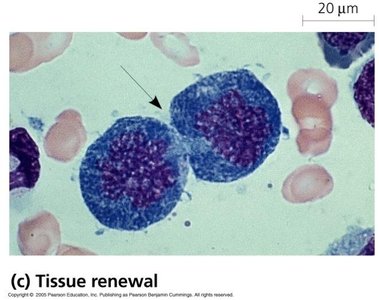
Tissue Renewal: Damaged or old cells are replaced by new cells.
Key Terms and Concepts
Centromere: Region where sister chromatids are joined; site of spindle attachment.
Chromatid: One of two identical halves of a duplicated chromosome.
Kinetochore: Protein structure on the centromere where spindle fibers attach.
Spindle Apparatus: Microtubule structure that separates chromosomes during cell division.
Tetrad: Structure formed by synapsis of homologous chromosomes during meiosis I.
Important Equations
Number of possible gametes due to independent assortment:
Where is the haploid number of chromosomes.
Number of possible zygotes from two parents:
Additional info: These equations do not account for genetic variation introduced by crossing over.
