 Back
BackBasic Chemistry for Biology: Atoms, Bonds, Water, and pH
Study Guide - Smart Notes
 Tailored notes based on your materials, expanded with key definitions, examples, and context.
Atoms and Atomic Structure
Definition and Components of Atoms
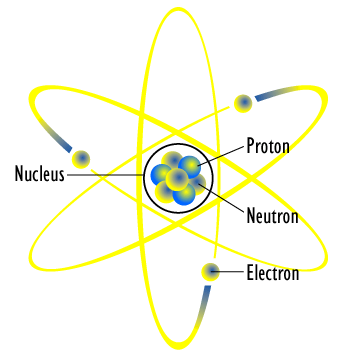
An atom is the smallest unit of an element that retains the properties of that element. Atoms are composed of three main subatomic particles:
Proton: Positively charged particle located in the nucleus.
Neutron: Neutrally charged particle also found in the nucleus.
Electron: Negatively charged particle that orbits the nucleus in energy levels.
Energy Levels and Electron Configuration
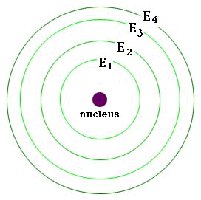
Electrons occupy specific energy levels around the nucleus. Each level can hold a certain number of electrons:
First energy level: up to 2 electrons
Second energy level: up to 8 electrons
Third energy level: up to 18 electrons (for basic biology, often simplified to 8)
All occupied energy levels must be full for an atom to be stable. For example, an atom with 8 electrons will have 2 in the first level and 6 in the second, which is not stable because the second level is not full.
Elements and the Periodic Table
Definition of Elements
An element is a pure substance that cannot be broken down into simpler substances by chemical means. There are 90 naturally occurring elements, but only 25 are essential for life. Four elements—carbon (C), hydrogen (H), nitrogen (N), and oxygen (O)—make up 96% of the mass of a human body.
Atomic Number and Atomic Mass
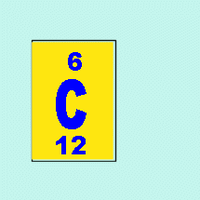
Atomic Number: The number of protons in an atom, which also equals the number of electrons in a neutral atom.
Atomic Mass: The sum of protons and neutrons in the nucleus.
Determining Subatomic Particles
Number of protons = atomic number
Number of electrons = atomic number (unless the atom is an ion)
Number of neutrons = atomic mass - atomic number
Ions and Isotopes
Ion: An atom with a net charge due to loss or gain of electrons. Protons do not change.
Isotope: Atoms of the same element with different numbers of neutrons (e.g., Carbon-12, Carbon-13, Carbon-14).
Chemical Bonds and Molecules
Compounds and Molecules
Compound: Substance formed when two or more different elements bond together (e.g., NaCl, H2O).
Molecule: Group of atoms held together by covalent bonds (e.g., O2).
Covalent Bonds
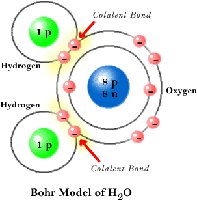
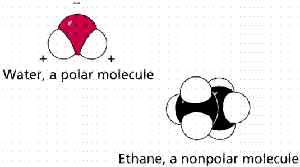
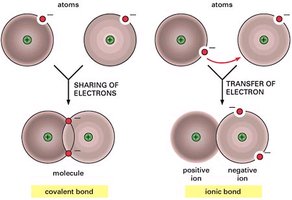
Covalent bonds form when two atoms share electrons. These are common in organic compounds.
Polar vs. Nonpolar Covalent Bonds
Polar Bond: Electrons are shared unequally, resulting in partial charges (e.g., H2O).
Nonpolar Bond: Electrons are shared equally (e.g., H2).
Ionic Bonds
Ionic bonds form when electrons are transferred from one atom to another, creating oppositely charged ions that attract each other (e.g., Na+ and Cl- form NaCl).
Hydrogen Bonds
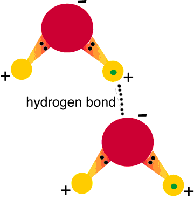
Hydrogen bonds are weak attractions between a hydrogen atom (already covalently bonded to a highly electronegative atom) and another electronegative atom. These bonds are crucial for the structure of water and many biological molecules.
Water: Properties and Importance
Importance of Water
Provides a medium for chemical reactions
Makes up 75-90% of living organisms
Hydrogen bonding gives water unique properties
Polarity of Water
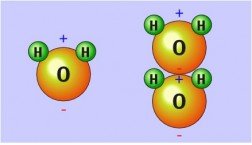
Water is a polar molecule due to the uneven distribution of electrons between oxygen and hydrogen atoms. Oxygen has a stronger pull on electrons, making it slightly negative and hydrogen slightly positive.
Properties of Water
Cohesion: Attraction between molecules of the same substance, leading to surface tension.
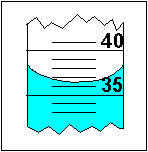
Adhesion: Attraction between molecules of different substances, causing phenomena like the meniscus in a graduated cylinder and capillary action.
High Specific Heat Capacity: Water can absorb large amounts of heat due to hydrogen bonding, helping organisms maintain stable temperatures.
Evaporative Cooling: As water evaporates, it removes heat, which is important for processes like sweating.
Versatile Solvent: Water's polarity allows it to dissolve many substances, making it an excellent solvent in biological systems.
Solutions and pH
Solutions
Solution: A homogeneous mixture of a solute dissolved in a solvent.
Solute: The substance being dissolved (e.g., iced tea mix).
Solvent: The substance doing the dissolving (e.g., water).
pH: Acids and Bases
The pH scale measures the concentration of hydrogen ions (H+) versus hydroxide ions (OH-) in a solution, ranging from 0 (most acidic) to 14 (most basic). Pure water has a pH of 7 (neutral).
Acid: Substance with more H+ ions, pH below 7 (e.g., HCl in water).
Base: Substance with more OH- ions, pH above 7 (e.g., NaOH in water).
Substance | pH Value |
|---|---|
Pure Water | 7.0 |
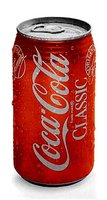
Soda | 3.0 |
Hair Remover (Nair) | 13.0 |

Chemical Equations
Reactants, Products, Coefficients, and Subscripts
Chemical equations represent the transformation of reactants into products. For example:
Reactants: Substances that start the reaction (left side).
Products: Substances formed by the reaction (right side).
Coefficients: Numbers before compounds, indicating the number of molecules (e.g., 6CO2 means 6 molecules of CO2).
Subscripts: Numbers within formulas indicating the number of atoms in a molecule (e.g., H2O has 2 hydrogens per molecule).
