 Back
BackBiochemistry Foundations: Introduction, Water, and the Chemistry of Life
Study Guide - Smart Notes
 Tailored notes based on your materials, expanded with key definitions, examples, and context.
Introduction to Biochemistry
What is Biochemistry?
Biochemistry is the scientific discipline that explores the chemical processes and substances that occur within living organisms. It seeks to answer fundamental questions such as “What are we made of?” and “How do we work?” by examining both the structures and the physical and chemical processes of biological molecules.
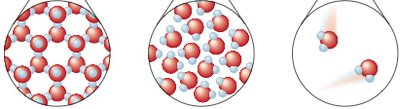
Physical processes: Changes that do not alter the chemical composition of a substance (e.g., melting or evaporating water).
Chemical processes: Changes that result in a new chemical composition (e.g., electrolysis of water).
Biochemistry is inherently multidisciplinary, integrating biology, chemistry, physics, and more.
Applications include medicine, industry, agriculture, technology, and nutrition.


Characteristics of Life
Defining Life and Its Organization
All living organisms share a set of characteristics that distinguish them from nonliving matter. These include organization, metabolism, homeostasis, growth, response to stimuli, reproduction, and evolution.
Cellular organization: All life is composed of cells, the basic unit of life.
Metabolism: The sum of all chemical reactions that extract and transform energy.
Homeostasis: Regulation and maintenance of a stable internal environment.
Growth and development: Organisms increase in size and complexity.
Response to stimuli: Ability to react to environmental changes.
Reproduction: Capacity to produce new life, sexually or asexually.
Heredity: Transmission of genetic information (DNA) to offspring.
Evolution: Genetic changes over time leading to adaptation.


Abiogenesis: The Origin of Life
How Did Life Begin?
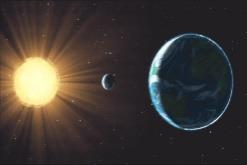
Abiogenesis describes the natural process by which life arose from nonliving matter, approximately 3.8 billion years ago. Theories include:
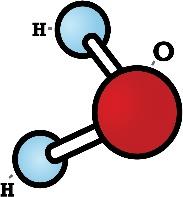
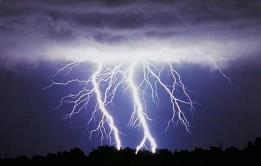
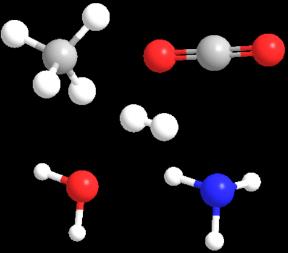
Atmospheric conversion theory: Lightning and solar radiation converted prebiotic molecules (H2, H2O, NH3, CO2, CH4) into simple biomolecules.
Hydrothermal vent theory: Ocean floor vents provided energy for the formation of biomolecule monomers.
Polymerization on mineral surfaces: Charged surfaces like clay facilitated the alignment and polymerization of monomers.
Membrane formation: Lipid membranes enclosed pools of biomolecules, forming protocells.
Double Origin Theory: Coding systems and enzyme catalysis developed in separate protocells and later merged.
RNA World Hypothesis: RNA was likely the first genetic material due to its ability to encode information and catalyze reactions.
Nucleic Acids
Structure and Function
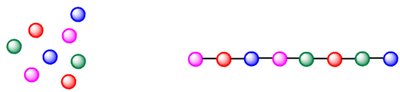
Nucleic acids (DNA, RNA, and related molecules) are polymers of nucleotide monomers and are essential for storing and transmitting hereditary information.
Nucleotide structure: Each nucleotide contains a phosphate group, a pentose sugar (ribose or deoxyribose), and a nitrogenous base.
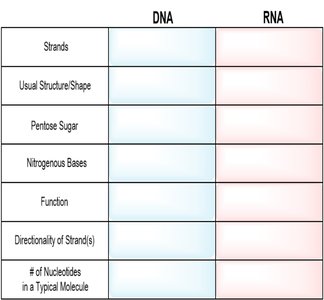
DNA vs. RNA: DNA is usually double-stranded, contains deoxyribose, and uses thymine; RNA is usually single-stranded, contains ribose, and uses uracil.
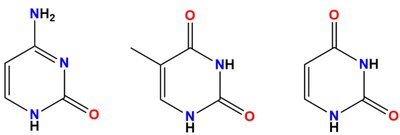
Nitrogenous bases: Purines (adenine, guanine) and pyrimidines (cytosine, thymine, uracil).
Base pairing: Hydrogen bonds form between complementary bases (A-T/U, G-C).
Proteins
Structure and Function
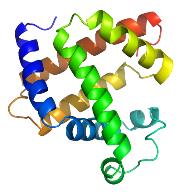
Proteins are polymers of amino acids and perform a vast array of structural and functional roles in cells.
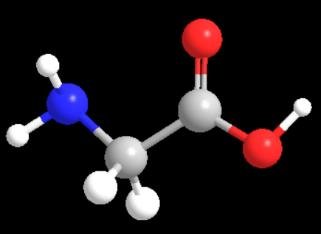
Amino acid structure: Central α-carbon, hydrogen atom, amino group (N-terminal), carboxyl group (C-terminal), and unique R-group.
Levels of protein structure:
Primary: Sequence of amino acids.
Secondary: Local folding into α-helices and β-pleated sheets.
Tertiary: Overall 3D shape.
Quaternary: Association of multiple polypeptide chains.
Enzymes: Proteins that catalyze biochemical reactions without being consumed.
Carbohydrates
Structure and Function
Carbohydrates are sugars composed of carbon, hydrogen, and oxygen, typically with the formula Cn(H2O)n. They serve as primary short-term energy sources and structural components.
Monosaccharides: Simple sugars, water-soluble, sweet-tasting.
Polysaccharides: Polymers of monosaccharides (e.g., starch, glycogen, cellulose, chitin, peptidoglycan).
Glycosidic bonds: Link monosaccharides in polysaccharides.
Functions: Energy storage (starch in plants, glycogen in animals), structural support (cellulose in plants, chitin in fungi and arthropods).
Lipids
Structure and Function
Lipids are hydrophobic macromolecules with diverse structures and functions, including energy storage, membrane structure, and signaling.
Types: Fats, oils, waxes, phospholipids, steroids.
Phospholipids: Amphipathic molecules with hydrophilic heads and hydrophobic tails, forming the basis of cell membranes.
Cell membranes: Composed of a phospholipid bilayer, proteins, cholesterol, glycolipids, and glycoproteins.
Fluid mosaic model: Describes the dynamic and heterogeneous nature of the plasma membrane.
Taxonomy and Domains of Life
Classification of Living Organisms
Taxonomy is the science of classifying, identifying, and naming living organisms. The three domains of life are Bacteria, Archaea, and Eukarya.
Bacteria and Archaea: Prokaryotic, single-celled, lack a membrane-bound nucleus.
Eukarya: Eukaryotic, possess a membrane-bound nucleus, include multicellular and some unicellular organisms.
Hierarchy: Domain, Kingdom, Phylum, Class, Order, Family, Genus, Species.
Cell Organelles
Structure and Function
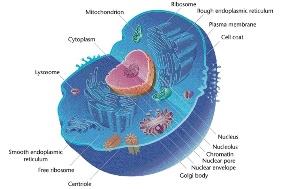
Cells contain specialized subcellular structures called organelles, each with distinct functions. Eukaryotic cells have membrane-bound organelles, while prokaryotic cells do not.
Nucleus: Stores and protects DNA, controls nuclear transport.
Endoplasmic reticulum (ER): Rough ER (protein folding/modification), Smooth ER (lipid synthesis, detoxification).
Golgi apparatus: Modifies and ships proteins/lipids.
Lysosomes: Vesicles with digestive enzymes for recycling cellular components.
Ribosomes: Sites of protein synthesis (translation), composed of rRNA and proteins.
Cytoskeleton: Provides shape, movement, and transport within the cell.
Endosymbiotic Theory
Origin of Mitochondria and Chloroplasts
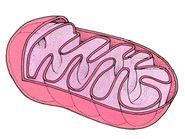
The endosymbiotic theory proposes that mitochondria and chloroplasts originated as free-living prokaryotes engulfed by ancestral eukaryotic cells. Over time, these endosymbionts became integral organelles.
Evidence: Both organelles have circular DNA, 70S ribosomes, and replicate by binary fission.
Mitochondria: Site of aerobic respiration and ATP production.
Chloroplasts: Site of photosynthesis in plants and algae.
Central Dogma of Molecular Biology
Flow of Genetic Information
The central dogma describes the unidirectional flow of genetic information: DNA is transcribed into RNA, which is then translated into protein.
Transcription: Synthesis of RNA from a DNA template by RNA polymerase.
Translation: Synthesis of proteins at ribosomes using mRNA as a template and tRNA for amino acid delivery.
Genetic code: Triplet codons in mRNA specify amino acids.
Functional Groups in Biomolecules
Key Chemical Groups
Functional groups are specific groupings of atoms within molecules that confer characteristic chemical properties and reactivity. Common in biomolecules, they include:
Amino group (-NH2): Found in amino acids and proteins.
Carboxyl group (-COOH): Found in amino acids, fatty acids.
Hydroxyl group (-OH): Abundant in carbohydrates.
Phosphate group (-PO4): Found in nucleotides and nucleic acids.
Sulfhydryl group (-SH): Found in some amino acids (e.g., cysteine).
Essential elements for life include carbon, hydrogen, nitrogen, oxygen, phosphorus, and sulfur (CHNOPS), with trace elements also required.
Chemical Bonds
Types and Properties
Chemical bonds are the forces that hold atoms together in molecules. They are classified as:
Intramolecular bonds: Within a molecule (e.g., covalent, ionic).
Intermolecular forces: Between molecules (e.g., hydrogen bonds, van der Waals forces, dipole-dipole interactions).
Covalent bonds: Atoms share electrons (can be polar or nonpolar depending on electronegativity).
Ionic bonds: Attraction between oppositely charged ions.
Hydrogen bonds: Weak interactions involving hydrogen and electronegative atoms (N, O, F).
Organic Chemistry in Biochemistry
Structure and Stereochemistry
Organic chemistry focuses on carbon-containing compounds, which are central to biochemistry. Stereochemistry examines the spatial arrangement of atoms:
Isomers: Molecules with the same formula but different structures.
Chirality: Carbon atoms bonded to four different groups, leading to enantiomers (mirror-image isomers).
Resonance: Delocalization of electrons within a molecule, stabilizing its structure.
Thermodynamics and Entropy
Energy and Disorder in Biological Systems
Thermodynamics governs the flow and transformation of energy in biological systems. Entropy (S) measures disorder; the second law states that entropy of the universe always increases in spontaneous processes.
Gibbs Free Energy (G): Determines spontaneity of reactions.
Exergonic reactions: Release energy, spontaneous ().
Endergonic reactions: Require energy input, nonspontaneous ().
Equilibrium: Forward and reverse reaction rates are equal; no net change in concentrations; .
Equilibrium constant (K_{eq}): Ratio of product to reactant concentrations at equilibrium.
Example equation: Where is the reaction quotient, is the gas constant, and is temperature in Kelvin.
