Back

Summary of Membrane Transport definitions

Control buttons has been changed to "navigation" mode.
1/15
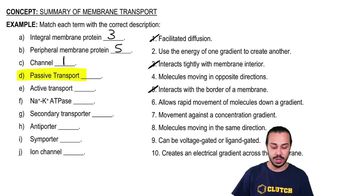
  • Passive Transport

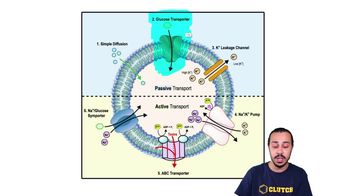
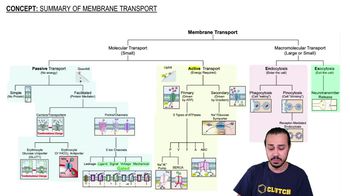
    Movement of molecules across membranes without energy input, following their concentration gradient from high to low concentration.
  • Active Transport

    Energy-dependent movement of molecules across membranes against their concentration gradient, from low to high concentration.
  • Simple Diffusion

    Direct passage of molecules between phospholipids in a membrane, requiring no protein mediator or energy.
  • Facilitated Diffusion

    Transport of molecules across membranes via protein mediators, allowing movement down concentration gradients without energy.
  • Carrier

    Protein mediator that undergoes conformational change to transport molecules across membranes down their concentration gradient.
  • Channel

    Membrane protein forming a tunnel for molecules or ions to diffuse across membranes, often without conformational change.
  • Leakage Ion Channel

    Type of channel that remains open, permitting continuous ion flow down concentration gradients across membranes.
  • Ligand Gated Ion Channel

    Channel that opens or closes in response to extracellular molecules binding, regulating ion movement across membranes.
  • Voltage Gated Ion Channel

    Channel that responds to changes in transmembrane potential, controlling ion flow across membranes.
  • Primary Active Transport

    Transport process directly powered by ATP hydrolysis, moving molecules against their concentration gradient.
  • Secondary Active Transport

    Transport process using an ion gradient, indirectly powered by ATP hydrolysis, to move molecules against their gradient.
  • P-type ATPase

    Membrane protein that becomes phosphorylated during ATP hydrolysis, facilitating ion transport, such as sodium-potassium pump.
  • ABC Transporter

    Protein with transmembrane and nucleotide binding domains, hydrolyzing ATP to export drugs and toxins from cells.
  • Endocytosis

    Cellular process for internalizing molecules, including phagocytosis, pinocytosis, and receptor-mediated mechanisms.
  • Exocytosis

    Cellular process for releasing molecules, exemplified by neurotransmitter secretion using snare fusion proteins.