Back

Liver vs Muscle Glycogen Phosphorylase definitions

Control buttons has been changed to "navigation" mode.
1/15
  • Glycogen Phosphorylase

    Enzyme responsible for catalyzing glycogen breakdown, releasing glucose 1 phosphate for energy or export.
  • Liver Glycogen Phosphorylase

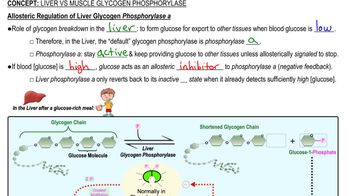
    Form of the enzyme in liver cells, primarily active to supply glucose to other tissues unless inhibited by high blood glucose.
  • Muscle Glycogen Phosphorylase

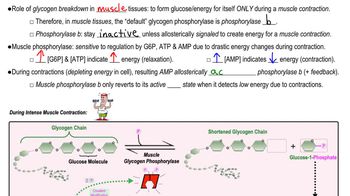
    Form of the enzyme in muscle cells, usually inactive and activated during muscle contraction to provide energy.
  • Phosphorylase a

    Active enzyme form, present in liver and muscle, catalyzing glycogen breakdown when not inhibited.
  • Phosphorylase b

    Inactive enzyme form, default in muscle, reverts to active state during low energy conditions.
  • Allosteric Regulation

    Control of enzyme activity by molecules binding at sites other than the active site, affecting function.
  • Allosteric Inhibition

    Reduction of enzyme activity by a molecule binding to a regulatory site, often resulting in negative feedback.
  • Allosteric Activation

    Enhancement of enzyme activity by a molecule binding to a regulatory site, often resulting in positive feedback.
  • Negative Feedback

    Regulatory mechanism where high product levels inhibit enzyme activity, maintaining homeostasis.
  • Positive Feedback

    Regulatory mechanism where low energy signals enhance enzyme activity, promoting energy production.
  • Glucose

    Monosaccharide acting as an allosteric inhibitor in liver, signaling sufficient energy availability.
  • Glucose 1 Phosphate

    Product of glycogen breakdown, intermediate in conversion to glucose or glucose 6 phosphate.
  • Glucose 6 Phosphate

    Intermediate in glycolysis, indicator of high energy in muscle, inhibits glycogen breakdown during relaxation.
  • ATP

    High energy molecule, signals muscle relaxation and inhibits glycogen breakdown via negative feedback.
  • AMP

    Low energy molecule, signals muscle contraction and activates glycogen breakdown via positive feedback.