Back

Inhibitory Adenylate Cyclase GPCR Signaling definitions

Control buttons has been changed to "navigation" mode.
1/15
  • Adenylate Cyclase

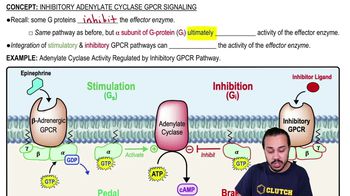
    Effector enzyme regulated by GPCRs, responsible for converting ATP into cAMP, with activity modulated by stimulatory and inhibitory G proteins.
  • GPCR

    Membrane receptor that detects extracellular signals and activates intracellular G proteins, initiating biosignaling cascades.
  • cAMP

    Secondary messenger produced from ATP by adenylate cyclase, crucial for transmitting signals within cells.
  • G Protein

    Intracellular protein complex activated by GPCRs, consisting of alpha, beta, and gamma subunits, mediating signal transduction.
  • Alpha Subunit

    Component of G protein that dissociates upon activation, directly influencing effector enzymes like adenylate cyclase.
  • GI

    Inhibitory alpha subunit of G protein that reduces adenylate cyclase activity, decreasing cAMP production.
  • GS

    Stimulatory alpha subunit of G protein that enhances adenylate cyclase activity, increasing cAMP production.
  • Beta Adrenergic GPCR

    Specific GPCR subtype involved in adenylate cyclase signaling, responsive to ligands like epinephrine.
  • BARK

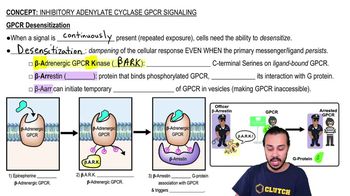
    Kinase that phosphorylates ligand-bound beta adrenergic GPCRs, marking them for desensitization.
  • Beta Arrestin

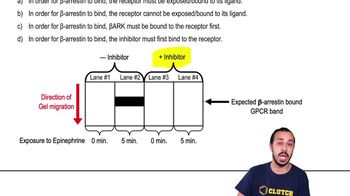
    Protein that binds phosphorylated GPCRs, blocking G protein interaction and facilitating receptor endocytosis.
  • Desensitization

    Cellular process where response to persistent signals is reduced, even if the ligand remains present.
  • Endocytosis

    Mechanism by which GPCRs are internalized into the cell, making them temporarily inaccessible to extracellular ligands.
  • Ligand

    Molecule that binds to a receptor, such as a GPCR, triggering conformational changes and signaling events.
  • ATP

    Cellular energy molecule converted by adenylate cyclase into cAMP during signal transduction.
  • Phosphorylation

    Addition of phosphate groups to proteins, such as GPCRs, often altering their function or signaling capacity.