Back

Erythrocyte Facilitated Transporter Models definitions

Control buttons has been changed to "navigation" mode.
1/15
  • Erythrocyte

    A red blood cell responsible for transporting oxygen and carbon dioxide in the bloodstream.
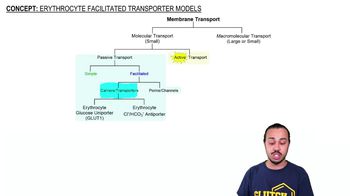
  • Facilitated Passive Transport

    A membrane process where specific proteins enable movement of molecules down their concentration gradient without energy input.
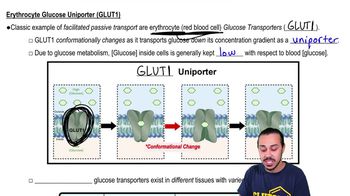
  • Uniporter

    A transporter protein that moves a single type of molecule in one direction across a membrane.
  • GLUT1

    A glucose transporter found in most cells, crucial for basal glucose uptake via conformational changes.
  • Concentration Gradient

    A difference in molecule concentration across a membrane, driving passive movement from high to low regions.
  • Basal Glucose Uptake

    The essential process of importing glucose into cells to maintain energy supply under normal conditions.
  • Antiporter

    A membrane protein that exchanges two different molecules in opposite directions across a cell membrane.
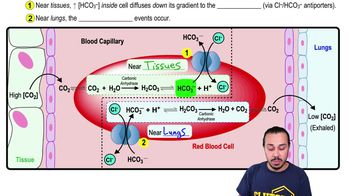
  • Chloride Bicarbonate Antiporter

    A transporter in red blood cells exchanging chloride and bicarbonate ions to regulate blood pH and CO2 transport.
  • Chloride Shift

    The exchange of chloride and bicarbonate ions across erythrocyte membranes, crucial for CO2 removal and pH balance.
  • Carbonic Anhydrase

    An enzyme in red blood cells catalyzing the conversion of carbon dioxide and water to bicarbonate and protons.
  • Bicarbonate Anion

    A negatively charged ion formed from carbon dioxide, vital for buffering blood pH and transporting CO2.
  • Blood pH

    A measure of acidity in blood, tightly regulated by ion exchanges to preserve enzyme function and physiological balance.
  • Physiological Homeostasis

    The maintenance of stable internal conditions, such as pH and ion balance, essential for proper cellular function.
  • Plasma Membrane

    The lipid bilayer enclosing cells, hosting transport proteins that regulate molecule movement in and out.
  • Respiring Tissues

    Body tissues actively producing carbon dioxide as a result of cellular metabolism.