Back

Endosymbiotic Theory quiz

Control buttons has been changed to "navigation" mode.
1/15
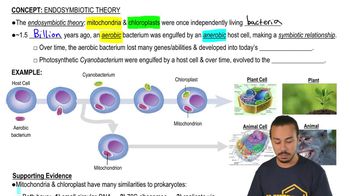
  • What does the endosymbiotic theory propose about the origin of mitochondria and chloroplasts?

    It proposes that mitochondria and chloroplasts originated from independent bacteria engulfed by a host eukaryotic cell.
  • From what type of bacteria did mitochondria evolve according to the endosymbiotic theory?

    Mitochondria evolved from aerobic bacteria that use oxygen in their metabolism.
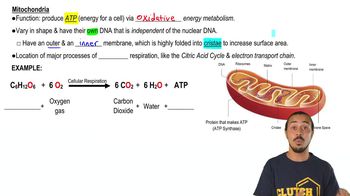
  • What is the primary function of mitochondria in eukaryotic cells?

    The primary function of mitochondria is to produce ATP through oxidative metabolism.
  • What evidence supports the endosymbiotic theory regarding the DNA of mitochondria and chloroplasts?

    Both mitochondria and chloroplasts contain their own small, circular DNA, similar to prokaryotes.
  • How do mitochondria and chloroplasts replicate, and what does this suggest about their origin?

    They replicate via binary fission, which is characteristic of prokaryotes, supporting their bacterial origin.
  • What type of ribosomes are found in mitochondria and chloroplasts, and why is this significant?

    They contain 70S ribosomes, which are typical of prokaryotes, further supporting the endosymbiotic theory.
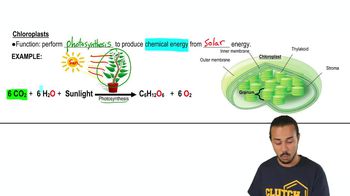
  • What is the main function of chloroplasts in plant cells?

    Chloroplasts perform photosynthesis, converting carbon dioxide, water, and sunlight into glucose and oxygen.
  • Describe the membrane structure of mitochondria.

    Mitochondria have a double membrane: an outer membrane and a highly folded inner membrane called cristae.
  • What are the main reactants and products of cellular respiration in mitochondria?

    The main reactants are glucose and oxygen, and the products are carbon dioxide, water, and ATP.
  • What is the stroma in a chloroplast?

    The stroma is the fluid-filled internal space of the chloroplast where some photosynthetic reactions occur.
  • What are thylakoids and grana in chloroplasts?

    Thylakoids are membrane-bound sacs, and stacks of thylakoids are called grana.
  • Where do the major processes of cellular respiration occur within the mitochondria?

    The citric acid cycle occurs in the mitochondrial matrix, and the electron transport chain occurs in the inner membrane.
  • What enzyme in mitochondria is responsible for producing most of the cell's ATP?

    ATP synthase is the enzyme that produces the bulk of ATP in mitochondria.
  • What are the two major processes of photosynthesis and where do they occur in the chloroplast?

    Photosynthesis consists of two major processes: one occurs in the thylakoid membranes and the other in the stroma.
  • How did the engulfment of different bacteria lead to the evolution of plant and animal cells?

    Host cells that engulfed only aerobic bacteria became animal cells with mitochondria, while those that also engulfed cyanobacteria became plant cells with both mitochondria and chloroplasts.