Back

Endosymbiotic Theory definitions

Control buttons has been changed to "navigation" mode.
1/16
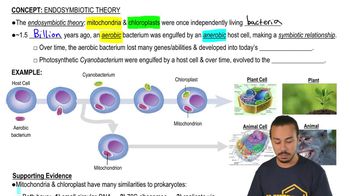
  • Endosymbiotic Theory

    Explains the origin of mitochondria and chloroplasts as formerly independent bacteria engulfed by a host cell, leading to eukaryotic cell complexity.
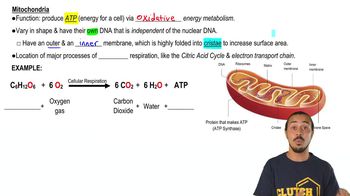
  • Mitochondria

    Organelle responsible for ATP production via oxidative metabolism, featuring a double membrane, circular DNA, and 70S ribosomes.
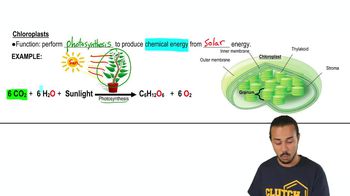
  • Chloroplast

    Organelle in plant cells that converts solar energy into chemical energy through photosynthesis, containing a double membrane and internal structures.
  • Eukaryotic Cell

    Cell type characterized by a nucleus and membrane-bound organelles, including mitochondria and chloroplasts.
  • Aerobic Bacterium

    Microorganism capable of using oxygen for metabolism, considered the ancestor of mitochondria in the endosymbiotic theory.
  • Cyanobacterium

    Photosynthetic prokaryote believed to be the precursor of chloroplasts, providing the ability to convert sunlight into energy.
  • Double Membrane

    Structural feature of mitochondria and chloroplasts, consisting of two lipid bilayers, supporting their prokaryotic origin.
  • Circular DNA

    Genetic material found in mitochondria and chloroplasts, distinct from nuclear DNA, resembling prokaryotic genomes.
  • 70S Ribosome

    Protein synthesis machinery present in mitochondria and chloroplasts, similar to those found in prokaryotes.
  • Binary Fission

    Replication method used by mitochondria and chloroplasts, mirroring the division process of prokaryotic cells.
  • Cristae

    Highly folded inner membrane structures in mitochondria, increasing surface area for energy production.
  • Intermembrane Space

    Region between the inner and outer membranes of mitochondria, crucial for electron transport chain activities.
  • Mitochondrial Matrix

    Innermost compartment of mitochondria, site of the citric acid cycle and other metabolic reactions.
  • Stroma

    Fluid-filled interior of chloroplasts, hosting reactions of photosynthesis and containing grana and thylakoids.
  • Thylakoid

    Disk-shaped membrane structures within chloroplasts, location of light-dependent reactions of photosynthesis.
  • Granum

    Stack of thylakoids within the stroma of chloroplasts, increasing surface area for photosynthetic processes.