Back

Endocytosis & Exocytosis definitions

Control buttons has been changed to "navigation" mode.
1/15
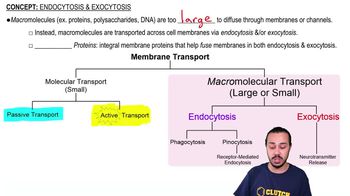
  • Macromolecule

    Large biological molecule, such as protein, polysaccharide, or DNA, unable to cross membranes by simple diffusion.
  • Integral Membrane Protein

    Protein embedded within the cell membrane, essential for processes like membrane fusion during transport.
  • Fusion Protein

    Specialized membrane protein facilitating the merging of vesicle and cell membranes during transport events.
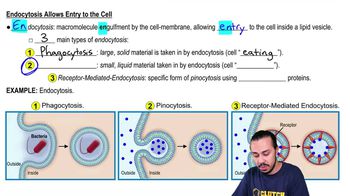
  • Endocytosis

    Cellular process forming a lipid vesicle to internalize macromolecules from the external environment.
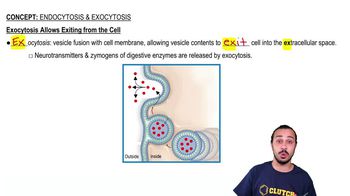
  • Exocytosis

    Cellular mechanism releasing vesicle contents, such as neurotransmitters, into the extracellular space.
  • Phagocytosis

    Type of endocytosis involving uptake of large, solid particles, often used by immune cells for defense.
  • Pinocytosis

    Form of endocytosis where small, liquid materials are internalized, commonly referred to as cellular drinking.
  • Receptor-Mediated Endocytosis

    Specific pinocytosis subtype utilizing membrane receptors for selective uptake of molecules.
  • Lipid Vesicle

    Membrane-bound compartment formed during endocytosis or exocytosis, enclosing transported substances.
  • Plasma Membrane

    Cell boundary composed of a lipid bilayer, involved in vesicle fusion and macromolecule transport.
  • Extracellular Space

    Area outside the cell where substances are released during exocytosis.
  • Neurotransmitter

    Chemical messenger released from cells via exocytosis, facilitating communication between neurons.
  • Zymogen

    Inactive enzyme precursor released by exocytosis, later activated for digestive functions.
  • Receptor Protein

    Membrane protein recognizing and binding specific molecules, crucial for selective endocytosis.
  • Immunity

    Biological defense mechanism, often involving phagocytosis to protect against harmful invaders.