Ch. 7 The Axial Skeleton
Martini - Fundamentals of Anatomy and Physiology 12th Edition
Martini, Nath, Bartholomew12th EditionFundamentals of Anatomy and PhysiologyISBN: 9780137854011Not the one you use?Change textbook
Chapter 7, Problem 6

Blood vessels that drain blood from the head pass through the:
(a) Jugular foramina
(b) Hypoglossal canals
(c) Stylomastoid foramina
(d) Mental foramina
(e) Lateral canals

Verified step by step guidance
1
Step 1: Understand the anatomy of the skull and the pathways for blood vessels draining the head. Blood vessels, specifically veins, that drain blood from the brain and head must pass through specific openings in the skull called foramina.
Step 2: Identify the function of each foramen listed in the options: (a) Jugular foramina allow passage of the internal jugular vein and cranial nerves; (b) Hypoglossal canals transmit the hypoglossal nerve; (c) Stylomastoid foramina transmit the facial nerve; (d) Mental foramina allow passage of blood vessels and nerves to the chin; (e) Lateral canals are not a standard anatomical term for foramina in the skull.
Step 3: Recognize that the internal jugular vein is the main vessel draining blood from the brain and head, and it exits the skull through the jugular foramen.
Step 4: Conclude that the blood vessels draining blood from the head pass through the jugular foramina, as this is the anatomical structure designed for venous drainage from the brain.
Step 5: Therefore, the correct answer is the jugular foramina, option (a).

Verified video answer for a similar problem:

This video solution was recommended by our tutors as helpful for the problem above.
Video duration:
2m
Was this helpful?

Key Concepts

Here are the essential concepts you must grasp in order to answer the question correctly.

Jugular Foramina

The jugular foramina are paired openings located at the base of the skull, allowing passage of important structures including the internal jugular veins, which drain blood from the brain and head. Understanding their anatomy is crucial for identifying the route of venous drainage from the head.
Recommended video:
Guided course
2:25
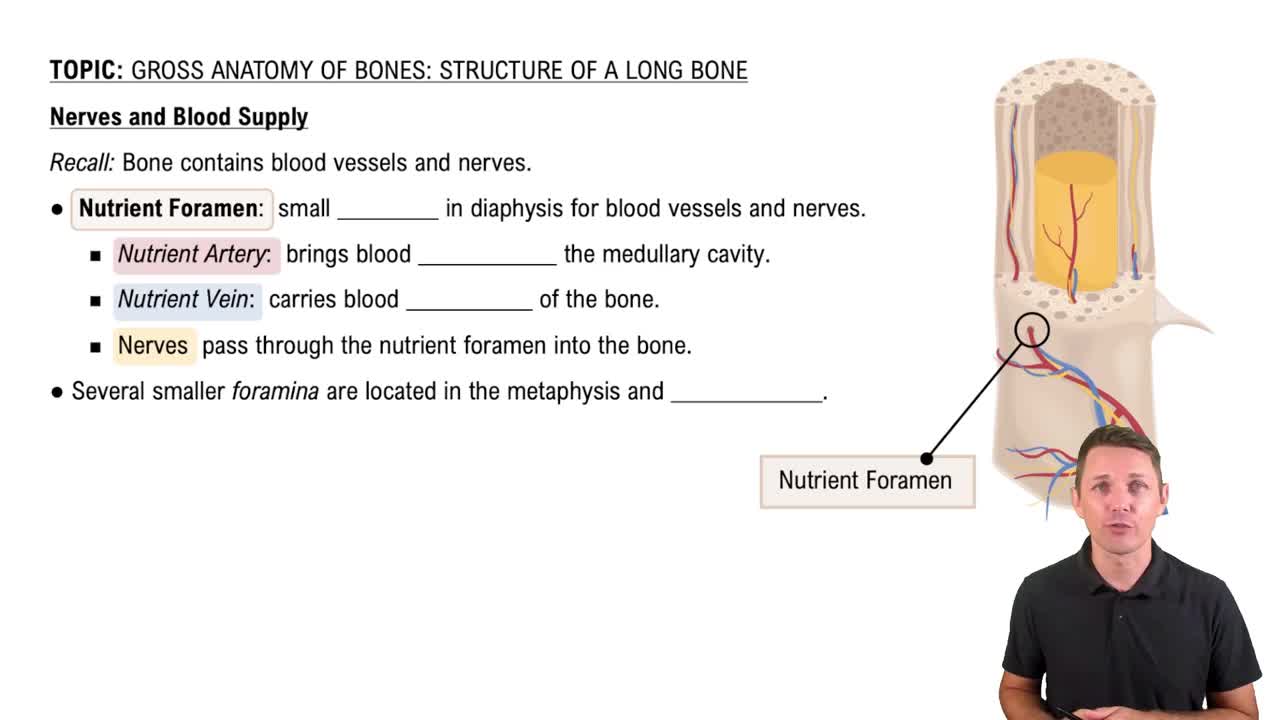
Nerves and Blood Supply

Hypoglossal Canals

Hypoglossal canals are small openings in the occipital bone that transmit the hypoglossal nerve (cranial nerve XII), which controls tongue movements. They do not serve as passageways for blood vessels, making them less relevant for venous drainage.
Recommended video:

Venous Drainage of the Head

Venous drainage of the head involves veins that collect deoxygenated blood and channel it back to the heart. Key vessels like the internal jugular veins exit the skull through specific foramina, primarily the jugular foramina, highlighting the importance of these anatomical structures.
Recommended video:
Guided course
04:19
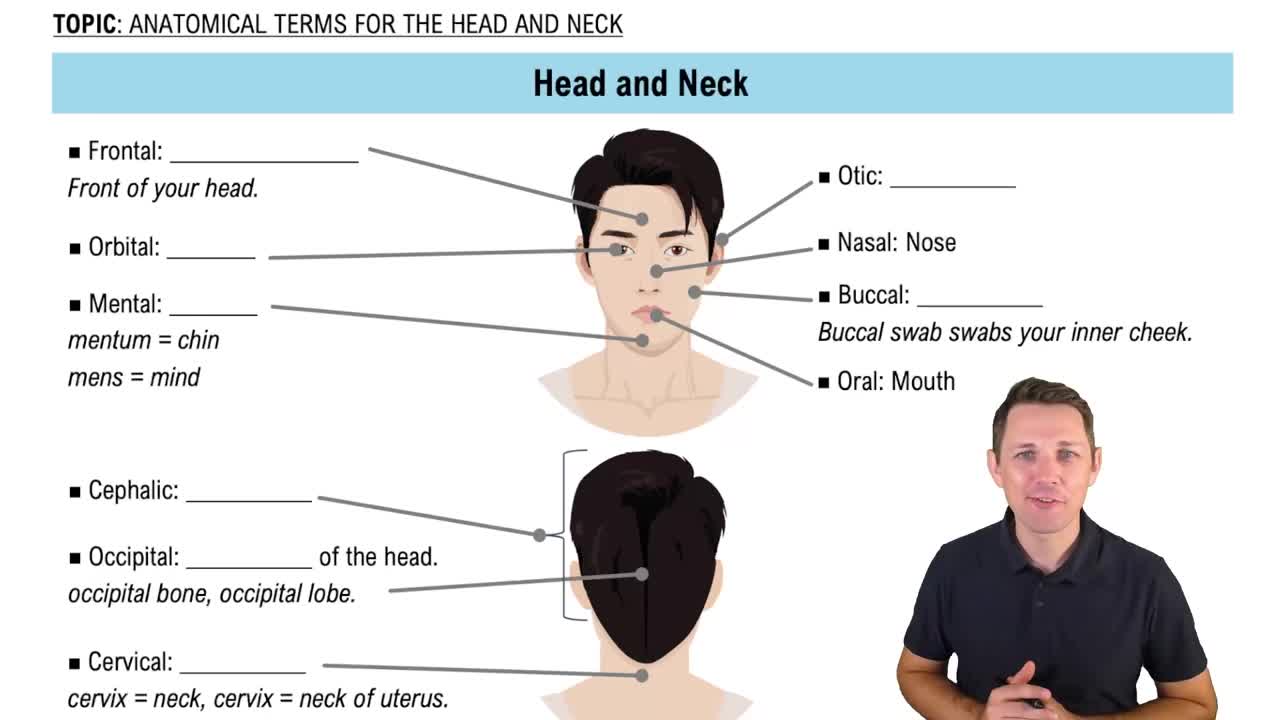
The Head and Neck