Textbook Question
Isotopes of an element differ from each other in the number of
(a) Protons in the nucleus
(b) Neutrons in the nucleus
(c) Electrons in the outer shells
(d) a, b, and c are all correct
1
views

 Martini, Nath, Bartholomew 12th EditionCh. 2 The Chemical Level of OrganizationProblem 3
 Verified step by step guidance
 04:48
04:48
 3:42
3:42 01:56
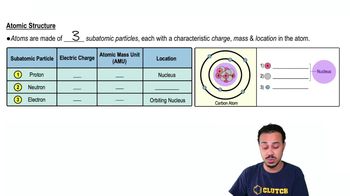
01:56Isotopes of an element differ from each other in the number of
(a) Protons in the nucleus
(b) Neutrons in the nucleus
(c) Electrons in the outer shells
(d) a, b, and c are all correct
All organic compounds in the human body contain all of the following elements except
(a) Hydrogen
(b) Oxygen
(c) Carbon
(d) Calcium
(e) Both a and d
What is the following type of decomposition reaction called?
ABCD + H₂O → ABCH + DOH
The number and arrangement of electrons in an atom's outer energy level (valence shell) determine the atom's
(a) Atomic weight
(b) Atomic number
(c) Molecular weight
(d) Chemical properties
An oxygen atom has eight protons.
(b) How many more electrons will it take to fill the outermost energy level?
An oxygen atom has eight protons.
(a) Sketch in the arrangement of electrons around the nucleus of the oxygen atom in the following diagram.