Ch. 16 The Autonomic Nervous System and Higher-Order Functions
Martini - Fundamentals of Anatomy and Physiology 12th Edition
Martini, Nath, Bartholomew12th EditionFundamentals of Anatomy and PhysiologyISBN: 9780137854011Not the one you use?Change textbook
Chapter 16, Problem 18

Which six plexuses in the thoracic and abdominopelvic cavities innervate visceral organs, and what are the effects of sympathetic versus parasympathetic stimulation?

Verified step by step guidance
1
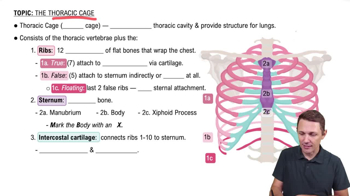
Identify the six major autonomic plexuses located in the thoracic and abdominopelvic cavities that innervate visceral organs. These typically include the cardiac plexus, pulmonary plexus, esophageal plexus, celiac (solar) plexus, superior mesenteric plexus, and inferior mesenteric plexus.
Understand that these plexuses contain a network of sympathetic and parasympathetic nerve fibers that regulate the function of internal organs by modulating activities such as heart rate, digestion, and glandular secretion.
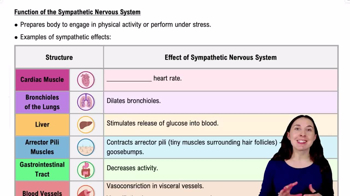
Recall that sympathetic stimulation generally prepares the body for 'fight or flight' responses, which include increasing heart rate and force, dilating bronchioles, decreasing digestive activity, and constricting blood vessels to non-essential organs.
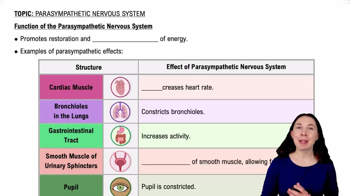
Recognize that parasympathetic stimulation promotes 'rest and digest' activities, such as slowing the heart rate, constricting bronchioles, increasing digestive secretions and motility, and promoting energy storage.
Summarize the contrasting effects by associating each plexus with the organs it innervates and describing how sympathetic and parasympathetic inputs alter the function of those organs through these plexuses.

Verified video answer for a similar problem:

This video solution was recommended by our tutors as helpful for the problem above.
Was this helpful?

Key Concepts

Here are the essential concepts you must grasp in order to answer the question correctly.

Thoracic and Abdominopelvic Plexuses

These six major autonomic plexuses—cardiac, pulmonary, esophageal, celiac, superior mesenteric, and inferior mesenteric—are networks of nerves located in the thoracic and abdominopelvic cavities. They distribute autonomic fibers to visceral organs, coordinating functions like heart rate, digestion, and respiratory activity.
Recommended video:
Guided course
5:03
Thoracic Cage

Sympathetic Nervous System Effects

Sympathetic stimulation prepares the body for 'fight or flight' responses by increasing heart rate, dilating bronchi, inhibiting digestion, and constricting blood vessels. It generally activates visceral organs to respond to stress or emergencies, promoting energy mobilization and alertness.
Recommended video:
2:52
Function of the Sympathetic Nervous System

Parasympathetic Nervous System Effects

Parasympathetic stimulation supports 'rest and digest' activities by slowing heart rate, constricting bronchi, stimulating digestion, and promoting energy storage. It helps maintain homeostasis during restful states by enhancing organ functions related to recovery and nutrient absorption.
Recommended video:
1:56
Function of the Parasympathetic Nervous System