Ch. 10 Muscle Tissue
Martini - Fundamentals of Anatomy & Physiology 11th Edition
Martini, Nath, Bartholomew11th EditionFundamentals of Anatomy & PhysiologyISBN: 9780136874089Not the one you use?Change textbook
Chapter 10, Problem 19

Areas of the body where you would not expect to find slow fibers include the
(a) Back and calf muscles
(b) Eye and hand
(c) Chest and abdomen
(d) All of these

Verified step by step guidance
1
Step 1: Understand what slow fibers are. Slow fibers, also known as slow-twitch muscle fibers or Type I fibers, are muscle fibers that contract slowly but are highly resistant to fatigue. They are specialized for endurance and continuous, prolonged activities.
Step 2: Identify the typical locations of slow fibers. Slow fibers are commonly found in muscles that maintain posture and perform sustained activities, such as the back and calf muscles, which are involved in standing and walking.
Step 3: Consider muscles that require quick, precise, and rapid movements. Muscles in the eye and hand are designed for fast, fine motor control and typically contain more fast-twitch fibers rather than slow fibers.
Step 4: Analyze the options given: (a) Back and calf muscles are rich in slow fibers; (b) Eye and hand muscles are not expected to have many slow fibers; (c) Chest and abdomen muscles have a mix but generally more fast fibers for quick movements; (d) All of these is a general option.
Step 5: Conclude that areas where you would not expect to find slow fibers are those requiring rapid, precise movements, such as the eye and hand muscles.

Verified video answer for a similar problem:

This video solution was recommended by our tutors as helpful for the problem above.
Video duration:
3m
Was this helpful?

Key Concepts

Here are the essential concepts you must grasp in order to answer the question correctly.

Muscle Fiber Types

Muscle fibers are classified into slow-twitch (Type I) and fast-twitch (Type II) fibers. Slow fibers contract slowly but are resistant to fatigue, making them ideal for endurance activities. Fast fibers contract quickly but fatigue faster, suited for rapid, powerful movements.
Recommended video:
Guided course
7:47
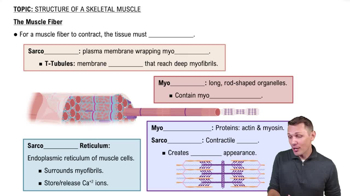
The Muscle Fiber

Distribution of Slow Fibers in the Body

Slow fibers are commonly found in muscles involved in posture and sustained activities, such as the back and calf muscles. These muscles require endurance and continuous contraction, which slow fibers support effectively.
Recommended video:
Guided course
1:21
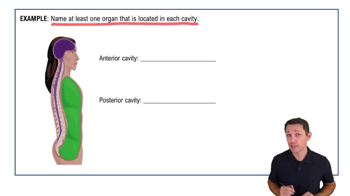
Organization of the Body: Body Cavities Example 1

Muscle Function in Different Body Regions

Muscles in the eye and hand are designed for quick, precise movements and typically contain more fast fibers. In contrast, muscles in the chest and abdomen have mixed fiber types but generally fewer slow fibers compared to postural muscles.
Recommended video:
Guided course
03:21
Introduction to Anatomical Terms