Ch. 2 Chemistry Comes Alive
Marieb - Human Anatomy & Physiology 7th Edition
Marieb, Hoehn7th EditionHuman Anatomy & PhysiologyISBN: 9780805359091Not the one you use?Change textbook
Chapter 2, Problem 14

Which of the following covalently bonded molecules are polar?
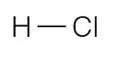
(a)
Chemical structure of hydrogen chloride (H-Cl), illustrating a covalent bond between hydrogen and chlorine.
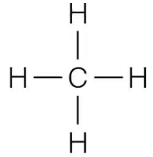
(b)
Structural formula of methane (CH4) showing one carbon atom bonded to four hydrogen atoms.
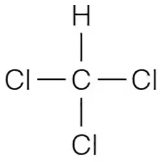
(c)
Structural formula of a carbon atom bonded to four chlorine atoms and one hydrogen atom, illustrating molecular polarity.
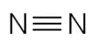
(d)
Chemical structure of a nitrogen molecule with a triple bond, labeled as N≡N, for identifying polar covalent bonds.

Verified step by step guidance
1
Step 1: Understand molecular polarity by considering two main factors: the difference in electronegativity between bonded atoms and the molecular geometry (shape). A molecule is polar if it has polar bonds and an asymmetrical shape causing a net dipole moment.
Step 2: Analyze molecule (a) H-Cl. Chlorine is more electronegative than hydrogen, creating a polar covalent bond. Since this is a diatomic molecule, the polarity of the bond directly makes the molecule polar.
Step 3: Analyze molecule (b) CH4 (methane). Carbon and hydrogen have a small difference in electronegativity, and the molecule has a symmetrical tetrahedral shape. The bond dipoles cancel out, making methane nonpolar.
Step 4: Analyze molecule (c) CHCl3 (chloroform). Carbon is bonded to three chlorine atoms and one hydrogen atom. Chlorine is more electronegative than carbon and hydrogen, and the molecule is asymmetrical due to the different atoms attached, resulting in a polar molecule.
Step 5: Analyze molecule (d) N≡N (nitrogen gas). Both atoms are identical nitrogen atoms sharing electrons equally, so the bond is nonpolar and the molecule is nonpolar.

Verified video answer for a similar problem:

This video solution was recommended by our tutors as helpful for the problem above.
Video duration:
1m
Was this helpful?

Key Concepts

Here are the essential concepts you must grasp in order to answer the question correctly.

Molecular Polarity

Molecular polarity arises when there is an uneven distribution of electron density in a molecule, resulting in a dipole moment. This occurs if the molecule has polar bonds and an asymmetrical shape, causing one end to be partially positive and the other partially negative.
Recommended video:
Guided course
04:15
Characteristic 1: Polarity

Electronegativity Difference

Electronegativity is the tendency of an atom to attract electrons in a bond. A significant difference in electronegativity between two bonded atoms creates a polar covalent bond, where electrons are shared unequally, leading to partial charges on the atoms.
Recommended video:
Guided course
03:04
The Difference Between Anatomy and Physiology

Molecular Geometry and Symmetry

The shape of a molecule affects its overall polarity. Even if bonds are polar, a symmetrical arrangement can cancel out dipole moments, making the molecule nonpolar. Asymmetrical molecules with polar bonds tend to be polar overall.
Recommended video:
Guided course
8:47
Pacemakers: Molecular Physiology