Ch. 14 The Autonomic Nervous System
Marieb - Human Anatomy & Physiology 7th Edition
Marieb, Hoehn7th EditionHuman Anatomy & PhysiologyISBN: 9780805359091Not the one you use?Change textbook
Chapter 14, Problem 12

Describe the importance of the hypothalamus in controlling the autonomic nervous system.

Verified step by step guidance
1
Begin by defining the hypothalamus as a critical brain region located below the thalamus, responsible for maintaining homeostasis by regulating various autonomic functions.
Explain that the autonomic nervous system (ANS) controls involuntary bodily functions such as heart rate, blood pressure, digestion, and temperature regulation.
Describe how the hypothalamus acts as the main control center for the ANS by integrating sensory input and coordinating responses to maintain internal balance.
Discuss the hypothalamus's role in sending signals to the sympathetic and parasympathetic divisions of the ANS to either stimulate or inhibit organ activity depending on the body's needs.
Highlight that through this regulation, the hypothalamus helps the body respond to stress, regulate metabolism, control fluid balance, and maintain body temperature, demonstrating its vital role in autonomic control.

Verified video answer for a similar problem:

This video solution was recommended by our tutors as helpful for the problem above.
Video duration:
2m
Was this helpful?

Key Concepts

Here are the essential concepts you must grasp in order to answer the question correctly.

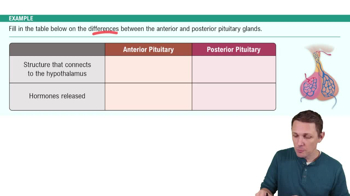
Hypothalamus Function

The hypothalamus is a brain region that acts as a control center for many autonomic functions. It regulates vital processes such as temperature, hunger, thirst, and emotional responses by integrating signals from the nervous and endocrine systems.
Recommended video:
Guided course
6:11
The Hypothalamus and Pituitary Gland Example 3

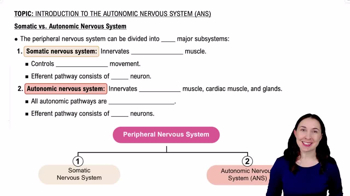
Autonomic Nervous System (ANS)

The ANS controls involuntary bodily functions like heart rate, digestion, and respiratory rate. It has two main divisions: the sympathetic system, which prepares the body for 'fight or flight,' and the parasympathetic system, which promotes 'rest and digest' activities.
Recommended video:
1:50
Somatic vs. Autonomic Nervous System

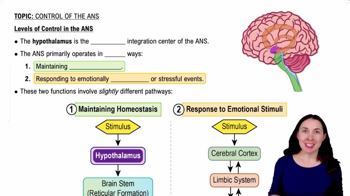
Hypothalamic Regulation of ANS

The hypothalamus influences the ANS by sending signals to autonomic centers in the brainstem and spinal cord. This regulation ensures the body maintains homeostasis by adjusting autonomic responses to internal and external stimuli.
Recommended video:
3:33
Levels of Control in the ANS
Related Practice
Textbook Question

Which of the effects listed in response to question 9 would be reversed by parasympathetic activity?

Textbook Question

As the aroma of freshly brewed coffee drifted by dozing Henry's nose, his mouth started to water and his stomach began to rumble. Explain his reactions in terms of ANS activity.

1
views
Textbook Question

Tiffany, a 21-year-old college student, is having trouble sleeping, cries frequently, and has recurrent thoughts of suicide. An antidepressant is prescribed. Like many such drugs, this antidepressant has anticholinergic side effects. What side effects might Tiffany experience in the first week of treatment?

8
views
Textbook Question

Describe the meaning and importance of sympathetic tone and parasympathetic tone.

5
views
Textbook Question

Mr. Johnson suffers from urinary retention and a hypoactive urinary bladder. Bethanechol, a drug that mimics acetylcholine's autonomic effects, is prescribed to manage his problem. First explain the rationale for prescribing bethanechol, and then predict which of the following adverse effects Mr. Johnson might experience while taking this drug (select all that apply): dizziness, low blood pressure, deficient tear formation, wheezing, increased mucus production in bronchi, deficient salivation, diarrhea, cramping, excessive sweating, undesirable erection of penis.

2
views
Textbook Question

Indicate the results of sympathetic activation of the following structures: sweat glands, eye pupils, adrenal medullae, heart, bronchioles of the lungs, liver, blood vessels of vigorously working skeletal muscles, blood vessels of digestive viscera, salivary glands.

5
views