Ch. 14 The Autonomic Nervous System
Marieb - Human Anatomy & Physiology 7th Edition
Marieb, Hoehn7th EditionHuman Anatomy & PhysiologyISBN: 9780805359091Not the one you use?Change textbook
Chapter 14, Problem 14

As the aroma of freshly brewed coffee drifted by dozing Henry's nose, his mouth started to water and his stomach began to rumble. Explain his reactions in terms of ANS activity.

Verified step by step guidance
1
Identify the autonomic nervous system (ANS) division involved: The parasympathetic nervous system is primarily responsible for stimulating digestive activities such as salivation and increased stomach motility.
Explain the role of the parasympathetic nervous system: When Henry smells coffee, sensory input from his olfactory system triggers the parasympathetic response, which prepares the digestive system for food intake.
Describe the effect on salivary glands: Parasympathetic activation causes increased secretion of saliva, which moistens the mouth and begins the digestion process, leading to Henry's mouth watering.
Describe the effect on the stomach: Parasympathetic stimulation increases gastric motility and secretion of digestive juices, causing the stomach muscles to contract and produce the rumbling sensation.
Summarize the overall ANS activity: The parasympathetic division of the ANS coordinates these responses to prepare the body for digestion in response to sensory cues like the aroma of coffee.

Verified video answer for a similar problem:

This video solution was recommended by our tutors as helpful for the problem above.
Video duration:
2m
Was this helpful?

Key Concepts

Here are the essential concepts you must grasp in order to answer the question correctly.

Autonomic Nervous System (ANS) Overview

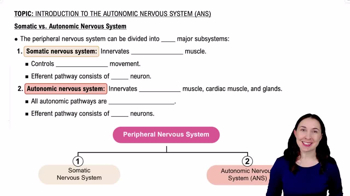
The ANS controls involuntary bodily functions and is divided into the sympathetic and parasympathetic systems. It regulates activities like heart rate, digestion, and salivation without conscious effort, responding to internal and external stimuli.
Recommended video:
1:50
Somatic vs. Autonomic Nervous System

Parasympathetic Nervous System and Digestive Response

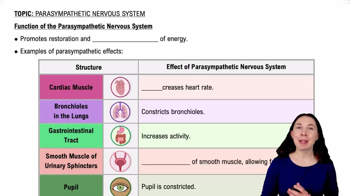
The parasympathetic system promotes 'rest and digest' activities, stimulating salivation and increasing digestive secretions. When Henry smells coffee, this system activates to prepare the body for food intake, causing his mouth to water and stomach to rumble.
Recommended video:
1:56
Function of the Parasympathetic Nervous System

Conditioned Reflexes and Sensory Stimuli

Sensory cues like the aroma of coffee can trigger conditioned reflexes via the ANS, linking smell to digestive responses. This learned association causes automatic physiological reactions, such as salivation and stomach activity, even before eating.
Recommended video:
3:37
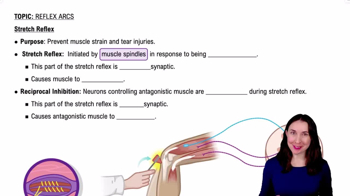
Stretch Reflex
Related Practice
Textbook Question

Describe the importance of the hypothalamus in controlling the autonomic nervous system.

2
views
Textbook Question

Tiffany, a 21-year-old college student, is having trouble sleeping, cries frequently, and has recurrent thoughts of suicide. An antidepressant is prescribed. Like many such drugs, this antidepressant has anticholinergic side effects. What side effects might Tiffany experience in the first week of treatment?

8
views
Textbook Question

Describe the meaning and importance of sympathetic tone and parasympathetic tone.

5
views
Textbook Question

Mr. Johnson suffers from urinary retention and a hypoactive urinary bladder. Bethanechol, a drug that mimics acetylcholine's autonomic effects, is prescribed to manage his problem. First explain the rationale for prescribing bethanechol, and then predict which of the following adverse effects Mr. Johnson might experience while taking this drug (select all that apply): dizziness, low blood pressure, deficient tear formation, wheezing, increased mucus production in bronchi, deficient salivation, diarrhea, cramping, excessive sweating, undesirable erection of penis.

2
views
Textbook Question

A reflex that causes reciprocal activation of the antagonist muscle is the

a. Crossed-extensor

b. Flexor

c. Tendon

d. Muscle stretch

2
views
Textbook Question

A 32-year-old woman complains of intermittent aching pains in the medial two fingers of both hands. During such episodes, the fingers become blanched and then blue. Her history is taken, and it is noted that she is a heavy smoker. The physician advises her that she must stop smoking and states that she will not prescribe any medication until the patient has discontinued smoking for a month. What is this patient's condition, and why was she told to stop smoking?

1
views