Ch. 9 The Endocrine System
Marieb - Essentials of Human Anatomy & Physiology 13th Edition
Marieb13th EditionEssentials of Human Anatomy & PhysiologyISBN: 9780135624340Not the one you use?Change textbook
Chapter 9, Problem 2

More than one choice may apply. Which is generally true of hormones?
a. Exocrine glands produce them.
b. They travel throughout the body in the blood.
c. They affect only non–hormone-producing organs.
d. All steroid hormones produce very similar physiological effects in the body.

Verified step by step guidance
1
Step 1: Understand the definition of hormones. Hormones are chemical messengers secreted by endocrine glands that regulate physiological processes in the body. They are distinct from substances produced by exocrine glands, which release their products into ducts rather than the bloodstream.
Step 2: Evaluate option (a). Exocrine glands do not produce hormones; they produce substances like sweat, saliva, or digestive enzymes. Hormones are produced by endocrine glands, such as the pituitary, thyroid, and adrenal glands.
Step 3: Evaluate option (b). Hormones are transported throughout the body via the bloodstream, allowing them to reach target cells or organs and exert their effects.
Step 4: Evaluate option (c). Hormones can affect hormone-producing organs as well as non-hormone-producing organs. For example, the pituitary gland secretes hormones that regulate other endocrine glands, such as the thyroid and adrenal glands.
Step 5: Evaluate option (d). Steroid hormones, such as cortisol, estrogen, and testosterone, have diverse physiological effects depending on their specific roles in the body. They do not produce very similar effects; each has a unique function.

Verified video answer for a similar problem:

This video solution was recommended by our tutors as helpful for the problem above.
Video duration:
2m
Was this helpful?

Key Concepts

Here are the essential concepts you must grasp in order to answer the question correctly.

Hormone Production

Hormones are primarily produced by endocrine glands, not exocrine glands. Endocrine glands, such as the pituitary, thyroid, and adrenal glands, secrete hormones directly into the bloodstream, allowing them to travel throughout the body and exert their effects on various target organs.
Recommended video:
Guided course
13:06
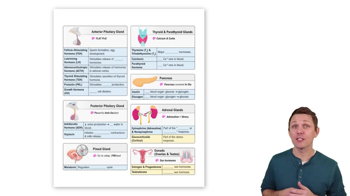
Review of Major Hormones

Hormonal Transport

Hormones are transported through the bloodstream, which serves as a delivery system to carry these chemical messengers to different parts of the body. This transport mechanism enables hormones to reach distant organs and tissues, where they can initiate specific physiological responses.
Recommended video:
Guided course
13:06
Review of Major Hormones

Hormonal Effects

Hormones can affect a wide range of target organs, including both hormone-producing and non-hormone-producing tissues. Their effects are not limited to specific organs; instead, they can influence various physiological processes across multiple systems in the body, depending on the type of hormone and its receptors.
Recommended video:
1:32
Effects of the Complement System