Ch. 9 The Endocrine System
Marieb - Essentials of Human Anatomy & Physiology 13th Edition
Marieb13th EditionEssentials of Human Anatomy & PhysiologyISBN: 9780135624340Not the one you use?Change textbook
Chapter 9, Problem 1

More than one choice may apply. The major endocrine organs of the body
a. Tend to be very large organs
b. Are closely connected with each other
c. All contribute to the same function (digestion)
d. Tend to lie near the midline of the body

Verified step by step guidance
1
Step 1: Begin by understanding the role of endocrine organs. The endocrine system consists of glands that secrete hormones directly into the bloodstream to regulate various body functions such as growth, metabolism, and reproduction.
Step 2: Evaluate option (a): 'tend to be very large organs.' Endocrine organs are generally small, such as the pituitary gland, thyroid gland, and adrenal glands. This option is likely incorrect.
Step 3: Evaluate option (b): 'are closely connected with each other.' While endocrine organs are not physically connected, they are functionally interconnected through the hormones they release, which influence each other’s activity. This option may be correct.
Step 4: Evaluate option (c): 'all contribute to the same function (digestion).' Endocrine organs regulate a variety of functions, not just digestion. For example, the thyroid gland regulates metabolism, and the adrenal glands manage stress responses. This option is likely incorrect.
Step 5: Evaluate option (d): 'tend to lie near the midline of the body.' Many endocrine organs, such as the thyroid gland, pituitary gland, and pancreas, are located near the midline of the body. This option may be correct.

Verified video answer for a similar problem:

This video solution was recommended by our tutors as helpful for the problem above.
Video duration:
1m
Was this helpful?

Key Concepts

Here are the essential concepts you must grasp in order to answer the question correctly.

Endocrine System

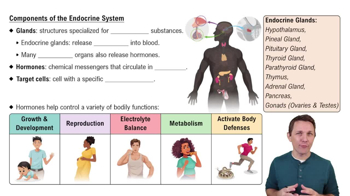
The endocrine system is a network of glands that produce and release hormones, which are chemical messengers that regulate various bodily functions, including metabolism, growth, and mood. Major endocrine organs include the pituitary gland, thyroid gland, adrenal glands, and pancreas. Understanding the role and function of these organs is crucial for analyzing their interconnections and contributions to overall health.
Recommended video:
Guided course
7:06
Components of the Endocrine System

Hormonal Regulation

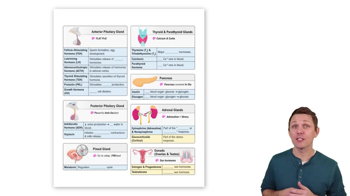
Hormonal regulation refers to the process by which hormones control and coordinate physiological activities in the body. This includes the regulation of metabolism, immune responses, and reproductive processes. Each endocrine organ releases specific hormones that can influence the activity of other organs, highlighting the interconnectedness of the endocrine system.
Recommended video:
Guided course
13:06
Review of Major Hormones

Anatomical Location of Endocrine Organs

The anatomical location of endocrine organs is significant for understanding their functions and interactions. Many major endocrine glands, such as the pituitary and thyroid, are located near the midline of the body, which facilitates their regulatory roles. This spatial arrangement can impact how hormones are distributed and how quickly they affect target tissues.
Recommended video:
Guided course
2:45
Organization of the Body: Serous Membrane Locations Example 1