Ch. 9 The Endocrine System
Marieb - Essentials of Human Anatomy & Physiology 13th Edition
Marieb13th EditionEssentials of Human Anatomy & PhysiologyISBN: 9780135624340Not the one you use?Change textbook
Chapter 9, Problem 12

Describe the chemical nature of hormones.

Verified step by step guidance
1
Hormones are chemical messengers secreted by endocrine glands that regulate physiological processes in the body. They are classified based on their chemical structure into three main types: peptide hormones, steroid hormones, and amine hormones.
Peptide hormones are composed of chains of amino acids. Examples include insulin and glucagon. These hormones are water-soluble and typically bind to receptors on the surface of target cells.
Steroid hormones are derived from cholesterol and include hormones like cortisol, testosterone, and estrogen. These hormones are lipid-soluble, allowing them to pass through cell membranes and bind to intracellular receptors.
Amine hormones are derived from amino acids, specifically tyrosine or tryptophan. Examples include epinephrine, norepinephrine, and thyroid hormones. Their solubility varies; catecholamines like epinephrine are water-soluble, while thyroid hormones are lipid-soluble.
The chemical nature of hormones determines their mode of transport in the bloodstream (bound to carrier proteins or free) and their mechanism of action (surface receptor binding or intracellular receptor binding). Understanding these properties is essential for studying their physiological effects.

Verified video answer for a similar problem:

This video solution was recommended by our tutors as helpful for the problem above.
Video duration:
2m
Was this helpful?

Key Concepts

Here are the essential concepts you must grasp in order to answer the question correctly.

Hormonal Classification

Hormones can be classified into three main categories: peptides, steroids, and amines. Peptide hormones are made of amino acids and are water-soluble, while steroid hormones are derived from cholesterol and are lipid-soluble. Amines are derived from single amino acids and can be either water or lipid-soluble, depending on their structure. This classification is essential for understanding how hormones interact with target cells.
Recommended video:
01:19
Introduction to Classification of Joints

Mechanism of Action

Hormones exert their effects by binding to specific receptors on target cells, which can be located on the cell surface or within the cell. Water-soluble hormones typically bind to surface receptors, triggering a cascade of intracellular signaling pathways, while lipid-soluble hormones can pass through the cell membrane and directly influence gene expression. This mechanism is crucial for understanding how hormones regulate various physiological processes.
Recommended video:
03:53
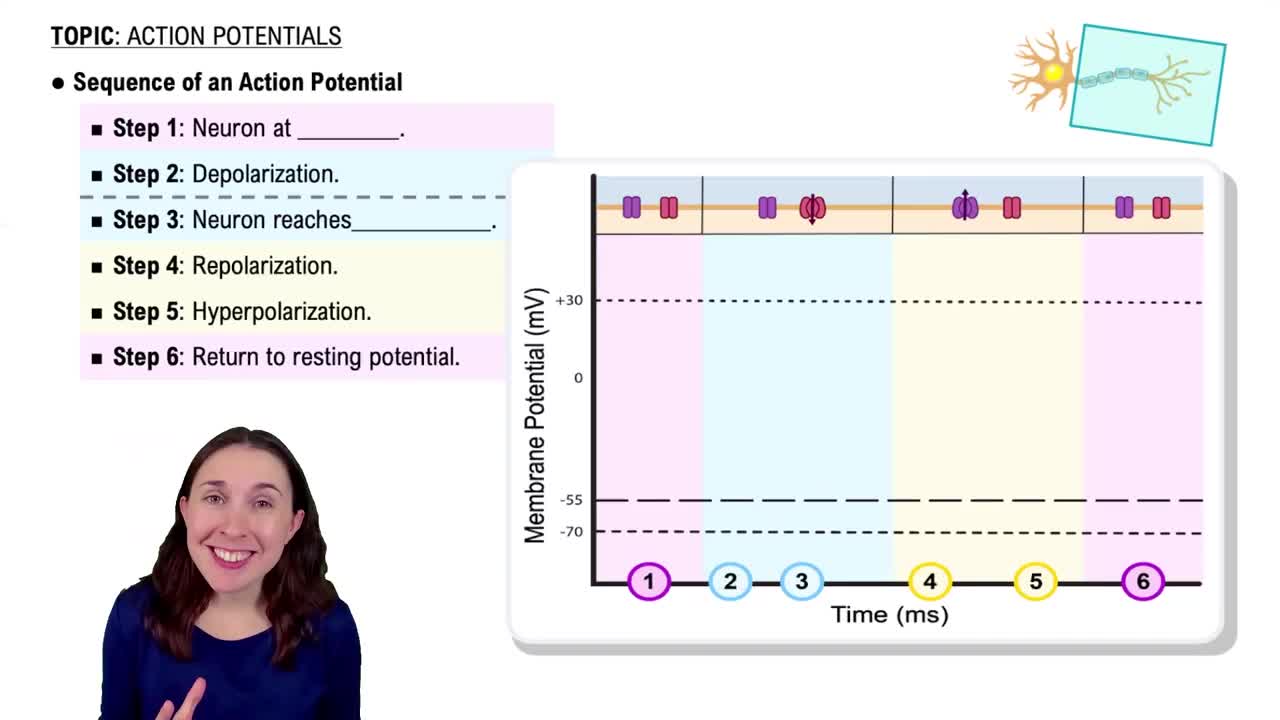
Action Potential

Feedback Mechanisms

Hormonal regulation often involves feedback mechanisms, primarily negative feedback, which helps maintain homeostasis. In negative feedback, the release of a hormone is inhibited by the effects it produces, ensuring that hormone levels remain within a specific range. This concept is vital for understanding how the endocrine system maintains balance in bodily functions, such as metabolism, growth, and stress response.
Recommended video:
Guided course
02:43
Feedback Loops: Positive Feedback Example 1