Compare the amount of movement possible in synarthrotic, amphiarthrotic, and diarthrotic joints. Relate these terms to the structural classification of joints—that is, to fibrous, cartilaginous, and synovial joints.
Ch. 5 The Skeletal System

Marieb13th EditionEssentials of Human Anatomy & PhysiologyISBN: 9780135624340Not the one you use?Change textbook
Chapter 5, Problem 22
At work, a box fell from a shelf onto Ella's acromial region. In the emergency room, the physician felt that the head of her humerus had moved into the axilla. What had happened to Ella?
Verified step by step guidance1
Step 1: Understand the anatomical terms mentioned in the problem. The 'acromial region' refers to the area near the acromion, which is the bony prominence on the scapula (shoulder blade). The 'axilla' refers to the armpit region. The 'head of the humerus' is the rounded top part of the upper arm bone that fits into the shoulder joint.
Step 2: Recognize the injury described. The head of the humerus moving into the axilla suggests a dislocation of the shoulder joint. Specifically, this is likely an anterior or inferior dislocation, where the humeral head moves out of its normal position in the glenoid cavity of the scapula.
Step 3: Explain the mechanism of injury. A box falling onto the acromial region could have exerted force on the shoulder joint, potentially causing the humeral head to be displaced. This type of injury often occurs when there is a combination of forceful impact and improper positioning of the arm.
Step 4: Discuss the implications of the injury. A shoulder dislocation can damage surrounding structures, such as ligaments, tendons, and nerves. The physician would need to assess for additional injuries, such as nerve compression or tearing of the rotator cuff muscles.
Step 5: Outline the typical treatment process. The physician would likely perform a physical examination and imaging studies (e.g., X-rays) to confirm the dislocation. Treatment typically involves reducing the dislocation (manually repositioning the humeral head into the glenoid cavity), followed by immobilization and physical therapy to restore function and prevent recurrence.

Verified video answer for a similar problem:
This video solution was recommended by our tutors as helpful for the problem above.
Video duration:
3mWas this helpful?
Key Concepts
Here are the essential concepts you must grasp in order to answer the question correctly.
Acromial Region
The acromial region refers to the area of the shoulder where the acromion, a bony projection of the scapula, is located. This region is crucial for shoulder stability and movement, and injuries here can affect the surrounding muscles and joints. Understanding the anatomy of the acromial region helps in diagnosing shoulder injuries.
Recommended video:
Guided course
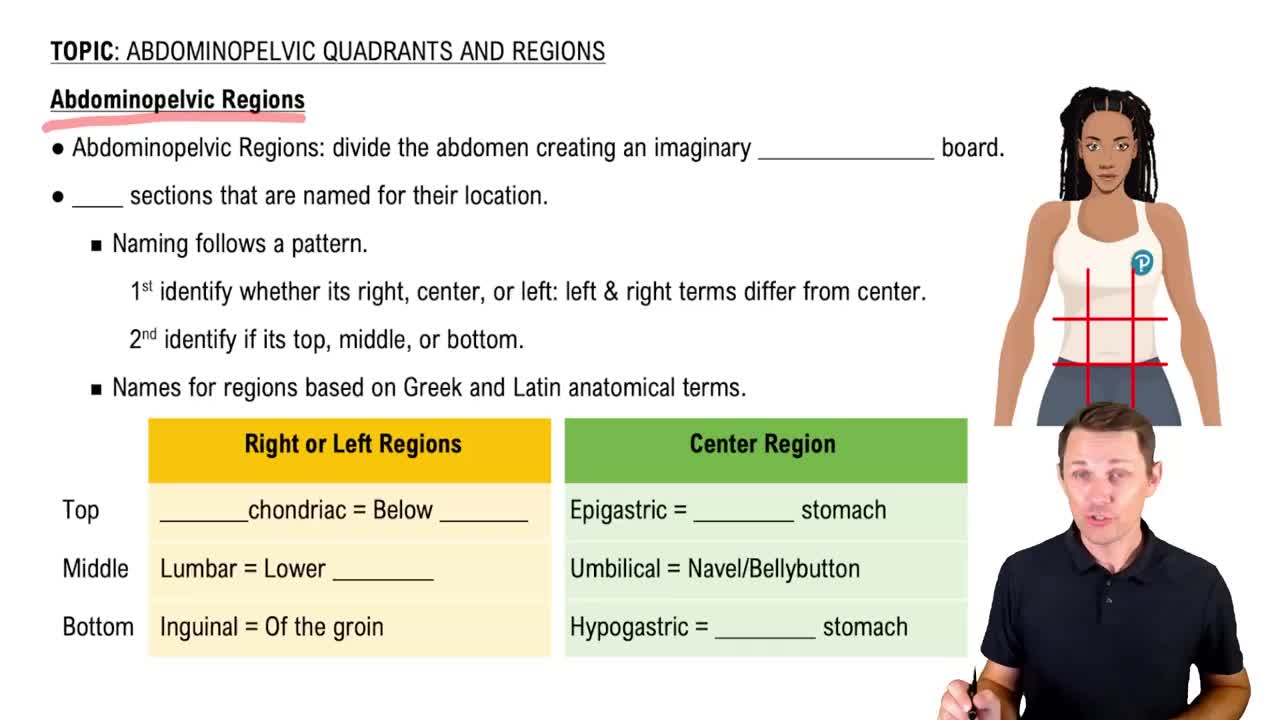
The 9 Abdominopelvic Regions
Humeral Head Dislocation
A humeral head dislocation occurs when the head of the humerus, the upper arm bone, is displaced from its normal position in the shoulder joint. This can happen due to trauma, such as a fall or impact, leading to severe pain, immobility, and potential damage to surrounding nerves and blood vessels. Recognizing the signs of dislocation is essential for prompt treatment.
Recommended video:
Guided course
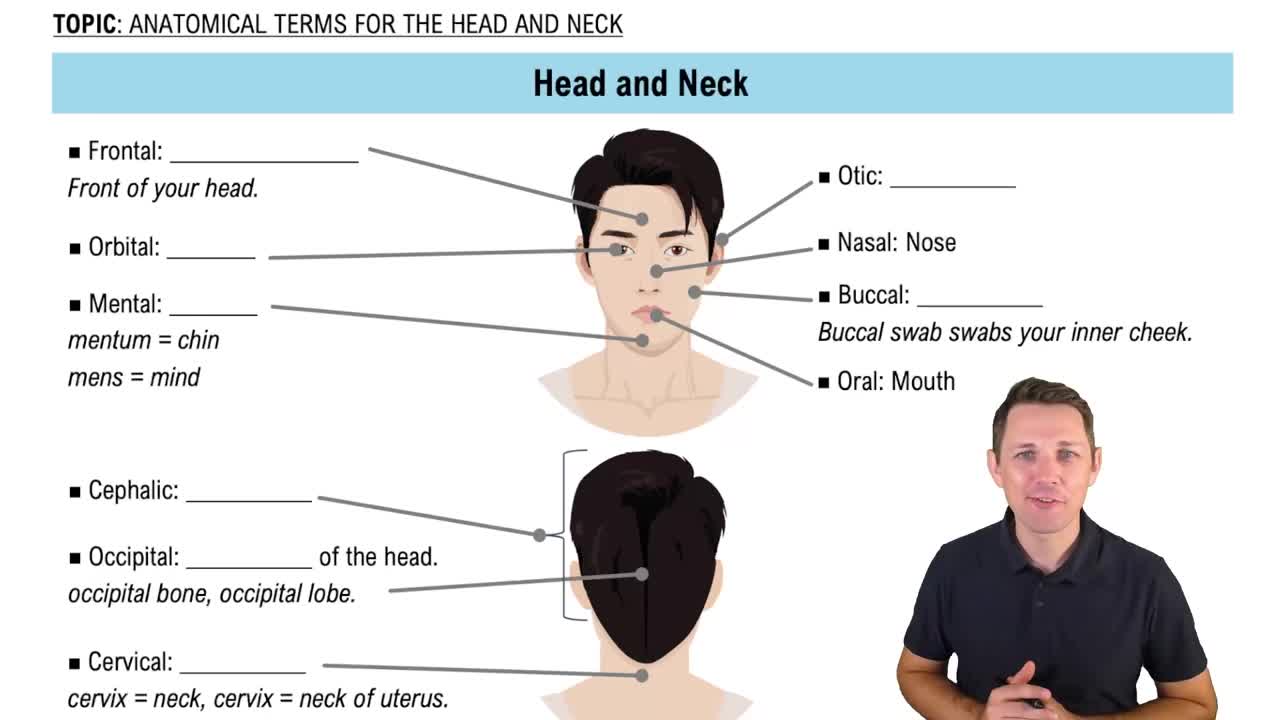
The Head and Neck
Axilla
The axilla, commonly known as the armpit, is the area beneath the shoulder joint that contains important structures such as blood vessels, nerves, and lymph nodes. It serves as a passageway for nerves and blood vessels to the arm. Understanding the anatomy of the axilla is vital in assessing injuries related to shoulder dislocations, as the humeral head may move into this space during a dislocation.
Related Practice
Textbook Question
2
views
Textbook Question
What bones make up each hip bone (coxal bone)? Which of these is the largest?
Which has tuberosities that we sit on?
Which is the most anterior?
2
views
Textbook Question
Deborah, a 75-year-old woman, stumbled slightly while walking, then felt a terrible pain in her left hip. At the hospital, X-ray images revealed that the hip was broken. Also, the compact bone and spongy bone throughout her spine were very thin. What was her probable condition?
1
views
Textbook Question
Ryan, a 6-year-old child who is allergic to milk, has extremely bowed legs. What condition do you suspect, and what is the connection to not drinking milk?
1
views