
Ch. 3 Cells and Tissues
Marieb - Essentials of Human Anatomy & Physiology 13th Edition
Marieb13th EditionEssentials of Human Anatomy & PhysiologyISBN: 9780135624340Not the one you use?Change textbook
Chapter 3, Problem 9

What kind of connective tissue acts as a sponge, soaking up fluid when edema occurs?
a. Areolar connective
b. Adipose connective
c. Dense irregular connective
d. Reticular connective
e. Vascular

Verified step by step guidance
1
Step 1: Understand the concept of edema. Edema refers to the accumulation of excess fluid in tissues, often due to inflammation or injury. Connective tissues play a role in managing this fluid buildup.
Step 2: Review the properties of each connective tissue type listed in the options. Areolar connective tissue is known for its loose structure and ability to soak up excess fluid, acting like a sponge. Adipose connective tissue primarily stores fat and does not absorb fluid. Dense irregular connective tissue provides structural support but is not specialized for fluid absorption. Reticular connective tissue forms a supportive framework for organs but does not absorb fluid. Vascular tissue (blood) is involved in fluid transport but does not act as a sponge.
Step 3: Focus on the connective tissue that has a loose arrangement of fibers and abundant extracellular matrix, which allows it to absorb and hold fluid effectively. This description matches areolar connective tissue.
Step 4: Eliminate options that do not align with the function of soaking up fluid during edema. For example, adipose connective tissue and dense irregular connective tissue are not designed for fluid absorption.
Step 5: Conclude that areolar connective tissue is the primary type that acts as a sponge during edema, based on its structure and function.

Verified video answer for a similar problem:

This video solution was recommended by our tutors as helpful for the problem above.
Video duration:
3m
Was this helpful?

Key Concepts

Here are the essential concepts you must grasp in order to answer the question correctly.

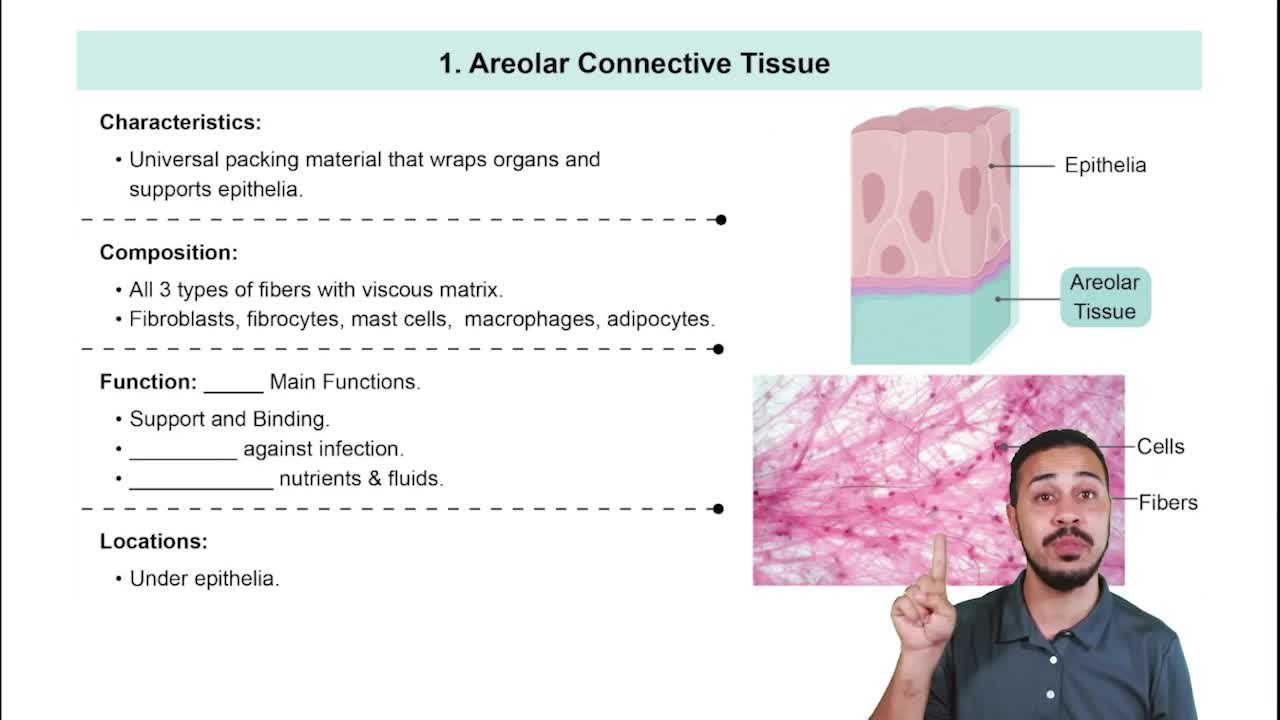
Areolar Connective Tissue

Areolar connective tissue is a loose connective tissue that provides support and elasticity to various organs. It contains a gel-like matrix with collagen and elastin fibers, allowing it to absorb excess fluid during edema. This property makes it crucial for maintaining tissue hydration and facilitating nutrient exchange.
Recommended video:
Guided course
08:25
Areolar Connective Tissue

Edema

Edema refers to the accumulation of excess fluid in the interstitial spaces of tissues, leading to swelling. It can occur due to various factors, including inflammation, injury, or circulatory issues. Understanding edema is essential for recognizing how certain connective tissues, like areolar tissue, respond to fluid imbalances in the body.
Recommended video:
3:15
Glomerular Filtration Rate

Connective Tissue Types

Connective tissues are classified into various types based on their structure and function, including loose and dense connective tissues. Each type serves different roles in the body, such as providing support, storing energy, or facilitating fluid movement. Recognizing these types helps in understanding their specific functions, particularly in pathological conditions like edema.
Recommended video:
Guided course
01:49
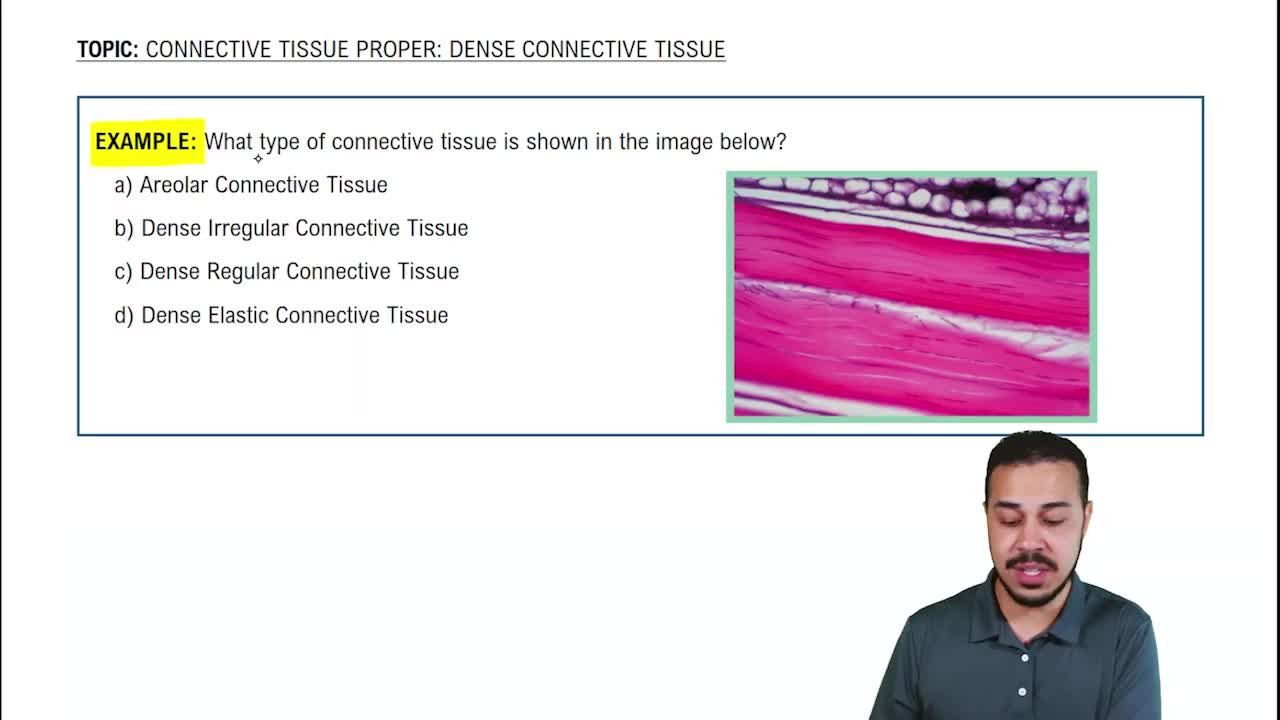
Connective Tissue Proper: Dense Connective Tissue Example 1