Ch. 11 Cardiovascular System
Marieb - Essentials of Human Anatomy & Physiology 13th Edition
Marieb13th EditionEssentials of Human Anatomy & PhysiologyISBN: 9780135624340Not the one you use?Change textbook
Chapter 11, Problem 21

Trace one drop of blood from the time it enters the right atrium of the heart until it enters the left atrium. What is this circuit called?

Verified step by step guidance
1
Step 1: Begin by identifying the starting point of the blood drop in the right atrium. Blood enters the right atrium from the superior vena cava, inferior vena cava, or coronary sinus, carrying deoxygenated blood from the body.
Step 2: From the right atrium, the blood passes through the tricuspid valve into the right ventricle. The tricuspid valve ensures one-way flow and prevents backflow into the atrium.
Step 3: The right ventricle contracts, pushing the blood through the pulmonary semilunar valve into the pulmonary trunk. The blood then travels through the pulmonary arteries to the lungs. This marks the beginning of the pulmonary circuit, which is responsible for oxygenating the blood.
Step 4: In the lungs, gas exchange occurs. Carbon dioxide is released from the blood into the alveoli, and oxygen is absorbed into the blood. The now oxygenated blood returns to the heart via the pulmonary veins.
Step 5: The oxygenated blood enters the left atrium of the heart, completing the pulmonary circuit. This circuit is specifically called the pulmonary circulation, which is distinct from systemic circulation.

Verified video answer for a similar problem:

This video solution was recommended by our tutors as helpful for the problem above.
Video duration:
3m
Was this helpful?

Key Concepts

Here are the essential concepts you must grasp in order to answer the question correctly.

Circulatory System

The circulatory system is a complex network responsible for transporting blood, nutrients, gases, and waste products throughout the body. It consists of the heart, blood vessels, and blood. Understanding this system is crucial for tracing the path of blood and recognizing how it supports bodily functions.
Recommended video:
Guided course
02:29
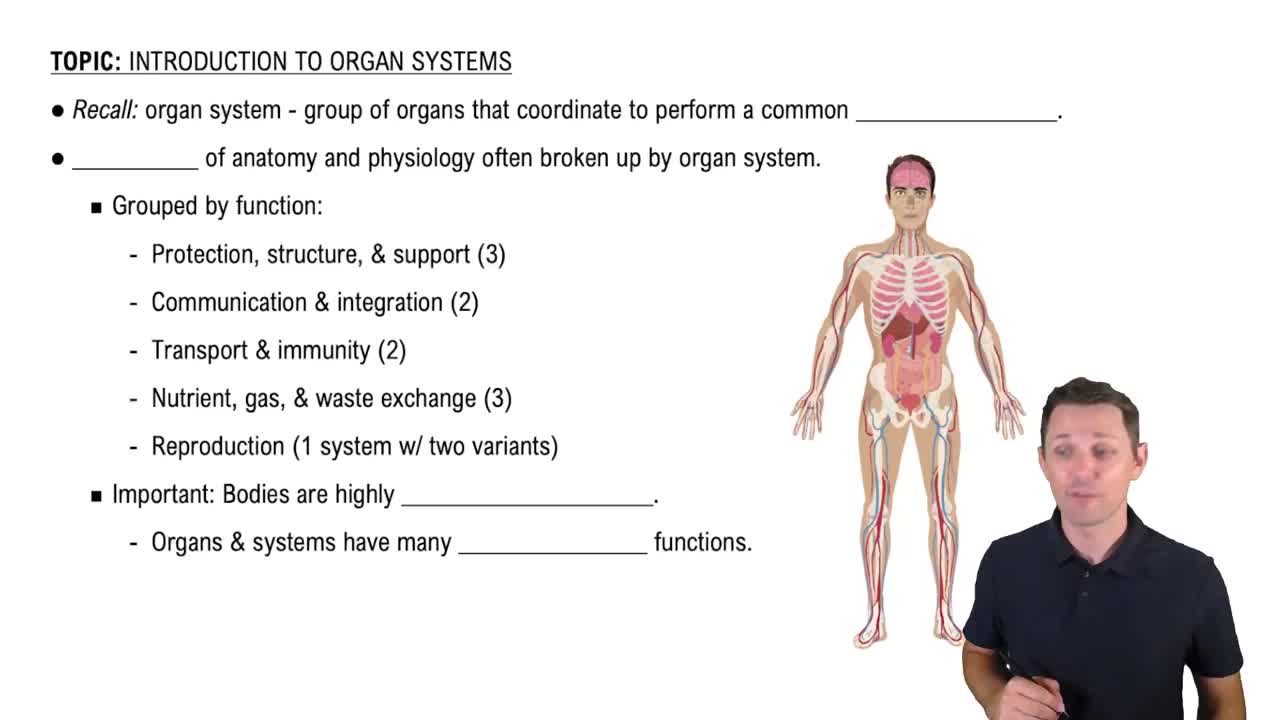
Introduction to Organ Systems

Pulmonary Circulation

Pulmonary circulation refers to the pathway of blood flow from the right side of the heart to the lungs and back to the left side of the heart. This circuit is essential for oxygenating blood, as it allows carbon dioxide to be expelled and oxygen to be absorbed. It begins when deoxygenated blood enters the right atrium and ends when oxygenated blood returns to the left atrium.
Recommended video:
Guided course
3:49
Pressure in the Lungs and Pleural Cavity Example 1

Cardiac Cycle

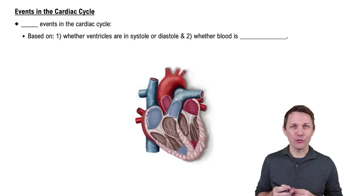
The cardiac cycle encompasses the sequence of events that occur during one heartbeat, including the contraction and relaxation of the heart chambers. It is divided into systole (contraction) and diastole (relaxation). Understanding the cardiac cycle is important for comprehending how blood moves through the heart and the timing of blood flow during the pulmonary circuit.
Recommended video:
Guided course
9:44
Events in the Cardiac Cycle